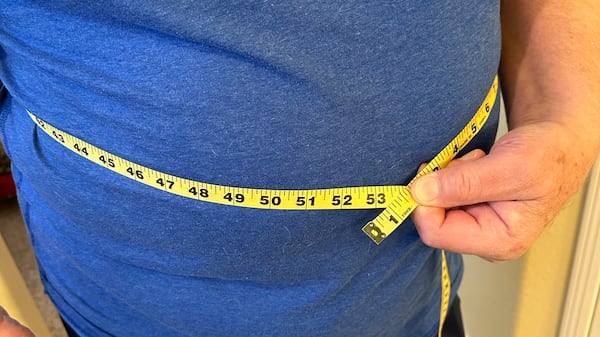
An Ontario man diagnosed with stage 4 colon cancer is encouraging the Ontario government to keep making progress when it comes to delays relating to the province’s lab technologist shortage. “It was a devastating thing that happened to me but also to my family. It was very traumatic to my wife and young sons. We were told I was going to die,” said Steve Slack from his home in Bowmanville on Wednesday. Slack was diagnosed in 2021 when he was 48 years old. The survival rate at the time was just 10 per cent. He explained that his tumour had undergone further laboratory testing to identify specific genetic markers. This analysis would help the oncologist determine whether targeted therapies, in addition to chemotherapy, might be suitable treatment options. But between July and October, his results were delayed due to a shortage of technologists, which lab professionals say has been ongoing in Ontario for years. “We got the results back and it turned out there was an opportunity for a targeted therapy on my tumour genetics, and so we did add that at that time, which was great, but we definitely lost time, because we didn’t start out with that therapy from the beginning.” To deal with his cancer Slack also ended up requiring a liver transplant, a life altering event he said that’s also left him wondering if he had been on the optimal treatment from day one, if the transplant would have been necessary. According to survey results from the Medical Laboratory Professionals’ Association of Ontario {MLPAO} the shortfall is headed in the right direction. In 2025, 68 per cent of labs reported a shortage of lab technologists.. Now in 2026, 42 per cent. While those numbers show an improvement, Slack and other patients forced to wait for critical lab results want shortages further reduced. A spokesperson for the Minister of Health said the government has added 700 more educational seats for professionals in diagnostics including technologists, expanded grants for students and is allowing workers from other jurisdictions to begin practicing in Ontario immediately. The MLPAO said there are enough students in the system, but there’s a bottleneck of them needing trainers to practice. “Currently 35 per cent of lab technologists are eligible to retire in the next two to four years,” said Michelle Hoad, CEO of the Medical Laboratory Professionals’ Association of Ontario. “That is concerning.” The MLPAO represents more than 200 labs, including community labs, public health labs and hospital labs. “We’ve got smaller communities that can’t take students on because they actually need to pull someone off a bench to do testing to train the student, so what we’re looking for is the government to keep investing in labs.” The government says its plan to train healthcare workers will ensure people can connect to the care they need now and for years to come. “I’ve learned this is a big issue and it’s a problem. In cancer, timing is everything, and we need to act quickly, and delays can cost people their lives,” said Slack. Slack said he’s had no evidence of disease in three years but still struggles with medication side effects from his liver transplant. He said he is grateful for how far he’s come and that he has a strong drive to push for change.