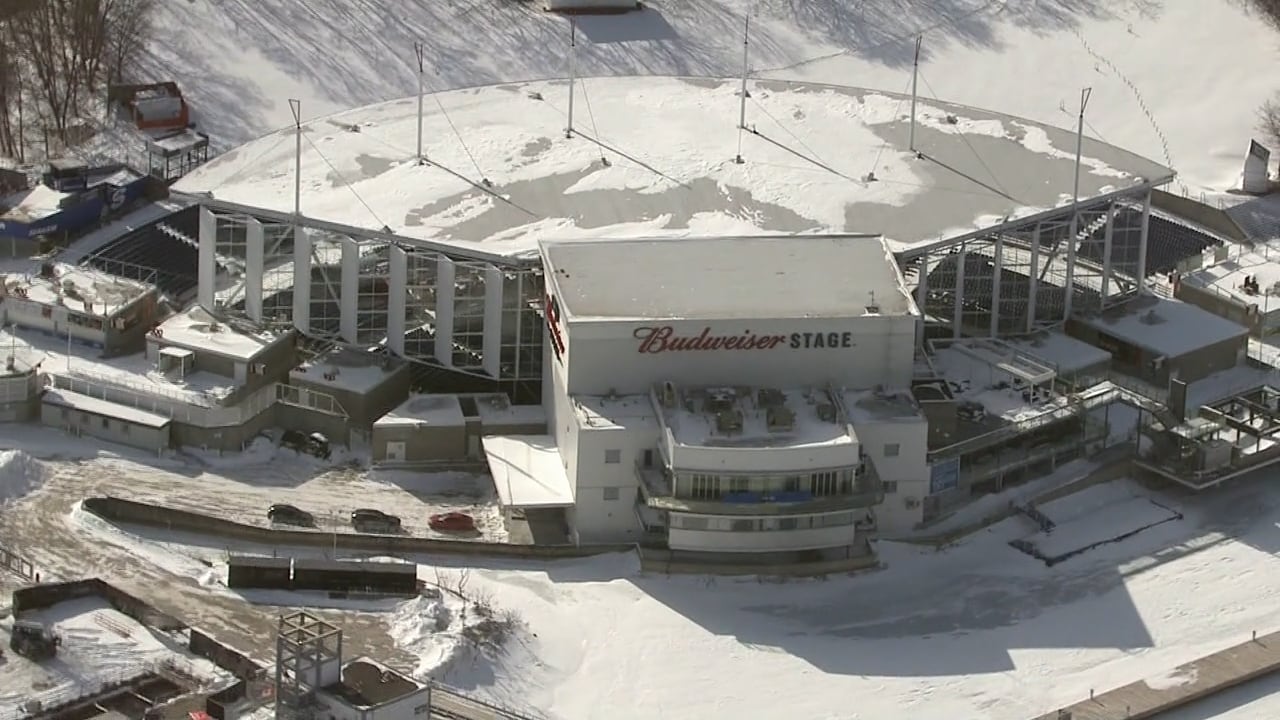
Keep it tidy, no racist merchandise and no criminal performers—or at least, no performers who committed criminal acts while on stage. Those are among the provisions in the lease between Live Nation, which runs the RBC Amphitheatre (formerly Budweiser Stage), and the Crown corporation responsible for Ontario Place. The provisions that aren’t in the lease are drawing the most attention from critics, however, particularly in comparison to the perks offered to the venue’s future neighbour, a mega-spa and waterpark operated by Therme. “It really points to a sweetheart deal for Therme,” said NDP MPP Chris Glover after taking a look at the Live Nation lease, which was obtained by CTV News via a freedom of information request. Austria-based Therme is redeveloping a portion of the public land at Ontario’s waterfront into a “state-of-the-art urban wellbeing oasis,” a project that came through an “unfair process,” according to a report from Ontario’s Auditor-General. The Therme contract, worth some $2.2 billion, was released in 2024 after multiple freedom of information requests from reporters and advocates. CTV News requested the Live Nation contract shortly after that. Both contracts contain provisions that stop the future neighbours from offering competing services: Live Nation is not allowed to use its premises as “a thermal spa” and Therme is not allowed to host any “entertainment events,” like concerts or theatrical events. But the length of each contract is different: Live Nation’s contract is 30 years with a 15-year extension. Therme’s is a 75-year term with an option to extend for an additional 20 years. And the two tenants are also treated very differently when it comes to a parking garage the province has said it plans to build. Live Nation is not entitled to any parking garage, the lease says: “The Landlord shall be under no obligation to construct such parking structure and the construction of any parking structure shall always be fully within the Landlord’s sole discretion.” Meanwhile, Ontario “shall” provide Therme a parking garage and is required to penalize the developer if the spots aren’t constructed by the time the facility opens, the lease says. That penalty is set at $5 per parking space per day that’s not constructed—an amount that would add up to roughly $2.2 million a year. That’s more than what Therme’s initial rent would be, according to the lease All of that adds up to preferential treatment that just can’t be explained, said Glover, also pointing to the Auditor-General’s conclusions, reflected in a New York Times investigation, that Therme burnished its application by claiming to operate European facilities it had little to do with. “This is something that needs to be investigated. We are going to keep digging on this, because preferential treatment is illegal,” Glover said. In a statement, Strategy Corp, the lobbying group representing Therme, said the parking fee was enacted to ensure the parking facility would be completed on time. “Having parking for people visiting all of Ontario Place—the public park we’re building, seeing a concert, visiting Therme, or any of the other attractions—has always been important part renewing this destination. Visitors who choose to drive will pay for parking and those revenues go to the government,” said John Perenack. “Our agreement contained an incentive to help drive momentum to completion by the agreed-upon date.” In a statement, the Ministry of Tourism, Culture and Gaming said the contracts aren’t comparable. “Contract terms are subject to multiple commercial factors that are unique and differ on a project-by-project basis. The contracts you reference are with different tenants, each with distinct concepts and lease obligations—comparing the two oversimplifies and draws unwarranted conclusions,” said Kelsey Hrappstead. “We have been clear that parking spaces to accommodate the six million annual visitors of the reimagined Ontario Place, which will offer over 50 acres of free trails, playgrounds, and beaches, will be added through the building of a new publicly owned parking structure with up to 3500 parking spots.” Live Nation itself didn’t return messages from CTV News. Canada’s Supreme Court has indicated it will hear a constitutional challenge to the Rebuilding Ontario Place Act with one group, the Ontario Place Protectors, arguing that Ontario can’t exempt itself from laws about environmental reviews and development. Ann-Elisabeth Samson, of Ontario Place For All, said in an interview that the disparity between the contracts illustrates something extremely unusual. “We’re spending a huge amount of money prepping the site for that. They’ve cut down 800 mature trees and flattened the land there,” she said. “Why are we giving such preferential treatment to this project? Especially when there has been such a public outcry about it?” Other provisions in the Live Nation contract deal directly with the issues that a live performance venue might have to manage. Live Nation is not allowed to permit the sale of any souvenirs or gifts that are “obscene, violent, abusive, harassing, disruptive, defamatory, or is likely to promote (or has the effect of promoting) discrimination, contempt or hatred for any group or person on the basis of race, ethnic origin, citizenship, colour, ancestry, credit (religion), age, sex, gender identity, gender expression, marital status, family status, sexual orientation, disability, political affiliation, membership in a union or staff association, receipt of public assistance, level of literacy or any other similar factor that is expected to materially damage the reputation of the province,” the lease says. But it does say those limitations are “subject to respecting an artist’s or performer’s right to free expression in a peaceful manner.” The lease also prohibits “any artist and/or performer that has contravened the Criminal Code of Canada or the Ontario Human Rights Code during a past performance at [the venue] or at another public venue in Ontario.”