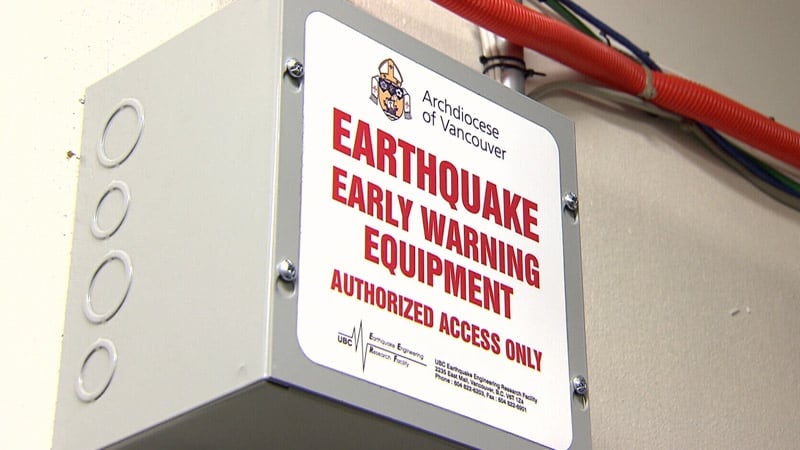
The Canadian government has activated an early warning system for earthquakes in Ontario and Quebec. The federal government made the announcement in a news release on Thursday, saying the Earthquake Early Warning (EEW) system is now operational and supporting preparedness efforts in Quebec and eastern Ontario. In the news release, the government said the EEW system detects earthquakes using a network of over 200 sensors established in the two provinces. If a potentially harmful earthquake is detected, an alert will automatically be issued through the National Public Alerting System for distribution by broadcasters and wireless carriers to people in the affected area. “Earthquakes strike without warning. This new system will give people in Quebec and Ontario the critical seconds needed to protect themselves,” Eleanor Olszewski, the minister of emergency management and community resilience, said in the news release. “This is an important step in strengthening Canada’s readiness for emergencies. By working closely with provincial partners and harnessing innovative technology, we are helping communities stay safe and reducing the risks posed by natural disasters.” The seconds of warning, the government said, will give people the opportunity to protect themselves and follow the “drop, cover and hold on” protocol. The government said Natural Resources Canada is also working to deliver detailed EEW messages to infrastructure operators allowing them to initiate protective measures automatically — such as stopping trains, restricting traffic on bridges and tunnels, opening doors and sounding alarms — before strong shaking occurs. The system is now operating in western British Columbia, eastern Ontario and Quebec, which the government says are the most earthquake-prone regions of the country. The EEW system has been operating in B.C. since May 2024. “Ontario is committed to being ready for any emergency, including earthquakes. The EEW system uses advanced tools and proven science to help protect lives and build a more resilient province and country,” Jill Dunlop, Ontario minister of emergency preparedness and response, said in the news release. “We are harnessing the latest innovations to keep our communities safe, practised and prepared.” The alerts could be released seconds to tens of seconds before strong shaking arrives. The government said the timing of when an alert is received depends on several factors, including the distance from the earthquake and the method of receipt. “Sites very close to an earthquake’s epicentre may be in the events ‘late alert zone,’ where alerts may arrive after the shaking starts because the potentially damaging seismic waves arrive at the same time as, or even before, the alert message can be sent by the system and received by the public,” the news release said. “Some people may feel an earthquake but not receive an alert because they are outside the designated warning zone, where strong and harmful shaking is predicted — in other words, because the shaking is too weak to trigger an alert."