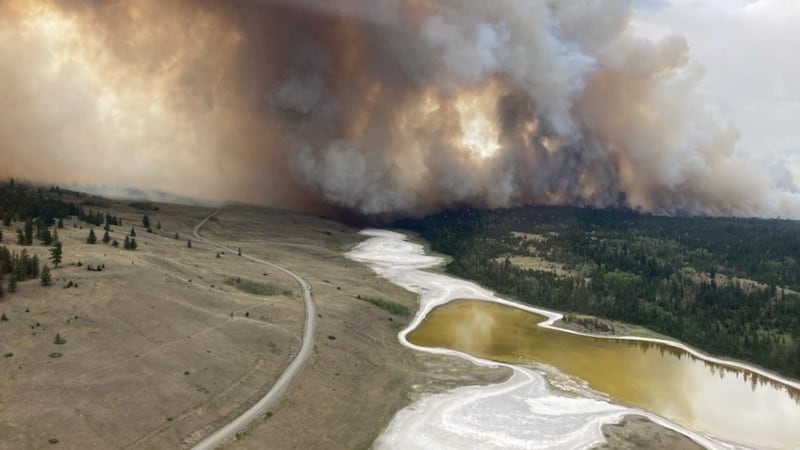
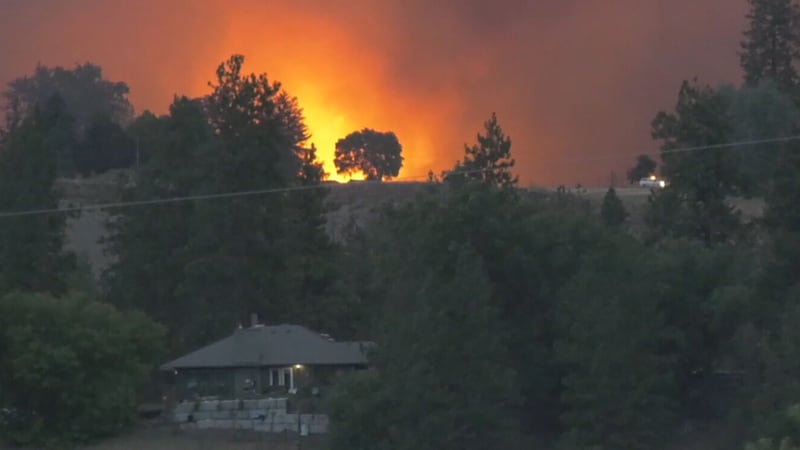
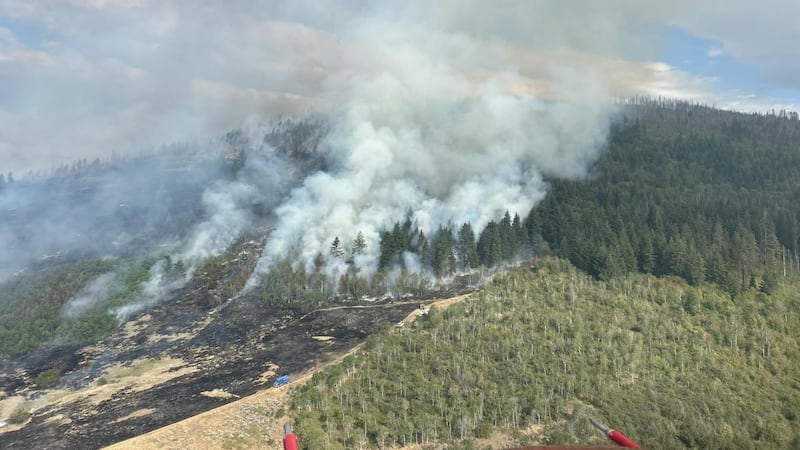
The Pear Lake fire in B.C.’s south Cariboo region continues to grow, reaching 1,150 square kilometres as of Sunday morning. Discovered on July 17, the fire immediately threatened the village of Clinton and has since merged with the Fiftynine Creek, forcing evacuation orders for everyone living there. While still a fraction of the size of 2023’s Donnie Creek fire—which reached more than 600,000 hectares, larger than the entirety of Prince Edward Island—the Pear Lake blaze ranks between 10 and 13 among the largest in B.C.’s history, depending on whether some fire complexes or cross-province wildfires are considered. The blaze was last measured at 115,250 hectares, which equates to approximately 284 times the size of Stanley Park in Vancouver. B.C. Wildfire Service said it has 279 firefighters, 24 helicopters, and 86 pieces of heavy equipment working to limit the spread. More humidity, lower temperatures, and less wind on Sunday decreased fire activity, officials said, but drought conditions across the region have made much of it “highly susceptible to ignition and increased fire behaviour if sunny conditions prevail and winds increase.” The B.C. Wildfire Service has its hands full with heightened wildfire activity across the province, with 46 per cent of the 131 fires classified as being out of control, a number buoyed in part by 2,200 recorded lightning strikes over 24 hours this weekend. Calls for support Cariboo-Chilcoten MLA Lorne Doerkson has been vocal about the need for more support in fighting the Pear Lake fire. In his frequent social media updates, Doerkson has expressed frustration with the B.C. government’s level of support, mainly its lack of declaring a provincial state of emergency. On Saturday, he shifted his focus locally. The MLA said he’s grateful for the work the Thompson-Nicola Regional District and Cariboo Regional District have done to ensure the delivery of safety and evacuation information to those living in the area, but he’s hoping to see more boots on the ground. “What I am looking for is for our province to bolster those local states of emergency,” he said, in a video posted on Facebook Saturday evening. “If it gets us two more firefighters, then mission accomplished, but if it gets us 10 or 15 more helicopters, that’s even better yet.” “I’m going to continue to push for this at least until I hear from the province that we have all the resources we need.” Doerkson’s calls for help come after a night of aggressive growth, seeing the Pear Lake blaze increase in size by approximately 10,000 hectares, or 100 square kilometres. Concerns about the spread Cindy Tudge lives in an area called the Ranchettes, about eight kilometres east of 100 Mile House, and about 35 kilometres north of the tip of the Pear Lake fire. In an interview with CTV News, Tudge said she and her neighbours have been feeling the effects of the fire and a lack of safety. “We’ve been experiencing very, very smoky days. Some of the worst air quality in Canada on some days; ash falls from the sky,” she said. “Everyone reaches their point where they have their mental breakdown.” “I think with seeing the numbers with the fires, and it seems that the government’s inability to control these fires, to stop them from growing … it doesn’t make you feel at ease.” One source of concern for Tudge was a lack of escape routes if wildfire were to reach her and her neighbours. “We only have two routes out of here right now due to the highway closures. We have Highway 24 East, and we have Highway 97 North,” she said. “You can’t ignore what’s going on around you. You can’t ignore how your friends and family are feeling that are directly impacted ... it really hits home.” Tudge echoed Doerkson’s sentiments, hoping for further support from the province, ideally in the form of a state of emergency that would see outside resources pour into affected communities. “They did it in 2017, and so people are going, ‘Why can’t that happen now, right? Why is this not happening?’” she said.