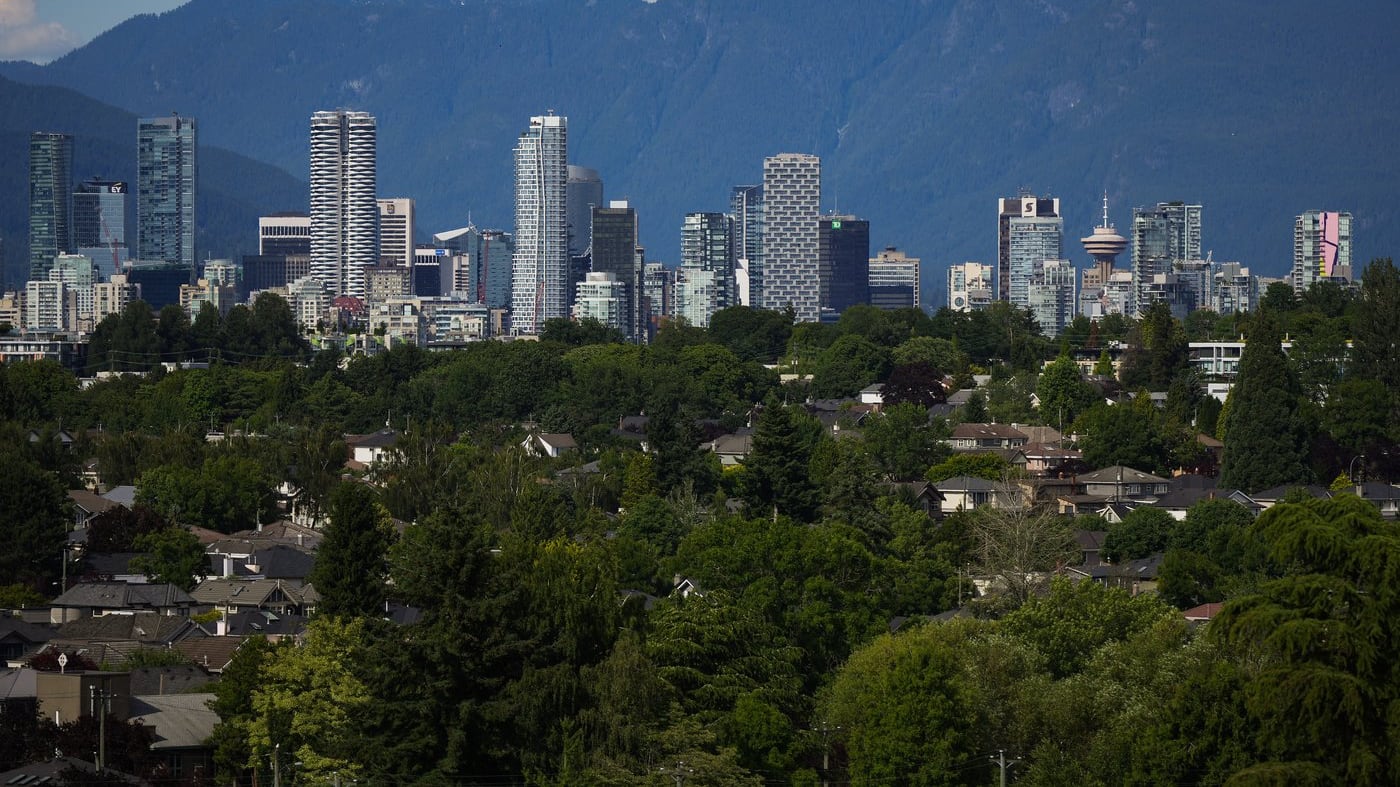
Voters in B.C.’s two biggest cities are once again being offered a chance to return to a ward system after this month’s municipal election. Under the ward system, which is used in every other major Canadian city, councillors are elected to represent a specific geographic area, similar to how MLAs and MPs are elected to provincial and federal ridings, respectively. Vancouver and Surrey currently use the at-large system, meaning each councillor represents the city as a whole—which is why Vancouver voters are facing a ballot with no fewer than 130 names. Hamish Telford, associate professor of political science at the University of the Fraser Valley, called it “crazy” to ask voters to familiarize themselves with that many candidates. “I have to confess a bias here, I grew up with a ward system,” said Telford, who was raised in Toronto. “Wards to me just make a lot more sense.” Several of Toronto’s wards have fewer than 10 council candidates this year, along with a handful of school board trustees. Proposals on offer In Surrey, former mayor Doug McCallum has pledged to split the city into eight wards, chosen by an independent boundaries commission, should he and his Safe Surrey party be elected. Council would have to pass the proposal, which would then be sent to the B.C. government for approval. McCallum noted the city’s population has increased tenfold since the province stepped in and abolished its ward system in 1957. Surrey now has around 733,000 residents, and is expected to top one million in the coming decades. “A city of a million people cannot be run by a council that no neighbourhood chose,” McCallum said Friday, in a statement. “Wards mean every community gets a seat at the table, every councillor has to earn it on the doorsteps of the people they serve, and every resident knows who to call and whose job it is to answer. That is how every big city in this country works, and it is how Surrey worked for 76 years before Victoria took it away.” Meanwhile, the Vancouver Liberals have promised to hold a referendum on whether to restore a ward system in Vancouver—22 years after a similar proposal was narrowly rejected in a plebiscite. “Vancouver has changed enormously over the past two decades,” said mayoral candidate Kareem Allam in a news release. “It’s time to ask whether our system of representation still reflects the city we live in and gives communities the accountability they deserve.” The party said it would convene a citizens’ assembly to consider various implementations of the ward system before recommending one in the referendum. Concerns about NIMBYism There are downsides to wards, Teflord noted, including the potential for councillors to become “hostage to NIMBYism” among their local constituents. Concerns about elected officials being too hyper-focused on their own wards—potentially to the detriment of the city as a whole—were part of the reason Vancouverites voted to abolish wards in 1935, and why the B.C. government stepped in and abolished Surrey’s ward system decades later. Telford acknowledged “some plausibility to that argument,” but said he doesn’t feel it outweighs the problems that emerge in the at-large system. With dozens and dozens of names on a ballot, residents may feel the easiest option is to simply vote along party lines. “People pick the slate that they prefer … without necessarily knowing who the individuals are, which is not the most informed way to vote,” Telford said. Only one B.C. municipality currently uses wards, and it’s as part of a hybrid system. Voters in Lake Country—which was formed by combining four previously unincorporated communities—elect councillor in four wards, plus two at-large councillors who represent the entire district. Telford mused that many B.C. voters “cling tenaciously” to the idea of having a local representative whenever the notion of electoral reform comes up at either the provincial or federal level—but that doesn’t necessarily mean they have an appetite for change at the municipal level. “I think it just speaks to the inherent conservativeness of people when it comes to changing electoral systems,” Telford said. Even if Safe Surrey and the Vancouver Liberals are voted in this month, Telford predicted their respective ward proposals could still be brushed aside for more urgent priorities. “I’d be very surprised if any municipality actually pushed forward with it after the election,” he said.