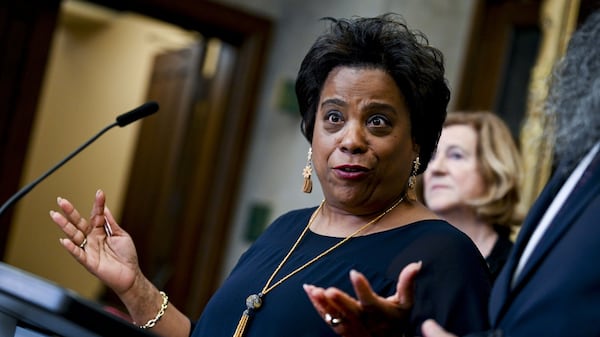
After 298 days of what his parents describe as a nightmare, the family of 15-year-old Chase De Balinhard finally has the first official account of what happened in the moments before RCMP officers shot and killed their autistic son. British Columbia’s Independent Investigations Office (IIO) has concluded the two officers who opened fire acted lawfully, but in a striking and unusually pointed section of its report, the civilian watchdog also revealed that none of the officers involved had any autism-specific training and emphasized how Chase’s neurodivergence may have shaped the encounter. For Chase’s parents, Crystal and Rick, the findings confirm what they have spent months trying to explain: that their son was overwhelmed, confused, and unable to respond in the ways police expected. “It’s been 298 days of torture,” Rick said, sitting in their family home hours after the report was released. The final moments of the teen’s life Chase’s parents say they’ve now been able to listen to the 911 call Chase made before he died.They described his initial demeanor with the dispatcher as “happy” and “calm.” “There are major gaps in how police are trained to deal with autistic individuals, neurodivergent individuals. They did not recognize Chase was in sensory overload,” said Crystal. The IIO’s narrative confirms that Chase left home with a pellet gun taken without his parents’ knowledge, then called 911 himself. His dad says he had taken the airsoft gun out of a drawer in their house that was normally locked. According to the report, he told the dispatcher he had a gun, that he was going to kill himself, and that he was autistic. The 911 call itself lasted 19 minutes and revealed crucial details about Chase’s mindset. According to the IIO report, the call-taker asked Chase whether he trusted the police, and he said he did not. When asked whether that distrust also meant he wanted to harm officers, Chase replied, “Both.” Moments later, he suddenly shouted a profanity and the call disconnected. His parents believe it was likely an attention-seeking prank, but because he functioned developmentally as a child that was significantly younger, he didn’t realize the gravity of the situation. The De Balinhards say Chase would regularly go for walks in his neighbourhood alone without incident, so they were shocked when they found out what happened. The IIO report outlines how quickly the situation escalated as officers tried to contain Chase in a residential park area with bystanders nearby. Officers told investigators that despite repeatedly calling out to him — telling him they “just wanted to talk” and to drop the gun — Chase did not acknowledge them or respond. One officer described the challenge of trying to track him as he moved between buildings. “The added challenge of numerous blind corners, and significant places for the subject to hide himself or conceal himself and potentially ambush us. It was not ideal. And in fact, we did lose visual contact at one point within that town housing complex,” an officer told the IIO. He said the incident was “a very dangerous and fluid and dynamic situation that posed a tremendous risk to public safety. We were not able to establish dialogue. We’re not even able to get him to acknowledge us. Hence, we can’t even try to de-escalate.” Multiple officers described Chase pointing the gun toward himself, toward officers, and toward the surrounding area. One officer told investigators that “during this time, he was waving this — what appeared to be — a large calibre revolver around. Pointing it at times to his head, pointing at times at us, waving in the general direction of anyone in the vicinity.” The first officer to speak to Chase on scene recalled hearing another officer pleading with Chase, “please don’t make me shoot you man, please don’t make me shoot you.” The report emphasized the officers’ perception of imminent danger. “And he’s putting the gun to his head, and he’s not listening to anything. He’s not talking, he’s pointing the gun to us, he’s not listening. He’s clearly an active threat, he’s clearly a threat to the public. He’s moving towards the townhouses where there’s people, there’s people everywhere, and there’s nothing you can do,” said a responding officer. Civilian witnesses described the teen as appearing “blank” and “confused,” and moving away from officers. Crucially, the report states: “None of the civilian witnesses reported that the AP threatened them directly.” Still, officers believed the gun was real, and the IIO found that both the subject officer and witness officer fired when Chase “fully extended his arm and pointed the gun directly at them.” One bullet missed and struck a house. The second hit Chase in the chest. Despite CPR, he died on scene. Why the IIO found the shooting lawful IIO chief civilian director Jessica Berglund said her conclusion was based strictly on whether officers committed a criminal offence.“ Although Chase was tragically killed, there was no offence committed by any officers in causing Chase’s death,” she said. The IIO emphasized that officers believed they were facing an immediate threat: that the firearm was real, loaded, and pointed directly at them. The officer who fired and missed told investigators that learning Chase was autistic actually heightened his sense of danger, because he did not understand what autism meant for communication or behaviour. “To be honest, it doesn’t change my risk assessment,” he’s quoted as saying in the IIO report. “It might even make it a little bit higher because I don’t know if that, does that add something to it? Like if you’re autistic does that mean, I don’t know, does that make my ability to communicate with you different? I don’t know.” He went on to say that while he understood Chase was in a “mental health crisis,” he did not know what the autism information would have changed in his approach. The report underscores a deeply troubling reality: None of the officers had autism spectrum disorder-specific training, their understanding of autism varied widely, and they relied on shouted commands and visual cues—tools experts say Chase may have been physically unable to process while in sensory overload. The IIO declined to provide the specific number of years of service for two officers who fired their guns. However, it did confirm that the officer who missed was one of the senior RCMP officers at the scene and that his home detachment was Surrey. The officer who fired the fatal shot was based at a detachment elsewhere in B.C. but was working an overtime shift in Surrey at the time of the incident. The IIO does not require an officer whose actions are subject to investigation to provide evidence, in accordance with the Charter right against self-incrimination. As such, in this case, the officer who fired the fatal shot did not give any account. Officers knew Chase was autistic from the start The report confirms that officers were told early in the response that Chase was autistic and suicidal, and a Car 67 mental-health nurse was on scene attempting to help. She did not get out of the vehicle prior to the shooting for safety reasons. Despite having this information, several officers admitted they did not know what to do with it. The IIO also noted it did not examine the lack of direct engagement by the mental-health nurse because its mandate does not extend to health-care professionals. For Chase’s parents, that gap is central: The people responding to their son had critical information, but no training or framework to interpret it, leaving them unable to adapt their approach in a way that might have reached him. Non-lethal force options and why they weren’t used The IIO report also details several non-lethal options officers considered, including a police dog, a 40-millimetre plastic projectile launcher, and even the possibility of using a vehicle to hit Chase. Each was ultimately rejected in the moment. One officer noted that when he prepared to deploy the 40-millimetre launcher, Chase “ran away,” eliminating the window to use it. His parents also say Chase was not wearing his proper prescription glasses when he was shot, and likely would not have been able to see well during the encounter. The report says the police dog was briefly positioned within approximately 20 metres, a distance where deployment might have been possible, but the officer determined it was not safe. Officers also discussed using a police vehicle to stop Chase, but abandoned the idea because “one of the officers would have been in the line of fire” if the truck were used. In each scenario, investigators concluded that officers believed the alternatives carried an unacceptable risk of escalating the situation or failing outright while Chase was, in their perception, armed with a real firearm. The officers also raised concerns about civilians being accidentally injured by attempts to stop the teen. As the report summarizes, “No reasonable officer would discount the potential danger of a firearm in the circumstances,” making the use of non-lethal tools effectively unviable in the fast-moving encounter. An extraordinary statement from the civilian watchdog Although the IIO cannot recommend policy changes, Berglund took the uncommon step of weaving a detailed discussion of ASD-training gaps into her findings, a commentary outside the IIO’s legislative mandate. “I do think it will make everyone in our society do better when it comes to … vulnerable individuals,” she said. “And I do think police have been open to improving the knowledge of their members with respect to autism.” For a watchdog bound by a narrow criminality test, such explicit recognition of systemic failings is rare, and signals the gravity of what the IIO observed in this case. The report acknowledges that sensory overload likely impaired Chase’s ability to hear or process officers’ commands: “The attempts to call out to him were hampered by the sight of officers’ uniforms and firearms, and by shouted commands,” it reads. Still, Berglund stressed that the officers’ legal threshold was met: They had to respond to what they saw in front of them, regardless of underlying neurodivergence. Why two officers fired at nearly the same moment The IIO report states that both officers appeared to act independently and simultaneously when they believed Chase pointed the gun at them. However, retired RCMP major crime investigator Bruce Pitt-Payne says there is another possible explanation based on his experience: “I’ve also heard of situations where one officer fires and it triggers the officer, a second officer to fire as well, because you hear a bang, and sometimes you don’t even know.” Pitt-Payne says the report is thorough, nuanced, and undeniably heartbreaking. “The word that struck me was ‘sadly,’” he said. “It really puts everything together. This was an extremely sad event.” Parents say lack of training ‘failed’ their son Crystal says the tragedy lies in what officers couldn’t see or understand. “Policing without autism-specific training is policing without essential knowledge,” she said. Both parents say Chase was overwhelmed, pacing, confused, and trying to walk away, behaviours they believe should have been recognized as crisis, not threat. Rick says the family’s focus now is ensuring no one else goes through this. “We don’t want this to happen to another family,” he said. Solicitor general responds In a statement to CTV News, Public Safety Minister and Solicitor General Nina Krieger said: “The IIO report outlines the importance of officers being equipped to recognize and respond to neurodivergent individuals, including autistic persons, and we take their findings very seriously.” Krieger confirmed that B.C.’s mandatory Crisis Intervention and De-escalation (CID) training for officers has been updated. “The training was recently refreshed and now includes autism-specific content, which will help officers when responding to a person in crisis,” Krieger said. “This will support officers in recognizing how autism may present, and considering how it can affect sensory processing, social communication, task performance, and emotional and behavioral regulation.”She thanked Autism BC and Autism Community Training for their strong advocacy, collaboration and engagement in updating the curriculum. The groups were invited to give their feedback only after CTV News’ series Lost in Translation exposed that none of the major autism organizations in the province had been consulted on the update. Advocates confirmed they were invited to have a seat at the table after the media scrutiny. RCMP decline to comment on fist-bump controversy Surveillance video previously obtained by CTV News showed two responding officers fist-bumping multiple times in the moments after Chase was shot, behaviour that drew widespread public criticism and complaints from some community members. But the RCMP still will not say whether the conduct was appropriate or whether it is being reviewed. In a written response, Staff Sgt. Kris Clark said he could not interpret the behaviour without speaking directly to the officers involved. “I think it would be irresponsible for me to assume any specific context behind a ‘fist bump’ between officers who were just involved in a traumatic event without speaking to those officers directly to understand the context,” Clark said. “To be clear, the RCMP did not conduct the investigation and have no information to advance an investigation with respect to officer conduct as we are not privy to the evidence. Again, I’d like to also say that the matter remains subject to other processes where this topic may be explored further for context.” When asked whether any complaints had been filed about the officers’ conduct, Clark again cited legal restrictions: “The Privacy Act limits me from speaking to any specific complaints we may have received.” What comes next The IIO’s mandate is extremely narrow. Its role is only to determine whether officers may have committed a criminal offence—not whether their actions were appropriate, whether different training could have changed the outcome, or whether systemic failures contributed to Chase’s death. Yet in this case, the civilian director went beyond that limited scope, choosing to explicitly highlight gaps in autism-specific policing knowledge. It is an uncommon step, and one that underscores both the gravity of what happened and the limitations of the training currently in place. The next stage now shifts to the B.C. Coroners Service, which must decide when to formally call a public inquest. The minister in charge has promised one, but the process could take years. That inquest is expected to examine the training officers received, the communication challenges that unfolded, the officers’ perception of the threat they faced, and areas of evidence the IIO could not consider, such as mental-health procedures and the handling of the 911 call. It will also compel testimony from the officer who fired the fatal shot, who did not speak to the IIO. For Chase’s family, the inquest is not about blame. It is about uncovering the full truth and pushing for the systemic change they believe could prevent another tragedy. ‘He wanted to change the world’ Crystal says Chase was a sensitive, funny, compassionate boy who dreamed of making a difference. Her mission now, she says, is to make sure his death leads to meaningful change—in policy, in training, and in understanding. “We can grow if we can teach peace officers how to interact with neurodiverse individuals,” she said. “That would be amazing.” Rick agrees. Their son cannot be brought back, but perhaps the system that failed him can be transformed. For the De Balinhards, closure is impossible. But accountability, transparency, and reform are still within reach. And they say Chase would have wanted nothing less. RELATED STORIES: