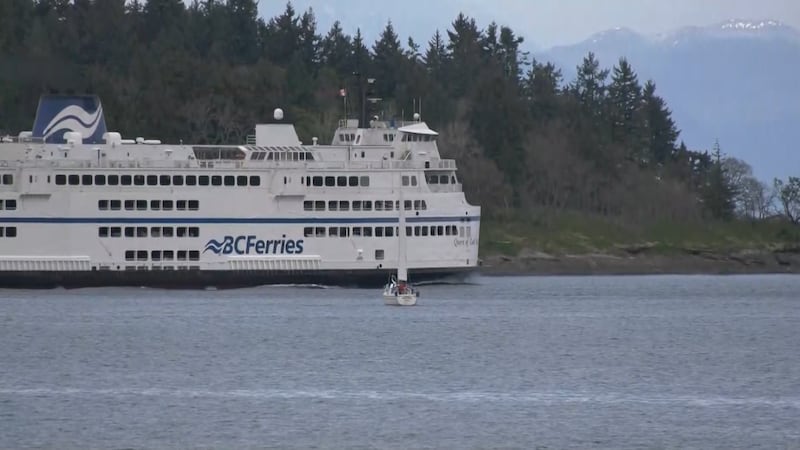
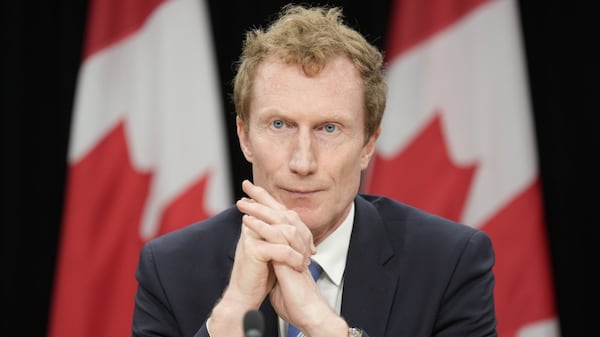
A Liberal MP on Vancouver Island says he and other government-side politicians are urging Ottawa to address a funding disparity between ferry services on Canada’s east and west coasts. The federal budget, released Thursday, announced $1.3 billion over eight years for ferry operators in Atlantic Canada and eastern Quebec. B.C. Ferries was not mentioned in the budget. “There’s more that Ottawa can do to help support the ferries and maintain access for communities that rely upon them,” said Will Greaves, Liberal MP for Victoria. “It’s very frustrating for those of us on the West Coast who’ve been calling for the federal government to do more to support B.C. Ferries.” The federal government has different funding agreements for ferry operators on either side of the country. In a statement to CTV News, a Department of Finance spokesperson said the government has a direct role in supporting interprovincial transportation on the East Coast. In B.C., federal support is tied to an agreement with the province dating back to 1977. Over the past three years, Ottawa has provided B.C. Ferries with roughly $37 million annually. “The federal government provides an annual indexed contribution in support of ferry and coastal freight and passenger services,” the Department of Finance spokesperson said. “Under this arrangement, the province is responsible for determining the services to be funded.” Greaves said he and other MPs have been asking the government to increase its support for the West Coast. “I have access to ministers and we can try to lobby and advocate internally for the changes that we want to see. That’s something that I will continue to do,” Greaves said. Long-standing concerns Courtenay-Alberni NDP MP Gord Johns said he wants to see his Liberal colleagues put pressure on their own ministers in the House of Commons. In September, Johns led a rally in Victoria calling on Ottawa to modernize its funding agreement for B.C. Ferries. “We support every dollar that goes to Atlantic Canada. All we’re looking for is some fairness,” Johns said in an interview with CTV News on Monday. To keep up with rising costs, B.C. Ferries has said it may need to increase fares by 30 per cent or more in 2028. “This is going to impact everything we buy, the cost of living, not just getting to the mainland and back,” Johns said. Concerns about the funding agreement date back to its creation, according to a transcript of a debate in the B.C. legislature on June 16, 1977. “The federal government is paying in the neighbourhood of $108 million in subsidies to shipping companies on the East Coast of this country. Here in British Columbia, we are receiving a piddling $8 million,” opposition MLA Don Lockstead said at the time. The incoming B.C. Conservative government has vowed to “fight for B.C.’s fair share of federal ferry funding,” a commitment B.C. Ferries says it supports. “A more sustainable funding model would help address these pressures and support our shared goals of keeping ferry travel safe, reliable and affordable,” the company said in a statement. ‘It’s a public service’ The B.C. Ferry and Marine Workers’ Union said it shared its concerns about the funding model with the federal government before the release of the budget. “Fundamentally, it’s a public service that Canadians use and access on a regular basis,” said union president Eric McNeely. “British Columbians are also federal taxpayers, but aren’t seeing the same benefits.” McNeely said the aging ferry system needs major infrastructure investments, a cost that will likely be passed on to customers if government funding does not increase.