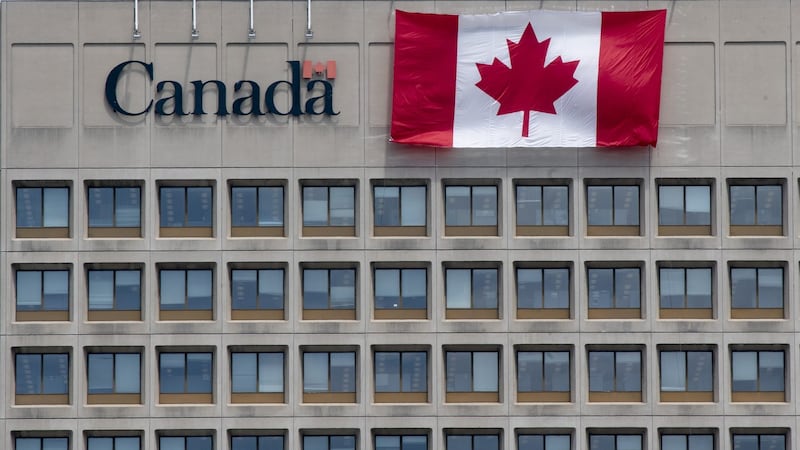
NUUK, Greenland - “The joke is, France has a guy but no building. You [Canada] have a building but no guy,” someone quips to me in the busy lobby of Nuuk’s largest hotel. The week France and Canada open new consulates in the capital of Greenland, it’s swarming with diplomats, politicians, journalists, security and the curious. Late night, the top floor bar buzzes with locals and visitors alike. The facts about buildings and diplomats in the France/Canada joke are correct, but the suggestion within is that nations are scrambling to figure out how best to support Greenland and Denmark in the wake of U.S. President Donald Trump’s threats to take over the autonomous Danish territory. Canada’s government is quick to point out its new consulate was promised back in December of 2024. But neither Global Affairs Canada nor Foreign Affairs Minister Anita Anand would explain to CTV News why no permanent consul general has been named. Greenlanders are curious about the expanding diplomatic presence. With Canada and France, there are now double the number of nations that hold consulates on the island, after the United States and Iceland. Iceland shares its small building with Canada. “So how does that work? Iceland uses it one week, and Canada the next?” a resident asks me, half-joking, half serious. In reality, the two nations share the small space, though Global Affairs Canada and Anand’s office would not let media that travelled to Greenland be present at Friday’s opening inside to observe its functioning or layout. A Canadian flag is visible through the window. Are residents concerned? Speaking to residents on the streets of Nuuk, opinions vary about the level of concern in response to Trump’s threats. Among the dozens of people CTV News spoke with during less than three days on the ground, more are concerned than not. Responses range from not being able to sleep at night, to not taking them seriously. Most land somewhere in the middle. In general, there is a reluctance to speak publicly about international relations. Some locals explain that by character trait; Greenlanders are more private or quiet by nature. Others point to how the small city of around 20,000, not used to the spotlight, has been descended upon by international attention and media. All who talk to CTV News about ties between Greenland and Canada point to the links with Inuit from both nations. A delegation of more than 60 Canadian Inuit leaders, community members and youth travelled from Canada to be present for the opening, many with friends or relatives who are Greenlandic Inuit, or Kalaallit, and all feeling a shared origin history. “I think it’s very good for Greenlandic people and Canadian people. They are together, Inuit people, together,” Amalie Ostermann says with a smile. Ostermann holds her red snowsuit-clad baby granddaughter in her arms on a trip to the grocery store Saturday morning when she stops to speak with CTV News. She says she is still worried about the U.S. threat of invasion. We asked her thoughts as she thinks of the little one in her arms. “It’s dangerous and I’m afraid for her,” she says, but adds she still carries hope things will get better. Others see a silver lining in the increased attention. There are more people here injecting more money into the economy, and learning more about Greenland. One store employee said it’s sad people haven’t realized her beautiful nation has been here all long. ‘We are not alone’ “It’s nice to know we are not alone,” says one man, Gaba Christiansen, as he stops on the street to speak with CTV News. While absolutely opposed to an American invasion, he points to the history of the American military presence during and since the Second World War as helpful in opening up the country. He sees the boost in tourist presence and interest now as similarly beneficial. “For me it’s positive Donald Trump is doing this, then we get everyone in the world looking at us,” Christiansen said. For the clothing store and brand BIBI CHEMNITZ, the “Greenland is not for sale!” T-shirt (and hoodie and tote bag) has spiked sales. Overall, David Røgilds says they now see between 10 and 20 per cent of all online sales go to Canada, mainly Ottawa and Nunavut, with larger Indigenous populations. He and his partner, Bibi Chemnitz, for whom the brand is named, are both designers and owners. “Even though our T-shirt says we’re not for sale, we’re open for business with everybody,” Røgilds says in an interview. “They could buy fish, they could buy clothes, they could buy minerals if they buy a licence, but not the country.” He says they felt it was their “duty” to make something Greenlanders could wear with pride, although sales have gone much further. “We are not politicians, and we’re not, like, walking around in important circles, but we are designers, and we have a small platform that we thought we could use it to display our opinion, which is the overall general feeling in Greenland… we cannot be bought.” Asked about Canada opening a new consulate, he sees it as a positive. “It’s very important that our allies and our partners show interest and put value and seriousness in what they say,” says Røgilds. It’s also a point of pride for Canadian Inuit, and some Greenlandic as well, Gov. Gen. Mary Simon, an Inuk from Nunavik (Quebec), was present for Friday’s opening. On our way to the airport, on winding roads around snow packed hills leaving Nuuk, we asked our taxi driver if he knew about the consulate opening. He didn’t speak much English, but he nodded. “You’re here with Mary Simon?” he asked. “I heard on the radio.”