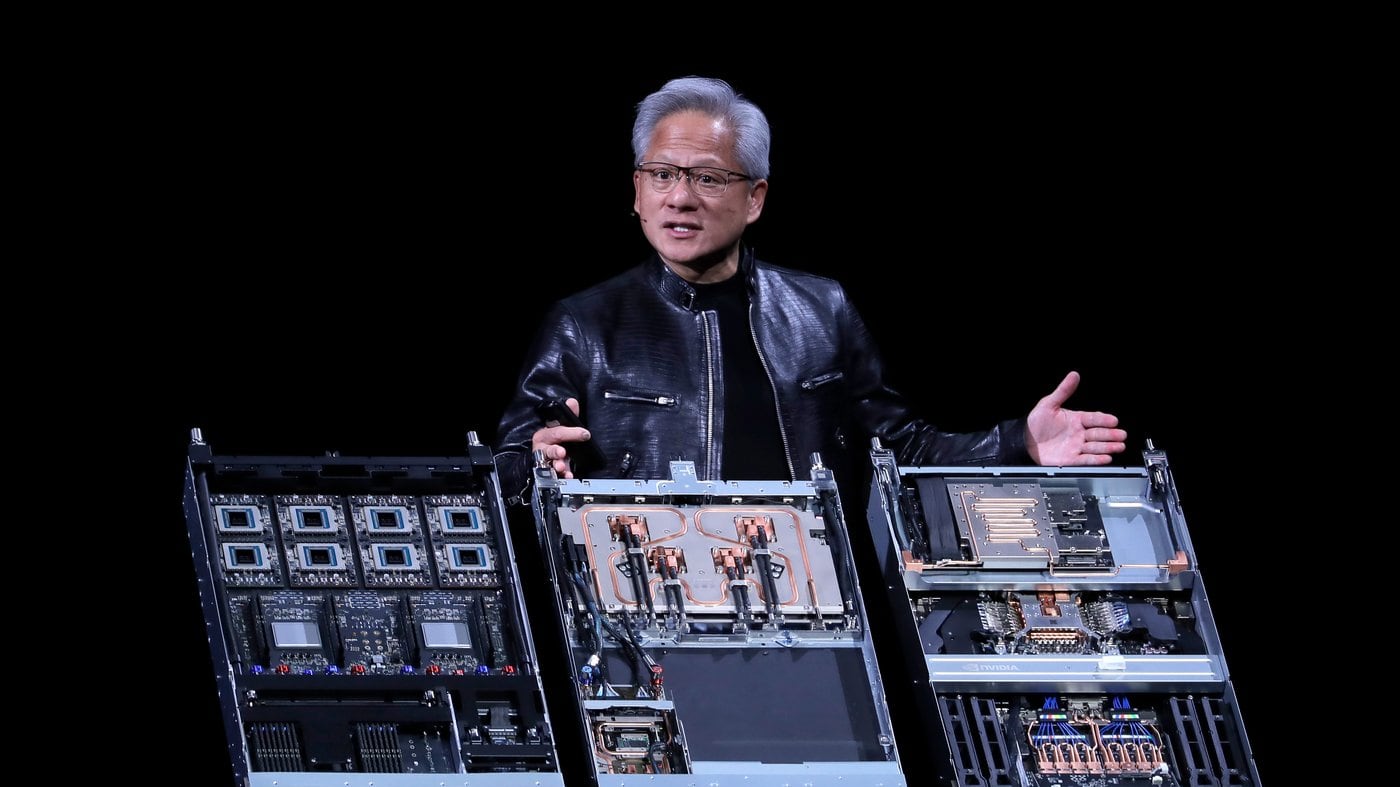
Nvidia boosted its share buyback authorization by a record US$150 billion, eclipsing Apple’s US$110 billion approval in 2024, as the chip giant’s stock trades near its lowest earnings multiple in more than a decade. Shares of Santa Clara, California-based Nvidia rose nearly 2 per cent. The stock has gained more than 20 per cent this year through Friday’s close. The additional authorization lifts Nvidia’s remaining buyback capacity to US$235 billion, which it expects to use through fiscal 2028, as surging demand for AI training and inference fuels cash generation. Nvidia shares were trading at about 16.5 times 12-month forward earnings, their lowest multiple since January 2015 and well below the 15-year average of 30, according to LSEG data, which some analysts see as a sign of slowing profit-growth expectations. The announcement comes amid a slowdown in stock buybacks, which fell about 50 per cent from July through September 23. “Our cash generation gives us the capacity to invest in the technologies that advance this transformation and return capital to shareholders,” CEO Jensen Huang said in a statement. Nvidia’s US$150 billion buyback increase exceeds the market capitalization of about 84 per cent of the S&P 500 constituents, according to data compiled by LSEG. “The AI buildout won’t continue at its current pace forever, but Nvidia is signaling confidence that demand for its hardware and services has staying power,” said Jacob Bourne, an analyst at Emarketer. “Its cash generation is currently strong enough that it believes it can continue investing heavily in the business while also returning capital to shareholders,” he added. Nvidia ended the July quarter with US$22.44 billion in cash and cash equivalents. It last announced an US$80 billion share buyback in May. Last month, it forecast about 70 per cent revenue growth for fiscal 2028, reassuring investors who have questioned how long the AI spending surge can last after years of explosive growth. --- Reporting by Anhata Rooprai in Bengaluru, additional reporting by Shashwat Chauhan and Sruthi Shankar in Bengaluru; Editing by Shreya Biswas, Christian Plumb and Anil D’Silva