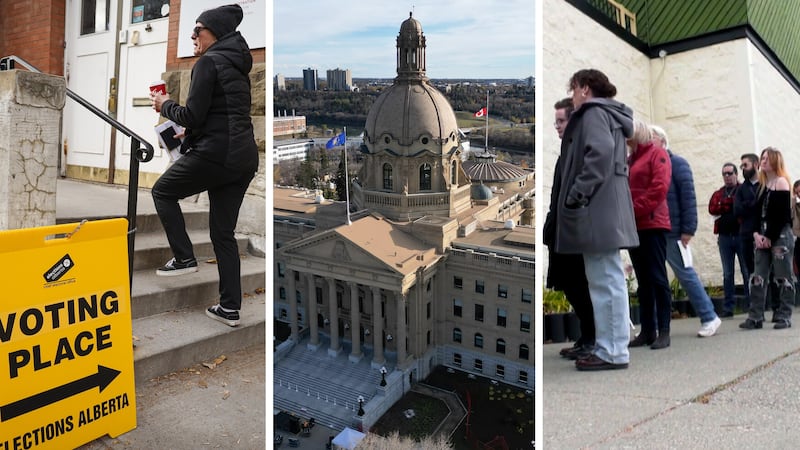
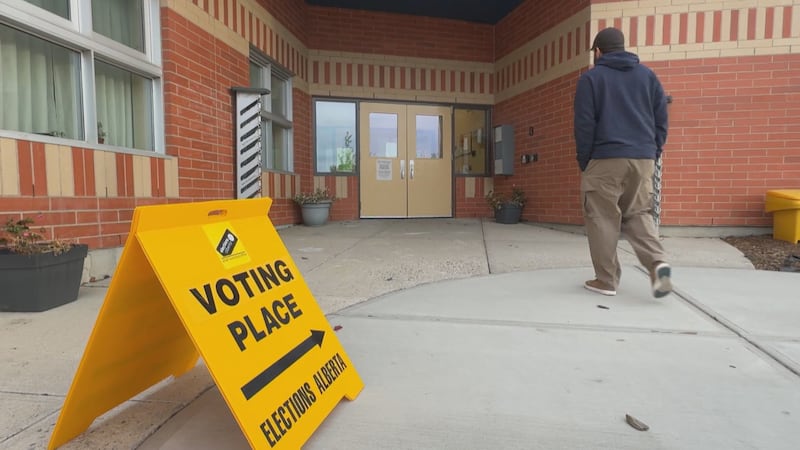
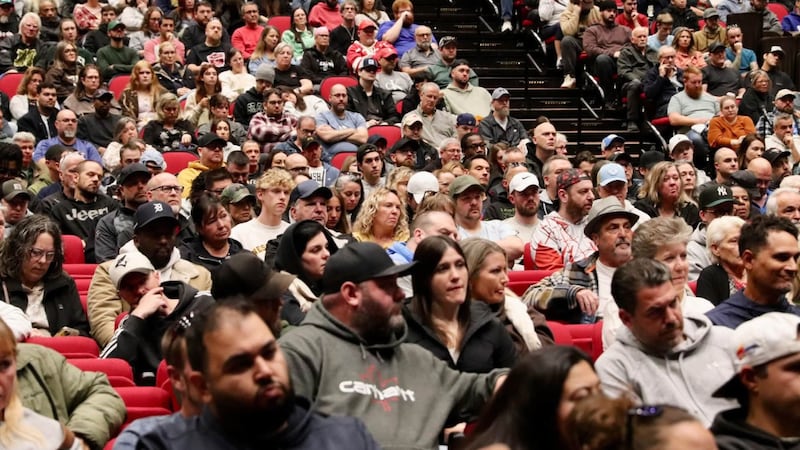
CTV News is your Alberta Referendum headquarters. Live results. Expert analysis. Everything you need to know is here. It’s decision day for the Alberta referendum as voters have one more chance to cast their ballots on the questions that will help the United Conservative government guide future policies. Questions 1 through 9 of the Alberta referendum focus on a variety of issues, from immigration rules to Senate choices and other concepts the government suggests would improve Alberta’s status in Canada. None of the questions – including Question 10 on Alberta’s separation from Canada – are legally binding. On referendum day, it was a steady stream of people casting ballots on the questions that could lead to a decision on the province’s future within Canada. Though while some polling stations saw lineups on Monday, it was nothing compared to the crowds during advance voting. Calgary Mayor Jeromy Farkas joined voters at his polling station in the southwest community of Glamorgan, casting his ballot and encouraging Albertans to participate regardless of their views on the referendum. “This is a really big day for Calgary, for Alberta, for our country,” Farkas said. “I want to encourage absolutely everyone, regardless of where you fall on the 10 questions, to come out and have your voices heard.” Farkas said the referendum represents an important moment for the province but questioned the clarity of some of the questions. “I think Calgarians and Albertans understand the weight of this moment, but I think the actual questions themselves are somewhat convoluted,” he said. The mayor also raised concerns about accessibility at some polling locations, citing Spruce Meadows as an example of a location that can be difficult to reach without a vehicle. He praised Calgary Transit for arranging additional transportation to help voters reach polling stations. Despite those concerns, Farkas said the feedback he had received about the voting process was generally positive. Advance voting points to potentially historic turnout More than 1.35 million Albertans had already voted before polling stations opened Monday morning. According to preliminary Elections Alberta figures, approximately 838,000 people cast ballots during advance voting, while another 519,000 voted by special ballot. Together, those votes represent 43.1 per cent of eligible voters. During the 2023 provincial general election, approximately 27.5 per cent of eligible voters had cast ballots through advance voting and special ballots. Mount Royal University political scientist Duane Bratt says the unusually high early participation suggests the referendum could produce one of the largest voter turnouts in Alberta’s history. “Normally, we’ve seen increases in advance polls year after year, and it’s had no impact on the overall voter turnout,” Bratt said. “This is different just because the scale is just so high.” Bratt said the numbers point to an extraordinary level of public engagement. “I think, based on what elections Alberta is predicting, this will be the highest voter turnout election in decades and decades, possibly in Alberta’s history,” he said, Final turnout figures will not be available until all ballots have been counted. Voters divided over Alberta’s future Among Calgary voters interviewed Monday, there was agreement on the importance of participating, even as opinions differed on the referendum itself. “This is a turning point in Canada’s history,” said Marge Sawinski “It’s a major decision to think about a divorce or a reconciliation, but something has to happen.” Cara Anderson said she was casting her ballot in support of Alberta remaining in Canada. “It’s very important for me to vote because I am an Albertan, but I’m also Canadian, and I think it should have never gotten this far,” Anderson said. Anderson also questioned why the province was holding a separate referendum rather than putting the questions to voters during a regular provincial election. “They shouldn’t have called an extra election and paid more money for us to get these questions answered,” she said. Separation debate unlikely to end with referendum While the referendum will provide a measure of public opinion on Alberta’s future within Canada, Bratt believes the separation debate will continue regardless of the outcome. “We’ve always had a separation movement, and now they’ve been legitimized by having a referendum; now they’re organized,” Bratt said. “Now they’re networked. Now they’ve got a fundraising channel, and they have said they’re not going to end this. They’re not going to quit.” Bratt said the margin of victory for whichever side prevails could be as significant as the result itself. “There’s a huge difference between a 60-40 ‘remain’ victory and an 80-20 ‘remain’ victory,” he said. “But no, this is not going to bed anytime soon.” The referendum has also created political alliances that cross traditional party lines. Bratt said the issue has brought together Albertans who disagree on other political questions but share a position on the province’s place in Confederation. “In the Quebec referendums, we saw something similar. Because this bridges the left-right divide, right? This is about Alberta’s place in Canada,” Bratt said. He said the issue has also exposed divisions within Alberta’s conservative movement, with some conservatives supporting separation while others remain firmly opposed. Farkas said that whatever the result, Albertans will need to find ways to move forward together. “We move forward together as one city, one province and one country,” he said. Voting on Monday Elections Alberta suggests voters read the questions ahead of time to familiarize themselves with them and help keep the voting process moving smoothly. Interested voters can consult CTV News for more information all the referendum questions. More than 1.35 million Albertans have already voted via mail-in ballots or in advance polling. That’s more than four in 10 eligible voters in the province. Anyone seeking to vote today will need to check their voting card, which was mailed to their home address, for the location of their polling station. To vote, they must be a Canadian citizen of at least 18 years of age or older and an Alberta resident. Identification, such as a driver’s licence with your full name and current home address, must be provided. Alternatively, voters can bring two pieces of acceptable identification, both in your full name, with at least one bearing your current home address.