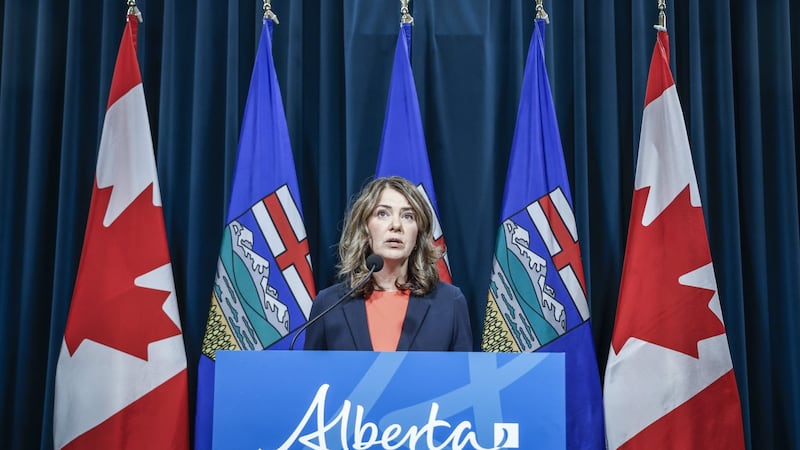
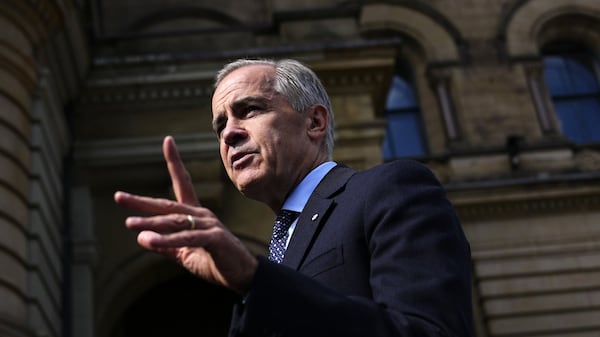
Premier Danielle Smith will be in Toronto early next week for the Canada Investment Summit. It’s a first-of-its-kind gathering in Canada bringing together global investors, Canadian CEOs, and public sector representatives in order to accelerate new investment into Canada. On her radio call-in show Saturday, Smith said Alberta has 34 projects in its idea book that are each worth $200 million or more. Those ideas touch much of Alberta’s economy. “[We’ll be] talking about [the proposed] west coast pipeline - [and we] hope to hear release details on that in October,” Smith said. Some other projects in the idea book, she said, include conventional fuel projects, carbon capture projects and agriculture projects, among others. “There are 34 ideas in our investment books and [we are] looking forward to making contact with people and companies who could help fund these,” she said. Catalyzing $1 trillion in investments: Carney The investment event is being co-organized by the Prime Minister’s Office with the Canada Pension Plan Investment Board and Public Sector Pension Investments, two of the country’s largest asset managers. The summit is, in many ways, the manifestation of the capital-focused agenda Carney laid out 18 months ago when he first took office. Since that time, he has reoriented federal policy and Ottawa’s budget framework to funnel spending to critical infrastructure and other major projects. Carney has set what experts consider a lofty goal of “catalyzing” $1 trillion in investments in Canada over five years. Open for business Jeremy Kronick, president and CEO of the C.D. Howe Institute, said Carney has taken a number of steps to show that Canada is “open for business” since taking office in March 2025. The major projects office and One Canadian Economy Act look to streamline approvals for nation-building projects, for example. Kronick said that’s enough to start shifting conversations about Canada as a destination for investment. But he suggested there’s more work to be done on other problems such as interprovincial trade barriers — the kind of regulatory snarls that can cause uncertainty about an otherwise viable project. “I think there’s been enough done on the change in tone. I think regulatory processes are harder to change,” Kronick said. With files from The Canadian Press