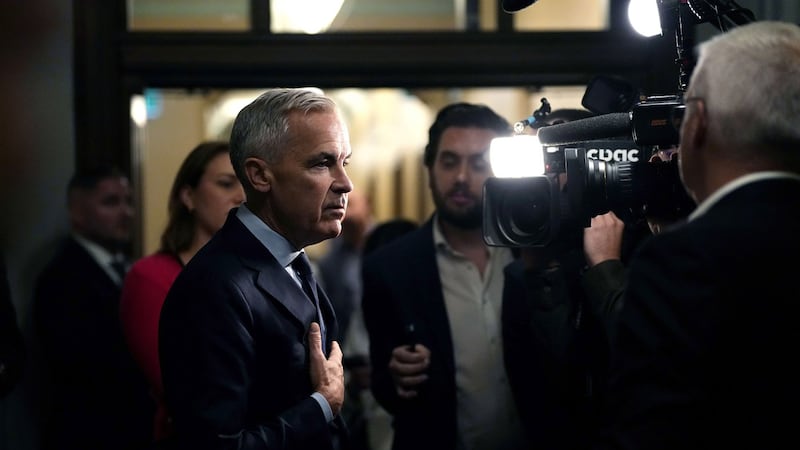
Alberta Primetime’s Michael Higgins sat down with Liberal MP Corey Hogan about the Quebec election ahead of Alberta’s Oct. 19 referendum. This interview has been edited for length and clarity. Michael Higgins: How do you anticipate this will change the federal-Quebec relationship dynamic at a time when national unity is so acutely on the front burner? Corey Hogan: Anytime there’s a change in government, it’s going to change those dynamics somewhat. Governments bring their own priorities, their own focuses. That’s why we have elections, right? But I do think that the premier-designate put it well: We’re all in the same boat. There are things that we need to accomplish as Canadians, as Quebecers, and many of those things are the same things. We want to strengthen this country. We want to make sure that we are building industry at home. We want to make sure we’re diversifying trade, and there’s going to be a lot of common ground. And I think that the prime minister has set a nice tone in terms of cooperative federalism, and that doesn’t mean there won’t be disagreements, and that doesn’t mean there won’t be tough days at certain times ahead. But we’ll work through it as Canadians, as we always have. The Quebec election results were obviously very diverse. You have a situation where the governing party has less than 30 per cent of the vote, so we’re all going to have to work together. MH: What message do you see this outcome sending to Albertans now that we’re less than two weeks away from a referendum where the issue of separation is front and centre for many? CH: I’m not really sure that it will send any particular message to Alberta because, fundamentally, it’s an entirely different situation with an entirely different set of variables at play here. But obviously, people are looking at it, drawing comparisons where they will. If there’s a comparison to draw, it’s just that it reinforces the need for federal governments to work cooperatively with provinces and get big things done. MH: You’ve been very vocal about pushing back on separatism, urging the pro-Canada side to show up. What worries you more about this Alberta vote: the degree of direct support for independence or the element of using this to send a message to your government? CH: I would say that you’ve outlined two things that require due attention. One of them is: if everybody shows up, we know what the result will be. We know that Albertans are proud Canadians, and we know that’s going to be reflected on referendum day on Oct. 19. The fear has to be: is everybody going to show up? I would implore everybody to get out there and vote. You don’t want to be sitting there on Oct. 20 and saying, “Geez, I wish I hadn’t thought the line was too long. Now, we can’t put this to bed right away.” But the other component is what per cent is trying to send a message, and I think the defence against that per cent of a separatist vote is the same as it’s always been, which is, you can’t get too distracted. You got to play your own game, so to speak. And the best defence for this country, whether it be in Quebec or Alberta, is the country working and getting those big things done that we were elected to do. MH: Should Albertans expect the prime minister back here in Alberta ahead of the referendum, delivering a direct message and address on this issue of separation? CH: The prime minister is a proud Albertan. He grew up in Edmonton. He certainly has deep, deep ties to the province. I’m certain that we’ll be hearing from the prime minister before the Oct. 19 vote, as we’ve heard from him already. But I expect more. MH: The Globe and Mail came out in recent days with investigative reporting on separatist leaders meeting with State Department officials in Washington, as well as a Republican political operative coming to our province. Where does this land on the radar of your government? Do you call the U.S. ambassador to Canada onto the carpet? CH: I’m going to give the most charitable read because I’ve certainly worked in government – not just in this job, but in other jobs – long enough to know. Sometimes somebody says, “Hey, can you take a meeting with somebody?” And then you take that meeting, and that meeting goes in ways that you didn’t expect. So, I don’t think we can read too much into what the separatists, who have not always shown themselves to be the most reliable characters, say about a particular meeting. I think we should start there as kind of a general read on those things. The other is there’s not any laws that are currently being broken. If that’s the situation, maybe we need to think about that. Maybe we need to think about whether or not we want people going down and freelancing on what they might trade away to a hypothetical or from a hypothetical country to another country. Maybe that’s a gap, but no, I’m not sure that would be appropriate. I think asking questions like, “Hey, what happened here?” is certainly appropriate, and I certainly know those inquiries have occurred. But I think that the other way operatives coming into Alberta, we should acknowledge political operatives have gone south to the United States from Canada. Political operatives have come north to Canada from the United States. That’s pretty common. But what’s important is in those situations that all of the local laws are being followed, including security of data, which I know there has been questions raised about, and including all of the requirements to register as those requirements firm up over the next bit with our various registries that are launching. MH: If it is that Albertans vote in less than two weeks’ time in favour of going to a binding referendum on independence, where does that leave your government support for Pacific Link? CH: I think we should be asking where does that leave Alberta? Because we’ve seen that the chamber has said 75 per cent of businesses would be looking to reduce their presence here in Alberta. It would be just so damaging and so detrimental if we went down that road, particularly at a time where we’re trying to pull in capital to get those big things done. You can talk about Pacific Link and you can talk about whether or not it should proceed under such conditions, but the reality is, in order to fill that Pacific Link pipeline, you’re going to need a lot of investment coming into the province. And who is going to invest in this province under such a cloud of uncertainty? That would be something I think would be very hard to sell people on. So, if Albertans want an economic argument, here’s one: Nobody likes risk. But I think there’s a bigger argument, which is that this country is a really important presence in the world, and it’s a really important presence in our lives. And it’s more than dollars and cents. There’s compelling arguments, but it’s the emotional pull of this place as well. It’s the fact that our ancestors have fought and died under this flag. It’s the fact that we have built something here that is truly remarkable when you look around the world. So, I think that is the thing that we should keep in our minds as we go to the ballot box.