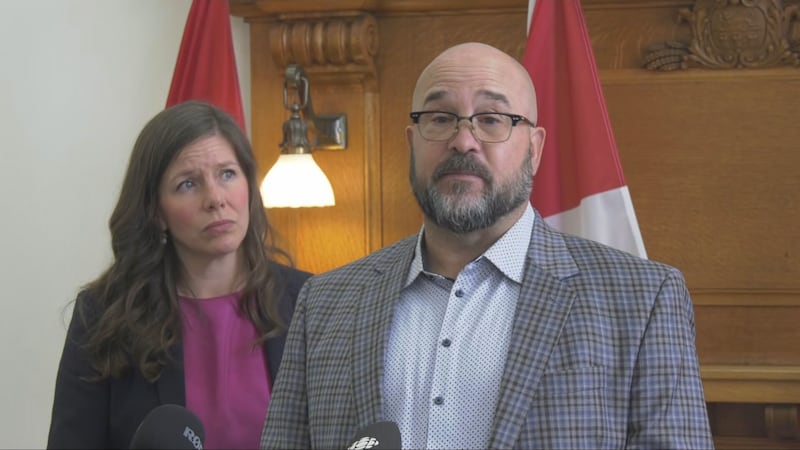
An independent report on the potential costs associated with Alberta separating from Canada shows multi-billion dollar costs in even the best-case scenario. Moshe Lander, an economics professor and former senior economist for the Alberta government, discusses the report. This interview has been edited for length and clarity. Michael Higgins: We spoke months ago about your expectations for the economic impact of separation. How do you now weigh the data this report presents and how it gets to its assessment of not only transition costs but long-term impact? Moshe Lander: This is coming from an independent group that has no skin in the game. When they’re saying that there’s significant costs on the upside and even more significant costs on the downside, this is what I was saying to you a few months ago, and this is what I’ve been saying all along. This is not an easy exercise to pull away from Canada, and it’s not really to Alberta’s benefit. Everything would have to go right where you thread that needle perfectly to even see some sign of success, and it’s really unlikely to happen, especially in today’s political climate. MH: How far does this report go to meeting the mandate set out by the Smith government in commissioning the analysis? Does it tick all the boxes when it comes to either the costs or benefits of separation? ML: There are some benefits to be had, don’t get me wrong, it’s just that the costs are so overwhelmingly large compared to those benefits that unless you’re one of those self-interested groups that would see those benefits by pulling away from Ottawa, you have to think that if you really care about Alberta, this is not in Alberta’s best interest. This report does a lot of that consideration. It’s telling too, Michael, that we have not yet seen any estimates from the separatist groups as to how they think things will play out, and it’s certainly not coming out of any mainstream economist. This is much closer to what economists would say is the correct story. MH: This is presented as something for Albertans to digest. So, for this report to connect with those voting in the referendum, what’s more relevant, the big multi-billion dollars needed in setup costs, debt impact on the economy or the degree to which it could impact Albertans on an individual level? ML: It’s what part of the story have you been listening to if you are pro-separatism. This thought that our taxes will go way down or that our incomes will go way up, that’s not in this report. The fact that there’s going to be a sizable debt means that you can’t just say to Canada, ‘Thanks very much for the last 100 years, but we’re out of here,’ and not think that there’s going to be any costs associated with it. Where you were saying a few minutes ago, ‘Does it tick all the boxes?’ I think what it should do is tick all the boxes for everybody who’s made an argument for why separation is a good idea. In each case, they’ve addressed one of those arguments that’s been made and said, ‘No, I think you got your sums wrong, and I think, in fact, your sums are way off.’ MH: With that in mind, the picture this paints through the depth of costs of starting up a new country and the degree of economic disruption, is that survivable? Could Albertans live through the pain and get to a brighter financial future. ML: Well, they would have to because the problem is if, let’s say, five, 10 years down the line, they decide, ‘Oops, I think we made a mistake,’ then you have to come back on bended knee to Canada and say, ‘We want back in.’ And if you want back in, Canada is not going to say with open arms, ‘Thanks very much, here you go.’ They’re going to say, ‘Well, we now need to negotiate with you as if we were negotiating with the U.S. or Mexico or Europe or anybody else that wants to be a part of our economy.’ And in the case of Alberta coming back, it would be that you actually want to be inside Canada again. They would never be able to open up their mouths again because their credibility would have been shot. So I think that if they go alone, it is burning the bridges and not being able to turn around. MH: Going back to your earlier point, for separatist leaders to offer a counterpoint that paints a different financial picture, what are they going to need to bring to the table where credible, backable information is concerned? ML: You said it, it’s credible and backable information. The last time that we heard from them on anything regarding numbers was they said that the report was forthcoming, but everybody who was reviewing that report had to sign non-disclosure agreements. Essentially they were saying, ‘We’ll let people look at it, but we’re not going to tell you who’s looking at it, we’re just going to say that they stamp their approval on it.’ That’s not credibility, so unless they’re willing to put it out to public scrutiny, to academics, to people who work in industry and have an expertise in economics to say, ‘Yeah, this is reasonable,’ or not, then anything they’re putting out there, you could come up with numbers just as well as they could. It would be just as credible and just as backable as theirs. MH: Is there anything in this government-commissioned report that might give separatists a window of opportunity, something they could latch onto where benefits of separation are concerned? ML: At this point, what they have to do is play defence against the report. What they have to do is say, ‘We don’t agree with that number, we don’t agree with that,’ or, ‘We don’t agree with that assumption per se, and we view it differently.’ This is a pretty scathing report, and because it is showing that there are some benefits to be had, but the costs are so much more overwhelming, if they’re going to try and use anything within this report, they’re going to have to say that those benefits have been massively understated, and here’s why, and these costs are massively overstated, and here’s how you’re going to be able to negotiate those costs down when negotiating out Canada. The important part two of the story is that this isn’t the type of thing that on October 20 we wake up and lower the maple leaf and raise the Alberta flag once and for all. It’s the beginning of what could be a decades-long negotiation to get out, and that itself is kind of missing in the report here in terms of just how long could that go on, and how these costs could magnify. Not just in a difficult scenario, but in a scenario that never ends because it’s completely awash in lawsuits and back and forth arguing. MH: How do you weigh the suggested harms to the rest of Canada because that factors into the report as well? How relevant is that to the conversation when it comes to Albertans voting on the referendum question? ML: Alberta is voting for Alberta, and even the people that want to remain in Canada, the view should always be what is in it for Alberta. Canada is not going to do particularly well if one of their interior provinces leaves the country, and then B.C. becomes an isolated province on its own with very difficult connectivity to the rest of Canada. I don’t think that that should influence the way you vote one way or the other, but I think that anybody who wants to stay in Canada is going to recognise this isn’t because that Canada stands to suffer; it’s because Alberta stands to suffer substantially.