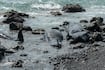
Ontario’s largest nuclear plant is facing two charges under the Federal Fisheries Act following a February 2025 fish kill that saw as many as five million fish caught and killed in the company’s underwater infrastructure. “Just a couple of years ago, in 2023, there was another fish kill. Not to the same magnitude as what was experienced in 2025, but certainly it was a large enough kill that we hoped it would serve as a kind of a wake-up call,” said Ryan Lauzon, Fisheries Management Biologist with the Chippewas of Nawash Unceded First Nation. Lauzon wrote an extensive report about the February 2025 fish kill that exceeded Bruce Power’s annual allowable fish deaths by 200 times last year. Bruce Power uses water from Lake Huron to condense steam to drive turbines to help create up to one-third of Ontario’s electricity, on a daily basis. One of the byproducts of that process is warm water, which is ultimately discharged back into Lake Huron. That warm water attracts fish, specifically Gizzard Shad. During the 2025 incident, nearly eight million fish were hovering near this warm water exchange pipe, and entered a recirculation duct through a gate that is only open in the winter, to keep frazil ice from forming, and clogging up Bruce Power’s pumps. Frazil ice is a collection of loose, sub-millimeter to millimeter-sized ice crystals that form in turbulent, supercooled open water and is notorious for blocking water intakes for hydropower plants and nuclear facilities. “When that happens, and they open up that that passageway, they opened a clear route for these fish to get sucked from the discharge, which is directly connected to the lake. All these fish are getting attracted. Then they get sucked into the intake side of the system. And like we saw, we had potentially as many as, five million fish killed within that event according to Bruce Powers own numbers,” said Lauzon. Bruce Power says the 2025 fish kill, which actually forced them to take their Unit 2 nuclear reactor offline for 1.5 weeks, occurred during very unique circumstances they hadn’t seen in decades. “The 2025 event occurred during a rare convergence of environmental conditions, including prolonged cold weather, and an unusually large presence of Gizzard Shad following several warm years. The last time this convergence of factors occurred was in the late 1970s.” said Bruce Power officials. Bruce Power says they have since invested millions of dollars in fish deterrents for their connection to Lake Huron, including nets, sound barriers, and enhanced monitoring. “Immediately following the event, Bruce Power invested millions of dollars in additional protective measures, including physical barriers (nets), acoustic and strobe light deterrents, enhanced monitoring using sonar and camera-based systems, and expanded lake monitoring and research to better understand fish movement and ecosystem responses. This was all implemented for the winter of 2026. The lessons learned and mitigation strategies developed through this work have been shared across the global nuclear industry,” said Bruce Power. Lauzon who works with Bruce Power, amongst other companies, on fish management practices for local indigenous groups says the mitigation measures have had mixed results. He says one of the nets installed has already had to be removed. “We do know that it had to be removed because it became so clogged with algae and dead fish. So, it’s really hard to get those nets perfectly aligned. You end up having gaps and fish can still enter. So, you know, I think it is an important step, but you know, it’s not necessarily a solution,” said Lauzon. Lauzon says putting warm water back into a cold lake creates an artificial ecosystem that attracts some species of fish. He calls it “a giant fish trap”, that can be mitigated, but not ever entirely stopped, as long as the nuclear plants continue to operate. “I don’t think we’re going to stop all the environmental effects. It’ll be very, very difficult. But I do think that we can reduce a lot of these major events like this one, and really reduce our impact on the lake,” said Lauzon. Bruce Power could face up to a $200,000 fine for the February 2025 fish kill, and exceeding their annual allowable fish kill limits. Their first court appearance will be Nov. 24 in Walkerton. Below is the entirely of Bruce Power’s statement on the Department of Fisheries charges. “Bruce Power has been formally notified that it will face two charges under the federal Fisheries Act related to the Gizzard Shad event that took place early 2025. The company takes its environmental responsibilities seriously and is committed to protecting the environment and the biodiversity of Lake Huron. We will respond to the charges through the appropriate process. The 2025 event occurred during a rare convergence of environmental conditions, including prolonged cold weather and an unusually large presence of Gizzard Shad following several warm years. The last time this convergence of factors occurred was in the late 1970s. As these factors unfolded, Bruce Power took proactive and conservative operational action, including removing Unit 2 from service while mitigation measures were implemented. Throughout the event and in the months that followed, Bruce Power was transparent with regulators, Indigenous Nations and local municipalities and the public regarding the circumstances of the event and our response actions. This includes ongoing engagement with Fisheries and Oceans Canada and the Canadian Nuclear Safety Commission. Immediately following the event, Bruce Power invested millions of dollars in additional protective measures, including physical barriers (nets), acoustic and strobe light deterrents, enhanced monitoring using sonar and camera-based systems, and expanded lake monitoring and research to better understand fish movement and ecosystem responses. This was all implemented for the winter of 2026. The lessons learned and mitigation strategies developed through this work have been shared across the global nuclear industry. Protecting the environment remains a core responsibility, and Bruce Power will continue to work with regulators, Indigenous Nations, local communities and scientific experts to better understand the factors that contributed to this rare event and help prevent a similar occurrence in the future.”