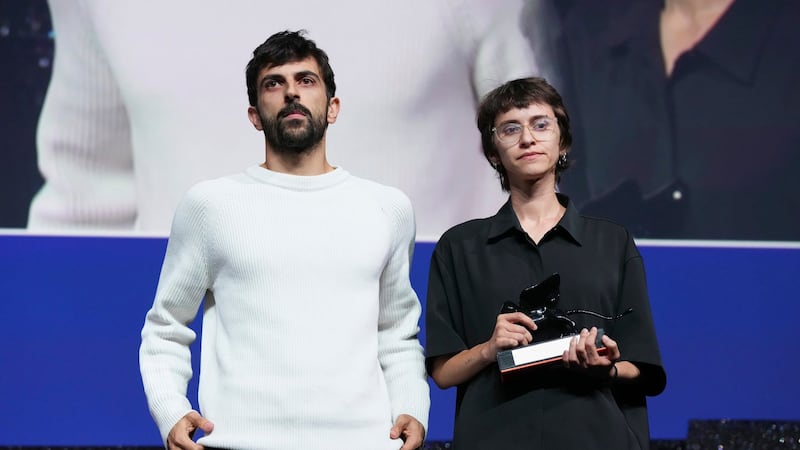
MONTREAL — A Quebec author who earlier this week was accused of using artificial intelligence to write an award-winning novel is now facing a new set of allegations regarding the originality of his previous work. A La Presse report published Wednesday alleges that some articles attributed to Thélyson Orélien and published in Quebec and French media between 2012 and 2014 included passages that were also found in previously published work by other authors. The La Presse article said the newspaper used the U.S.-based Pangram software that flagged the apparent similarities. The Canadian Press has not independently verified the allegations reported by La Presse. They come days after Orélien was accused of using generative AI to write his novel, “C’était ça ou mourir,” which translates to “It was either that or dying’.’ Orélien did not respond to a request for comment sent Thursday by text to his phone number. In a statement published Tuesday, he denied using AI to write the novel, a harrowing tale of migration. Les Éditions du Boréal, which published Orélien’s novel in Quebec, said in a statement on Thursday that it is concerned about the new plagiarism allegations as they raise issues related to copyright and editorial integrity. “Plagiarism is an unacceptable practice,” the Montreal-based publisher said. Boréal said it is suspending promotional activities surrounding Orélien’s novel for the time being, citing the author’s well-being. The book will remain available. The Salon du livre de l’Estrie, a book fair in Sherbrooke, Que., announced Thursday it was removing Orélien as a guest of honour after learning of the plagiarism allegations. The organization said Orélien’s invitations to participate in two events at the book fair have been withdrawn and references to his participation will be removed from its website and social media. Boréal said it had worked with Orélien in recent days to help him compile a detailed record of the work that took place before the publisher received his manuscript. “We would have liked to be able to provide a definitive answer,” the publisher said. “Unfortunately, at this stage, it is impossible for us to refute or confirm the allegations the author is facing and, under these circumstances, it is essential not to jump to conclusions.” The publisher also condemned what it described as hateful messages and personal attacks directed at Orélien in recent days. In an interview with the French media outlet Libération, Orélien said he had been the target of “numerous racist attacks, which do not come from readers but from outsiders seeking to cause harm.” In a press release published Tuesday by Les Éditions du Boréal, Orélien denied the allegations that he used AI to write the book, saying he comes “from a Haitian and Caribbean literary tradition in which poetry, imagery, repetition and rhythm carry a living voice.” “It is within that heritage that my voice was shaped. My style can be discussed, but treating these techniques as evidence of artificial intelligence has nothing to do with literary criticism,” he added. Published in March in Quebec, the book tells the fictional story of a history teacher who flees violence in Port-au-Prince, Haiti, and immigrates to Canada. Orélien has said the story was shaped by his own journey from Haiti after an earthquake struck the country in 2010 as well as the stories of other migrants. It recently won France’s Prix du Roman Fnac, a literary award chosen by a jury of 400 booksellers and 400 readers, and is in the running for several major French literary awards, including the Prix Goncourt and the Prix Médicis. The Académie Goncourt said on Thursday it was considering its next steps. “The academy is taking the time to consider the various elements emerging in this matter before making a decision that can preserve both the integrity of the prize it awards and that of its work,” academy president Philippe Claudel said in an email. The controversy began earlier this week when an account using the name “Balance ton Claude” alleged in a social media post that, according to the Pangram software, Orélien’s novel had been written “almost entirely by artificial intelligence.” The use of AI-detection software in the case has itself drawn criticism from Quebec artists groups, which have raised concerns about the tools’ potential for error and warned that creators could increasingly be forced to prove their work was produced without generative AI. The Union des artistes and the Société des auteurs de radio, télévision et cinéma said they were not commenting on the allegations against Orélien specifically, saying the author and his publisher were best placed to respond. They also renewed calls for governments to regulate generative AI and urged artists who use the technology to be transparent and exercise “extreme caution.” This report by The Canadian Press was first published Sept. 24, 2026. With files by Charlotte Glorieux in Montreal