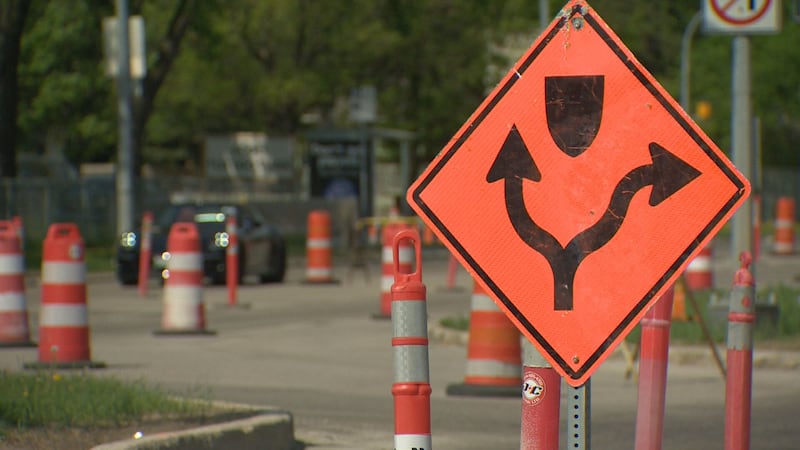
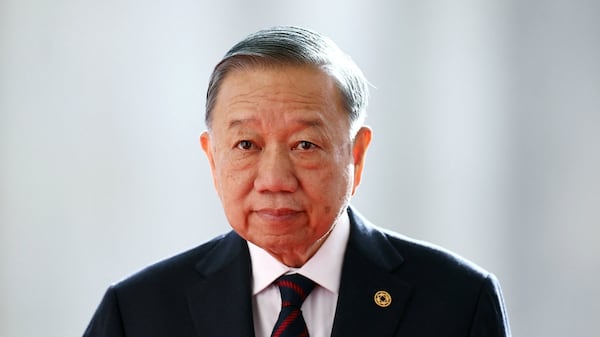
Prime Minister Mark Carney says he plans to address safety issues on highways 11 and 17 with Ontario Premier Doug Ford, as well as highway modernization. Speaking on Thursday at a Thunder Bay news conference, Carney was asked about the federal government’s “appetite” for working with the Ford government to expand or twin the highway system in the north. “There are structural issues that are there,” Carney said. Addressing northern Ontario’s highway needs must be a “priority for the province” and the federal government, he added. “I know it’s a priority for your representatives in the federal government because they bring it up with me,” Carney said. He says he plans to raise the issue with Ford about twinning, expanding and modernizing northern highways. “We have a lot to work on together.” In January, Dave Plourde, the president of the Federation of Northern Ontario Municipalities, wrote the prime minister following a meeting with his team. “People are dying on these highways,” Plourde wrote. “Families, truck drivers and first responders face unacceptable risk every day on corridors that carry more than $200 million in goods daily, serve as the primary access route to the Ring of Fire, and are critical infrastructure for national defence, emergency response, and continental supply chains.” While the federal government has said it’s willing to pay 50 per cent of the cost to modernize the highway, the province wants a firmer commitment. “The province has indicated hesitation to proceed without a clear, public federal commitment,” the letter said. Needs to be an equal partner “In short, Ontario needs to hear plainly and publicly that Ottawa is ready to be an equal partner.” Plourde told CTV News Thursday afternoon that the traffic on northern Ontario highways has fundamentally changed. “We have 10,000 transport trucks that go through our community every day,” he said. “Certainly, 20 years ago that wasn’t the case.” When either of the two major highways is closed for multiple days in a row, it costs the mining sector “$10 million a day.” “It’s what gets everything from the east to the west and the west to the east,” Plourde said. “Without that artery, there are businesses that just don’t function.” From Jan. 1 to Sept. 1, 30 people have died in collisions on highways 11 and 17 in northeastern Ontario, bringing fatalities close to the total for all of 2025. Tragedy for families “Each of these accidents is a tragedy for the families, friends and the communities,” Carney said. “This has been going on far too long.” In a statement to CTV News, the Ontario Ministry of Transportation said it has spent more than $600 million to build and repair northern roads, bridges and highways, including the Highway 11/17 corridor. Work on the 2+1 highway pilot project north of North Bay is underway. The 2+1 pilot project is set in two places on Highway 11; from Sand Dam Road to Ellesmere Road and from Highway 64 north to Jumping Caribou Lake Road. The particular highway model is used in other jurisdictions around the world and is often considered more cost-efficient than twinning a highway. The design involves a three-lane configuration with a median barrier, turnarounds and signs. It will give drivers more chances to pass without widening the highway to four lanes. Officials have said in the past that said studies have proven these types of roads have reduced fatality rates from 55 to 80 per cent, while improving travel times. This is just one highway improvement project that Plourde notes is needed, along with twinning where applicable. “We could probably plan this to be a 20-year project, but we have to start now,” he said.