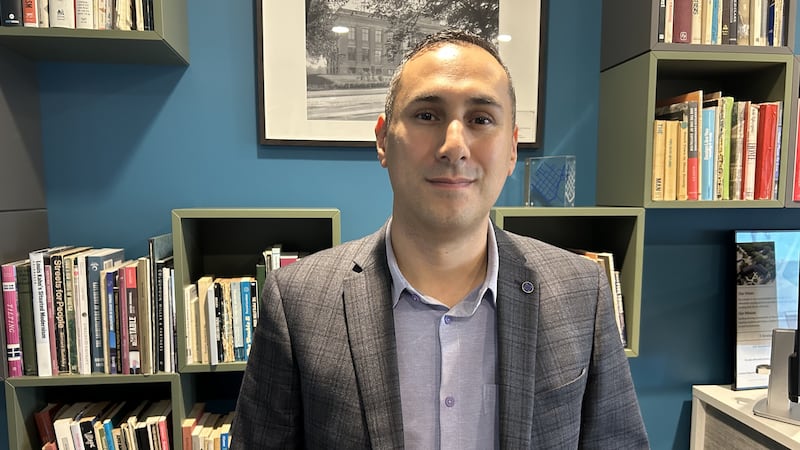
A recovering academic turned author is travelling across Canada with a simple yet countercultural message for companies and their staff: stop chasing perfection and start focusing on being a little better each day. Stephen de Groot, who has worked with Greater Sudbury companies across mining, medicine, health and human sciences, has distilled decades of research into a new book, Getting to Better, which proposes a human-centred, values-driven, strengths-based approach to growth. A better model De Groot’s said his journey to this new model was born from a persistent frustration with established theories and after years of studying various models in human performance, development and growth, he found they consistently failed to deliver on their promises in real-world settings. “They didn’t apply the same way as they did in theory,” he said. “My whole life has been chasing how do we make this stuff better. How do we get to better, and it’s been 30 years in the making, 15 years in the validating and five in the writing.” This extensive process has culminated in the creation of the CORE Algorithm, a model designed to make complex human behaviour simple and actionable, intended to help leaders in all walks of life – from managers and CEOs to parents and teachers – elevate their potential and the potential of others. Building on strengths Rather than focusing on deficits, de Groot’s approach emphasizes identifying and building upon existing strengths to address areas for improvement. This philosophy guides his work as he speaks with organizations across the country, offering an alternative to the often-critical feedback loop many employees experience. “I think we hear that we’re not doing well enough,” he told CTV News. “You’re not doing, you’re not doing, this is where you need to correct it. I just show up and say okay, let’s look at the things you are already doing well and start from there. Look at the gaps and start filling in from there.” These gaps, de Groot said, often involve crucial areas like engagement, performance, development and learning how to harness human capacity rather than curtailing it. This approach is particularly relevant given the current climate of widespread professional exhaustion. Perpetual destination of ‘better’ When asked for advice on how everyday people can apply his philosophy, de Groot offered a fundamental reframing of success that rejects the pursuit of an unattainable ideal. “This idea of perfect … best. You can never be your best. You can do your best, try your best, but being your best is like you can’t do that. Being a little better is possible.” De Groot discovered that by focusing on incremental improvements, he was able to progress more rapidly than he had thought possible. This shift in perspective reframes the goal as a continuous journey rather than a fixed endpoint. “Better is always better than the last place. So why wouldn’t we want to keep moving there as a perpetual destination?” The author was in Sudbury last month to present his ideas on behalf of Spark Employment Services, continuing his mission to help individuals and organizations get to better.