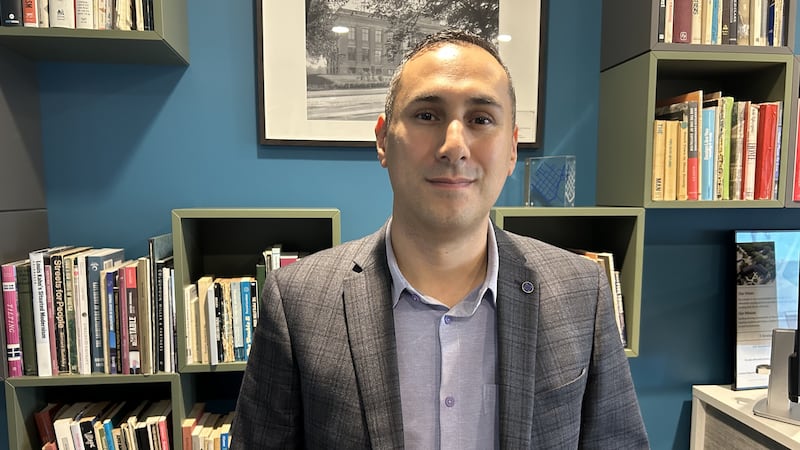
A new policy briefing is making the case that recent population growth in northern Ontario is a direct result of targeted immigration programs, urging the federal government to make those temporary pathways a permanent fixture. The briefing from the Northern Policy Institute, titled ‘Don’t Stop Now,’ analyzes the impact of federal and provincial efforts designed to steer newcomers away from Canada’s largest urban centres and into smaller, more remote communities. The institute argues the data shows these strategies are not just working, but are essential for the region’s economic survival. The numbers clearly demonstrate that community-based immigration, driven by local labour market needs, must become a permanent option for northern Ontario. Charles Cirtwill, Founding President and CEO of the Northern Policy Institute, pointed to the unequivocal success of recent pilots. “I think the numbers are pretty clear that, that the message has to be that the promise that was made to northern Ontario, back five years ago, is that the, the, community based immigration that’s driven by local labour markets has to be made a permanent option for northern Ontario,” said Cirtwill. He emphasized that while the previous initiatives worked, the current replacement programs are too limited in scope to drive sustained growth. “You know, the Rural Northern Immigration Pilot clearly worked. It saw growth in population across the board in northern Ontario. We now have two new pilots in place, but again, they’re temporary, and they’re small,” Cirtwill said. “The regulations limit the size of those programs to 2750 principal applicants nationwide. So, that we have to share that 2,750 with everybody across the country.” Sudbury sees significant gains through new pilots The City of Greater Sudbury is already seeing tangible results from the newest iterations of these programs. In 2025 alone, the city supported 551 principal applicants through the Rural Community Immigration Pilot and Francophone Community Immigration Pilot. When including accompanying family members, that support translates to a total of 1,082 new individuals joining the community. Meredith Armstrong, Director of Economic Development for Greater Sudbury, noted that these programs are not experimental; they are modelled on a proven formula. The hope is that federal policymakers will recognize their value and grant them the same permanency as their Atlantic Canadian predecessor. “They’re modelled after an approach used in Atlantic Canada that was super successful and actually made permanent,” said Armstrong. “So, our hope is that the federal government will recognize the success of these streams for areas that are outside of our, you know, Montreal, Toronto, Vancouver metropolitan areas and make them a permanent pathway for immigration in the future.” Priority sectors identified for 2026 applicants As the city moves forward with the 2026 cycle of the programs, it has announced the key economic sectors that will be prioritized for immigration candidates. According to Armstrong, the list reflects the foundational needs of any growing community, with a noticeable emphasis on essential services and skilled trades. “I don’t think anyone would be surprised to hear that health and trades are important, for the rural community,” Armstrong said. She detailed the specific sectors targeted under the RCIP, which include health, trades, transport, mining, applied science, government, education and social work. A new addition for 2026 reflects the evolving needs of local businesses. “RCIP, as we call it, the key sectors this year, health trades and transport, mining, applied science, government education and social work,” said Armstrong. “New in 2026, we’ve added business finance and administration.” The Francophone stream also has its own tailored list of priority sectors, designed to bolster both the region’s cultural fabric and its workforce. “In the francophone stream, business finance and admin, health and education, with a special focus on early childhood education, social work, trades and arts and culture,” Armstrong said. She emphasized that these designations were not made in a vacuum but, were the result of extensive collaboration. The priority sectors are based on “a lot of really thoughtful interaction with Immigration Canada, which is the oversight ministry on the program, as well as work with employers, and candidates coming through the door.” Employers and prospective immigrants seeking more details on the RCIP and FCIP programs can find application information and sector-specific guides on the city’s economic development website, investsudbury.ca.