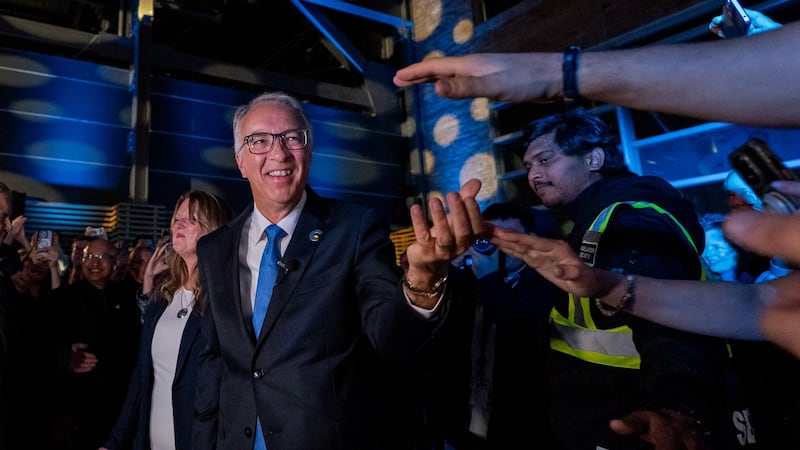
Community organizations in Sudbury are pushing back against a motion from the Greater Sudbury Police Service Board that would ask the province to allow involuntary treatment for people struggling with addiction, mental health issues, and homelessness. Instead, they are calling on the board to withdraw the request and invest further in evidence-based harm reduction. Evie Ali, the co-founder and executive director of the Go-Give Project, said the current system is already unable to meet the needs of those seeking help voluntarily. “The systems are already overloaded, and there’s major gaps within the care between the health care system, the judicial system, as well as the recovery-focused portion of that piece,” Ali said. “We’re really advocating for solutions that will help those that want to help first, before we ever consider providing any kind of involuntary anything to anybody else.” Ali and other support organizations maintain that the real solution lies in long-term housing and adequately funded voluntary supports. “It really just comes down to like the province and the federal government stepping up and saying, like, okay, we need to resolve this housing crisis yesterday,” Ali said. “We’ve spent years upon years, all of us as advocates, advocating for the supports that we need and the supports needed have not changed and, you know, implying and applying different approaches to kind of negate that is not going to create success for any community.” Mayor seeks provincial review of Mental Health Act Greater Sudbury Mayor Paul Lefebvre has taken a different position, arguing that the status quo is neither compassionate nor safe. He recently joined other Ontario Big City Mayors in calling on the province to do more, including a review of the Mental Health Act to allow for intervention in cases where individuals are unable to make decisions for themselves. Lefebvre said the mayors spoke about housing and supports. “It’s unanimous across the municipalities that we want the province to step to do more with respect to the housing opportunities for the ones that would want the help, and the ones that are not well enough to decide on their own.” he said. In a press release, Lefebvre framed the request as a humane response to a deteriorating situation. “This is not about criminalizing people who are struggling. It is about recognizing that sometimes leaving someone on the street is neither compassionate nor safe,” the mayor said. He expressed frustration with the cycle of emergency responses that repeatedly fails to produce lasting change. “I’m just tired, and I think our community is tired of saying it’s okay that they overdose, that paramedics come in, police come in, go to the emerge and then they come back up on our streets,” said Lefebvre. “I just don’t think that’s humane. It is not humane to leave them in that state.” MP describes crisis as nonpartisan but offers no quick fix Jim Bélanger, the Conservative MP for Sudbury East—Manitoulin—Nickel Belt, described the matter as beyond partisan politics, while cautioning against relying solely on increased funding. “It’s a nonpartisan issue,” Bélanger said, adding that simply throwing money at the problem amounts to a band-aid solution. “We have to find solutions to make them get out of their bad habits and be a good, productive person in society … I think that will help clean up the downtown and revitalize downtown Sudbury.” Bélanger acknowledged that he does not have a single answer to the complex crisis, but said he is willing to work with all levels of government, regardless of party affiliation, to make progress. Evidence and experience diverge on forced treatment Ali rejected the idea that involuntary measures would improve outcomes, pointing to research that suggests the opposite effect. She said evidence points to it increasing death rates and lowering success rates. Lefebvre, however, said the debate among Ontario Big City Mayors has been ongoing for two years, and the worsening conditions have brought them to a consensus they had not reached before. “This is the first time that it’s unanimous because the people are struggling and are struggling. And we’re just saying to ask the province, can you look at the Mental Health Act, see what we can do to help these individuals?” he said. Lefebvre acknowledged that not everyone shares his view, but stood by his call for provincial intervention. “I understand where they’re coming from, that they feel that maybe there’s another way. But I think we’ve tried other ways and they failed.”