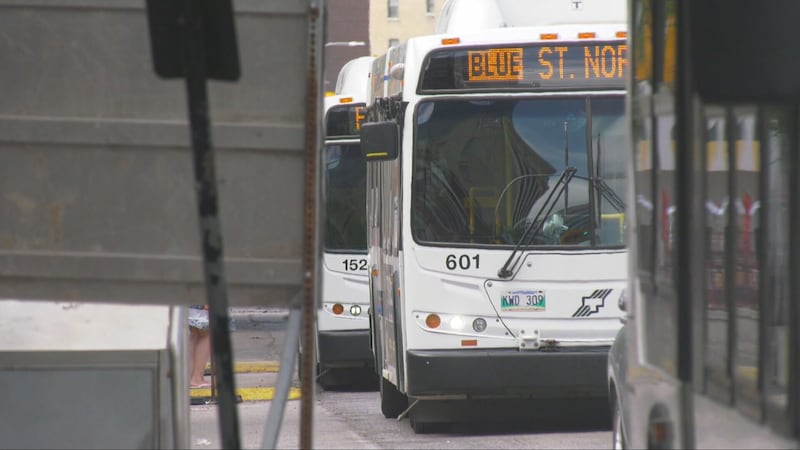
Regina executive committee discussed the success and challenges from its fare-free transit pilot project for some high school students in the city, with the possibility of expansion, in addition to its charter and paratransit service rates. The fare-free transit program allowed students from F.W. Johnson Collegiate to use the city’s transit services for free from Sept. 2 to Dec. 31, 2025. Although the cost to run the program was $49,000 – resulting a lost of revenue for the city due to the free passes and administrative expenses – delegates asked the committee to consider expanding the program to other schools in Regina. “Lowering monthly costs and expenses for any student or any family would help them with all the other pressures that they have in their lives,” said Sarah Cummings Truszkowski, a visual arts teacher at Regina Public Schools, at Wednesday’s meeting. “As we know, rent is extremely high, food prices are extremely high ... A reduction in paying for bus tickets would really help relieve stress, improve success at school and lifelong success, and just really help our students and our children in Regina.” Administration advised the committee the program would be $2.26 million in operating costs and $16.8 million in capital costs if implemented on a permanent basis to all high school students in the city – resulting in a $2.06 million in lost revenue. Ward 8 Coun. Shanon Zachidniak presented the idea of potentially opening up the project to a handful of other schools in the city instead of all. “One of the submissions from Lawrence Neufeld notes that young people and their parents shouldn’t have to choose between using transit and paying for food or rent. I hope we can all agree that that is true,” she said. “This is where, in my opinion, it merits consideration of what we might be able to do to continue on exploring these options.” Another delegate, Dylan Morin, also showed his support for the fare free transit by encouraging committee members to visit their local schools and ask students what the benefits of the program are. The city also saw an increase of transit ridership during the three-months of the program, which was projected. “There’s been some success around ridership, but we definitely have to take that in consideration with all the other budget considerations that we have,” Mayor Chad Bachynski told reporters after the meeting. “Knowing that [for us to] start expanding, we’re going to be getting into more staff required, more buses required so there’s a true capital investment. I think it would be important for us to take the time to make a proper plan.” He added reaching out to the provincial government for a partnership would also be an option to explore. The executive committee unanimously approved the project’s report which will be brought forward for final approval at Regina city council’s meeting on June 3. At that meeting, councillors are expected to discuss the future of the program. Changes to charter, paratransit service rates At Wednesday’s meeting, executive committee voted 10 to 1 in favour of approving changes to The Regina Transit Fare Bylaw, 2009, which looks after the hourly operations and maintenance costs for the city’s charter services, paratransit charter service rates, as well as U-passes for U of R students. Ward 5 Coun. Sarah Turnbull voted against the motion due to the city’s Accessibility Advisory Committee (AAC) not being included in the recommendation to change the transit fares. “In our strategic plan it is one of our core values, which would be to do that and by not engaging, by not looking at the bigger picture, or even asking the provincial and accessibility plan, I can’t,” Turnbull told the committee prior to voting. “If we’re not going to go take the step to see what the impact is, how can I support it?” The city clerk pointed out that advisory committees’ roles are to provide feedback and engagement, but ultimately Regina city council finalizes any changes. Final approval of the changes will be brought forward at the next Regina city council meeting on June 3.