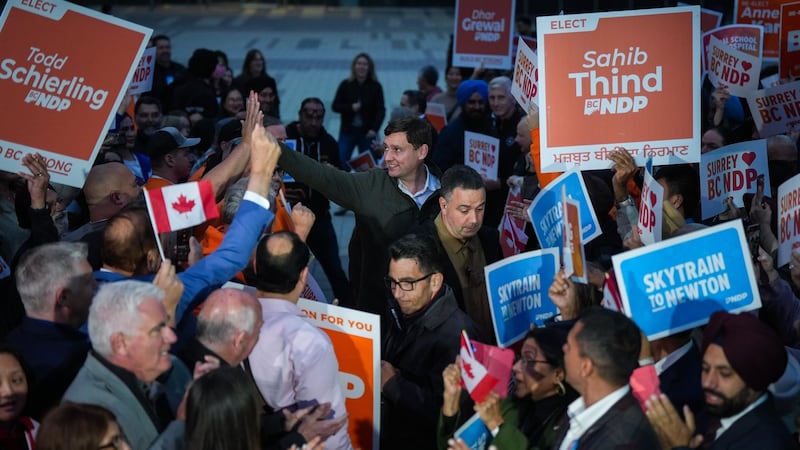
A majority of voters marked “yes” on both plebiscite questions included in the ballot in Vancouver’s election last weekend. On the first question, 137,178 people voted in favour of the city “strengthening its laws to forbid open-air drug use,” compared to 62,880 who voted no. As for the second question—on whether the city should “formally ask” the B.C. government to convert parts of the current St. Paul’s Hospital building or a similar site into a secure involuntary care facility after the hospital moves to its new location—135,509 voted in favour, while 63,722 voted no. A total of 207,489 plebiscite ballots were cast, according to the City of Vancouver. The plebiscite was introduced in August by outgoing mayor Ken Sim and it became a key message in his campaign. At the time, Sim said it was about re-establishing social norms and expectations in public spaces. The estimated cost to add the questions to the ballot was between $400,000 and $550,000 as per a memo from Jason Twa, the city clerk. Prior to beating out Sim for the city’s top job, mayor-elect Pete Fry called the initiative political theatre. ‘A priority for me’ Now that the results are in, Fry said his party is already committed to addressing the issues raised in the plebiscite, and didn’t believe there was a need to spend hundreds of thousands of dollars to poll Vancouverites. “It is certainly a temperature check,” he said. “I am personally committed to taking an approach to open air drug use. I am very committed to making our streets safer.” Fry said his plans include reversing the ban on net new supportive housing, green-lighting locations for overdose prevention sites with regulations, and introducing a Community Response Outreach Workers Team to respond to non-emergency calls regarding homelessness, public intoxication, and mental health crises. “They will see a tangible difference, because that is the intention, and the first question to address folks who are unwell and unhoused on our streets,” he said. “That is a priority for me.” As for the second question, Fry noted the province has already committed to providing 90 secure mental health beds at the new St. Paul’s Hospital, which can be used for both voluntary and involuntary care. Constructing has also begun on a new detox and secure treatment facility at First Avenue and Clark Drive. Council working across party lines ABC Coun. Mike Klassen said he wants to work together with council to find a solution. “People are struggling with drug use and using drugs outdoors—but I think that the general public is very much getting frustrated by it,” he said. “So, I think it’s important the council talks about it and really states their position and how we deal with it.” Both Fry and Klassen emphasized that whoever forms the next provincial government will be a crucial partner when it comes to investmenting in mental health and supportive housing.