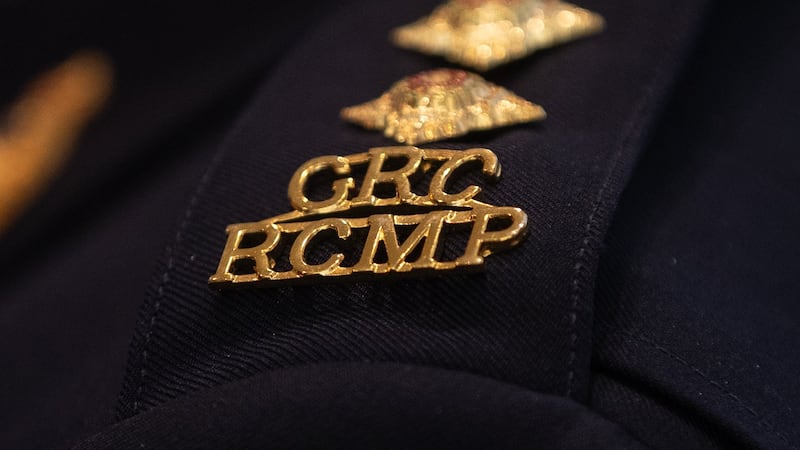
Warning: Graphic content Editor’s note: If you or anyone you know is struggling with mental health, there are a number of ways to get help, including by calling or texting the Suicide Crisis Helpline at 988. A list of local crisis centres is also available here. The death of an Indigenous man who hanged himself in the cells at an RCMP detachment in northern B.C. could have been prevented, a watchdog investigation has found. The prisoner was found unresponsive—in a noose he made using a pair of tube socks—on the night of Sept. 4, 2022, three days after he was arrested in connection with a home invasion in Smithers. The suspect had not been visited by staff for 13 hours, despite RCMP policy requiring physical checks every 15 minutes, according to a report released by the Independent Investigations Office this week. “There were a number of failures in the cell block operations at the Smithers RCMP detachment,” wrote chief civilian director Jessica Berglund, in the report. “Further, the evidence indicates that no action had been taken by senior officers in RCMP management to correct longstanding failures to follow policy with respect to the safeguarding of prisoners.” Timeline of events The suspect had been taken into custody on Sept. 1. According to the watchdog, he was held at the Smithers detachment longer than usual because of the Labour Day long weekend. Investigators were told transport to a remand facility in Prince George was only available on a fixed schedule, and that the earliest opportunity was on Sept. 6—the Tuesday after the holiday. The last time staff conducted a physical check on the prisoner was at 7:57 a.m. on the day of his death, as the officer on guard duty was ending his shift. A civilian guard took over at 8 a.m., and was replaced by another civilian guard at 4 p.m. Apart from delivering a meal through an opening in the cell door at around 5:51 p.m., that guard’s monitoring of the prisoner was “restricted to sitting at his guard station” where there were screens displaying surveillance video from inside the cells, according to the IIO’s report. The watchdog noted the surveillance video showed, for “a significant time,” that the suspect had taken off his tube socks—but no action was taken, despite policy also dictating any item of clothing a prisoner removes must be taken out of their cell. Between 6:54 p.m. and 7:31 p.m., cameras captured the prisoner reaching through the food slot on the door, where he attached his makeshift noose before hanging himself. An officer opened the cell and found him at 9 p.m., then tried, unsuccessfully, to save his life by administering CPR. According to the IIO, for most of the preceding two hours, the civilian guard on duty had been “either sitting in front of the monitoring screens with his feet up on the counter, appearing to be nodding in and out of sleep,” or “turned away from the screens, apparently browsing on a computer.” This was despite the civilian guard on the earlier shift recalling he had delivered a warning to his replacement that the prisoner’s “behaviour had changed and that he needed to be watched carefully,” the IIO found. Lax approach to policy According to the report, the evening guard was aware of the RCMP’s requirement to perform routine physical checks, but told investigators it had not been followed at the Smithers detachment for decades: “Checking on the prisoners could lead to ‘problems,’ he said, like a prisoner asking for something.” The guard had been working there for about 25 years at that point, and was the employee in charge of training new hires. He also said he felt he was being scapegoated for what happened. The guard told the IIO there had been a review of cell operations in March 2022, months before the suspect’s death, and that he had been commended at that time for running “a tight ship.” In the IIO’s report, Berglund acknowledged there was evidence “his failures had been condoned for some time by detachment officers, who also appear to have been negligent in other aspects of prisoner care.” The watchdog noted there were six incidents in which detainees died in B.C. police cells between 2019 and 2023—including one at the Williams Lake RCMP detachment the month after the death in Smithers—and nine others in which prisoners were transported from cells to hospital and died there. Seven of the 15 detainees who died were Indigenous. Despite the failures identified at the Smithers RCMP, Berglund found no grounds for criminal charges against anyone involved, including negligence causing death. “For that offence to be proven, the actions of an individual or organization must fail to meet the required standard of care in a marked and substantial way, such that the actions demonstrate a wanton and reckless disregard for human life, and the negligence must have caused the victim’s death,” Berglund wrote. “The officers’ actions in this case do not meet that test.” The year after the incident, the Smithers RCMP reported that staff had all read and agreed to the force’s policy for care of detainees, and that physical checks were being conducted and logged.