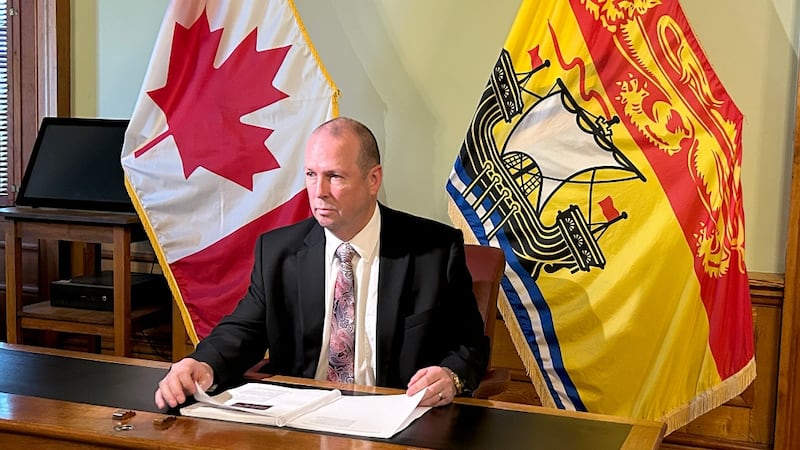
The four Chatham-Kent councillors who voted against the approval of a new multi-million-dollar wastewater recycling facility in Chatham want a do-over and are urging the public to raise concerns with a government agency before the submission window closes in a bid to pause the project’s progress. On Friday morning, Councillors Alysson Storey, Rhonda Jubenville, Amy Finn, and Michael Bondy held a media availability in a bid to urge the public to submit any concerns to the Environmental Registry of Ontario (ERO) by the June 4 deadline, as part of the project’s environmental regulatory process. “Basically, we just want to uncrack the egg, which seems pretty tough,” said Bondy in an interview with CTV News. At its April 27 regular meeting, Chatham-Kent council voted 14-4 in favour of a $160 million private-public partnership with Greenfield Global that would see a new anaerobic digester facility built at the Irwin Street Wastewater Recycling Treatment Plant at 175 Bloomfield Rd. to recycle wastewater and waste which would then be converted into natural gas and fertilizer. Chatham-Kent council approves waste-to-energy project despite concerns over public consultation – CTVNews The timing was meant to capitalize on an application window for up $25 million in Infrastructure Ontario financing. While Bondy stressed he’s not expressly against the project, as far as he and his fellow concerned councillors see it, the hefty figures have not been matched with a similarly robust public input process — believing many haven’t been made properly aware of the project or its potential impacts. “It’s big in New York City, but it’s really big in Chatham-Kent. You know, that’s big bucks, right?” Bondy questioned. “And it’s the whole impact; what does it do to benefit the lives of the citizens? Because it’s a lot of tax money. How’s my life going to be improved? Are the services for me going to be improved? No. In my opinion. I don’t think it’s a good idea.” The municipality expects its $16 million investment would yield a $123 million dividend over 30 years, with roughly $60 million in funding secured from upper levels of government before the April 27 meeting toward the project’s total cost. The project is also expected to generate new construction jobs, boost demand for construction supplies, and eventually employ, according to the municipality, 30 “well-paid full-time equivalent positions” once the plant begins expected operations at the end of 2028. The waste-to-energy project has been identified as a key initiative to meet climate change and waste management targets as identified under its Climate Emergency declaration and long-term Climate Action Plan. Volume discrepancy Bondy and the concerned councillors have also raised a new question about the facility’s size, claiming the application for approval to the province has nearly tripled the volume of organic waste to be treated from what council agreed in April. The council report shows approximately 370,000 wet tonnes of organic waste would be processed at the site; however, Bondy says the application calls for 900,000 wet tonnes of organic waste. “We’re not sure where that number came from, but that is a massive difference,” said Bondy. “It’s nearly triple the size — and this facility is within the city limits of Chatham. So, you know, there’s concerns.” The long-time councillor says he’s raised the concern with municipal administration and is awaiting a response. He believes there is still time, however little, to hit the brakes on the project, first endorsed by council in September 2021, to bring the public up to speed and seek their input. “Some people know that this is a recycling thing, but there’s not an understanding generally, across the opinion of the public,” said Bondy. “So, several of us on council think this should be revisited.” In it report to council on April 27, administration included a four-page document outlining some of the public input received concerning the project. Among the public proponents was the Chatham-Kent Agricultural Advisory Committee, arguing the area’s farming sector stood to gain while also adding the facility would improve wastewater management.