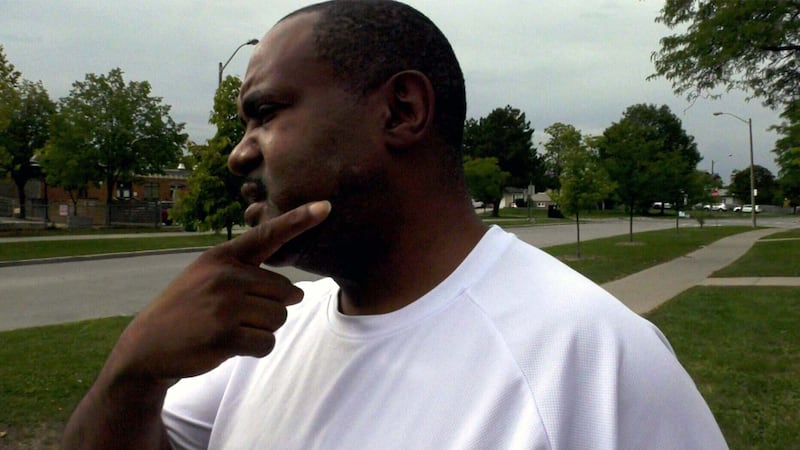
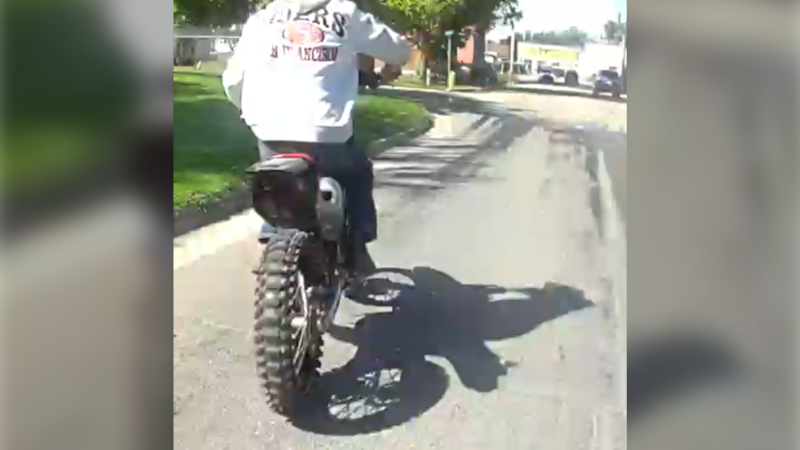
A former Toronto police officer turned crime analyst says bystander video of a fatal police shooting in Windsor shows officers responding in line with their training — while also underscoring how quickly situations like this can turn. Steve Ryan, who spent more than 30 years with the Toronto Police Service and now works as a CP24 crime analyst, reviewed cellphone video submitted to CTV News showing the March 18 police-involved shooting that left a 40-year-old man dead. “It’s a police officer’s worst nightmare,” Ryan said. “You talk to any officer that’s been involved in an officer-involved shooting. Once you discharge that first round, your life is never the same.” The Special Investigations Unit (SIU) is now probing the incident. According to the agency, Windsor police were responding to a reported robbery on Sandwich Street when officers located a man armed with a knife near Rankin Avenue and Wyandotte Street West. During the interaction, conducted energy weapons were deployed, followed by two officers discharging their firearms. The man was struck and later pronounced dead in hospital. Video captured by a nearby resident who has asked not to be identified appears to show officers approaching the man with their weapons drawn, repeatedly ordering him to drop the knife. The man can be heard refusing, before moving toward officers. That’s when you can hear gunshots. Ryan said, based on what he observed in that video, the officers’ actions appear consistent with how police in Ontario are trained to respond. “Everything that an officer is trained to do, they appeared to do,” he said. “Number one, you heard the commands. Drop the knife, drop the knife. You do that for a couple of reasons. You do that to instruct the individual who has that weapon as to what you want them to do, and you also create witnesses.” Police training in Canada, he said, allows officers to use lethal force if they are faced with an imminent threat of serious bodily harm or death. He pointed to what is commonly referred to as the “21-foot rule,” a concept taught in policing that highlights how quickly someone armed with an edged weapon can pose a deadly threat. “21 feet is the death zone,” he said. “If someone has an edge weapon within 21 feet, that can be fatal to a police officer.” Ryan said that in those situations, officers are trained to shoot in order to stop a threat — not to wound. “They don’t discharge the firearm to wound. They shoot for centre mass, the chest. That’s where your major organs are. And you shoot to stop the threat,” he said. “And how many shots do you fire? You fire enough shots until that threat stops.” He added that, based on the footage he reviewed, “that appears to have what has taken place in this video.” At the same time, Ryan cautioned that any conclusions about whether the use of force was justified will ultimately be determined by investigators. The SIU, a civilian agency, is mandated to investigate any incident in Ontario involving police where there is a death, serious injury, or the discharge of a firearm at a person. The agency has assigned three investigators and two forensic investigators to the case. Ryan said video evidence like this can play a critical role in those investigations — helping corroborate what officers and witnesses report. “Police officers welcome all the video that’s out there,” he said. “In this particular case, the police can articulate as best as they can as to what they all saw individually. And this video certainly will corroborate all of those statements, I’m sure.” He also noted that the footage raises broader questions about the circumstances leading up to the encounter. “I thought watching the video that this person was experiencing some sort of crisis, which makes this type of confrontation or this type of a radio call even that much more difficult,” Ryan said. He added that it is not uncommon for conducted energy weapons, such as Tasers, to be less effective in those situations. As the SIU investigation continues, Ryan said the focus will not only be on the final moments captured on video — but on everything that led up to them. “Oftentimes you need to wonder — if somebody is in crisis, how do they get to that situation?” he said. “What failed them?”