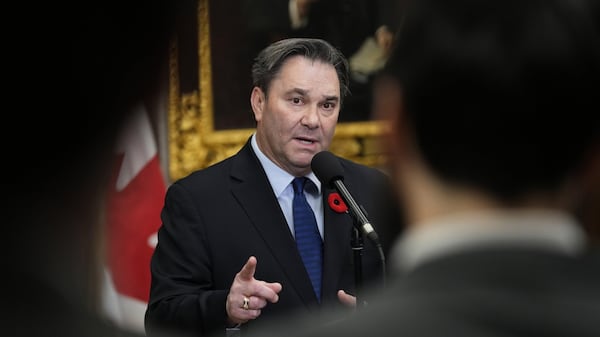
In the 12 months since Calgary implemented its controversial blanket rezoning or upzoning bylaw, officials say it has added housing supply, choice, and improved affordability. Since council approval in May 2024, it has faced pushback from residents, and even legal action. Yet, Calgary is breaking records for housing starts, surpassing all other Canadian cities. “All through the housing continuum, we have seen increases. And that’s really the goal of our strategy. Blanket rezoning provides lower density forms, the missing middle as it’s often called,” said Reid Hendry, chief housing officer for the City of Calgary. He says in some cases, where one property once sat, it could be torn down and developed into four units plus four secondary suites for a total of eight units. Hendry says a variety of new homes are among the 492 building permits issued under blanket rezoning. However, the majority of building permits issued continues to be single detached or semi-detached, at 77 per cent. This applies to low-density districts. With the land-use process eliminated, Hendry says new homes are being built four to six months faster. “And that is real money,” he added, “that’s being saved by the developers and the home builders that is (ultimately) being saved by Calgarians in the home purchase price.” The city’s chief planner says community input on development permits has not slowed down since the new bylaw took effect. “Calgarians’ needs have changed over time and by providing varied choice it allows us to live and stay in our neighbourhoods from when we start as students all the way to when we can retire,” said Teresa Goldstein, director of community planning. Changing communities However, opponents of the blanket rezoning bylaw say it is not adding affordable homes in the right areas. “It’s putting pressure on infrastructure, water, garbage collection, eliminating tree canopy,” said Robert Lehodey, from and advocacy group called Calgarians for Thoughtful Growth. “More importantly, it’s changing the nature of those communities from what they once were,” he added. He’s part of a large group that has taken the city to court over this, which is now in the appeal process. Lehodey said the city is not fully utilizing empty green fields, isn’t building along transit lines, and should consider densification in vacant commercial areas. He hopes that this becomes an election issue. “I would like to see whoever is elected as mayor and councillor to take a good long hard look at whether or not its truly creating housing affordable housing and solving a housing crisis.” Calgarians for Thoughtful Growth recently conducted a survey, asking mayoral candidates who would repeal blanket rezoning and who would not. Jeff Davison and Jeromy Farkas -- both former councillors and both taking a second run for the mayor’s office -- said they would repeal the bylaw. Sitting councillor Sonya Sharp responded she would repeal it, if elected as mayor. Lehodey said neither Jyoti Gondek nor Brian Thiessen responded to the survey. In May 2024, the new bylaw passed with eight councillors and the sitting mayor in favour. Balancing needs Both Goldstein and Hendry say they recognized the discomfort of change and opposition to the bylaw. “At the same time, we need to balance what we’re seeing on the ground. We’re seeing Calgarians every day that are struggling to afford housing,” said Hendry. He later added that housing on average now costs more than five times household income, when 20 years ago, the ratio was three times family income. The 2023 Housing Needs Assessment found that one out of five Calgarians struggle to afford housing. Goldstein says that blanket rezoning was meant to spread out development possibilities throughout the city. “We’re not seeing growth only happen in very specific areas but it allows us to grow incrementally. Slow growth, rather than it happening in one specific area.” She added blanket rezoning is just one tool out of many the city is using to reach its 2030 target.