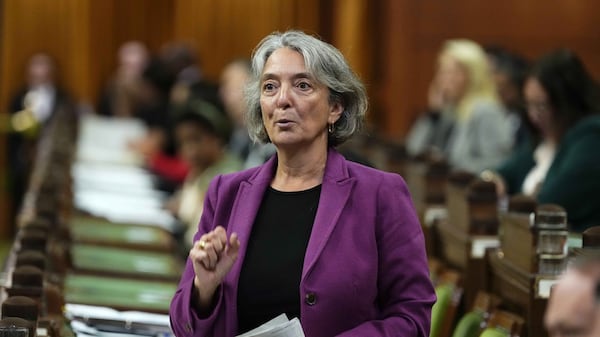
A final report on a $9-million pilot project looking to improve safety in Calgary’s transit system has arrived, with results showing little overall change to how safe riders felt while taking the CTrain. Launched by the City of Calgary in January, the nine-month project saw 33 more transit peace officers hired and posted to 10 pilot stations. Riders were then surveyed on how safe they felt at CTrain stations in the spring and fall. Surveys conducted in the fall found 73 per cent of riders felt safe, barely changed from polling in the spring that revealed 72 per cent felt safe. Across the 10 pilot stations and six comparison stations, more riders said they felt “very safe.” But the overall share of passengers feeling safe stayed almost unchanged, and there was little movement in the proportions feeling unsafe or neutral. Ward 7 Coun. Myke Atkinson questioned whether the pilot delivered what council intended. “I’m not looking to make people who already feel safe feel more safe at stations,” Atkinson said. “I’m trying to make the people who feel unsafe at stations or are neutral at stations at least to be shifting along that (safety) spectrum.” Atkinson said the results showed important differences between groups of transit users that needed closer examination, particularly for women. “The results from this pilot and the $9 million spent on transit officers did not lead to an increase in women feeling a perceived sense of safety on transit,” he said. Ward 4 Coun. DJ Kelly also has concerns about the difference between how men and women experience Calgary Transit. “Men and women’s perceptions of safety on transit are vastly different,” he said, adding he’d like to see council do more to help women feel safe when using transit. The pilot added security guards to 10 CTrain stations. A city report on the program says it first used contracted guards but later replaced them in June with 33 transit peace officers with full enforcement authority. The stations were: The city didn’t survey riders before the pilot began. As a result, pilot surveys couldn’t establish whether riders felt safer than before the extra security arrived. The report also says the findings cannot establish whether the additional security caused changes in crime, incidents or ridership. Leger conducted 4,870 rider interviews over three rounds at the 10 pilot stations and six comparison stations. Riders were interviewed on weekdays between 4 and 8 p.m., when the extra security was deployed. A separate Leger phone survey of 501 Calgary adults found women were considerably less likely than men to feel safe using transit — 43 per cent compared with 67 per cent. That survey included people who rarely or never use transit. Transit rider Anya Gota said she has noticed more officers checking tickets but continues to see behaviour that makes women uncomfortable. “I haven’t noticed a lot of quality control. I still see a lot of harassment on the trains, especially towards women from men,” Gota said. She described recently seeing a man blowing kisses at a female passenger who appeared visibly uncomfortable. “I think it has something to do with women being more vulnerable to such situations,” she said. Ursula Canning, who rides the Red Line, says she hasn’t noticed as many officers at Chinook station as she would like and continues to see people using drugs or drinking around transit stations. “I keep a 360 look. I keep my back to something. I exercise caution because you have to,” Canning said. “At one time, you didn’t have to look behind you or around you all the time. Now you do.” The clearest difference at pilot stations was how often riders noticed security personnel, with 61 per cent of those surveyed across three rounds saying they noticed more security guards, compared with 31 per cent at comparison stations. Some measures improved. Across all surveyed stations, the share of riders who felt “very safe” rose from 27 per cent in spring to 34 per cent in fall. Transit riders surveyed were less likely to report seeing disorder in the previous 30 days, with that figure falling from 76 per cent in spring to 70 per cent in fall. They were also slightly more confident help would arrive promptly if needed, with 73 per cent in the fall saying they thought it would come, up from 67 per cent in spring. Still, disorder remained common. Riders at pilot stations reported feeling less safe than those at comparison stations. Researchers cautioned pilot stations were selected partly because of greater need, and conditions differed between locations. City administration says the added security reassured riders, but a visible presence alone cannot address broader safety concerns. It calls for an approach combining security, prevention, outreach and social supports. Atkinson said council needs more detailed information about how the pilot affected different groups before deciding where future safety spending should go. “We heard that they also gathered data on visible minorities, but unfortunately, we weren’t provided that with the information provided today,” he said. He also pointed to differences among younger riders and said the city needed to examine why improvements in overall survey results weren’t reflected across all demographic groups. A city committee voted to have administration return with a more detailed examination of the data in the first quarter of 2027. Marcia Gonder, the city’s chief of public vehicle standards, told the committee that 33 transit peace officers were hired during the pilot, earning $58 an hour. She says her department will ask council to keep them in the upcoming city budget. Kelly said council will have to consider whether continuing to fund those positions represents the best use of transit safety spending.