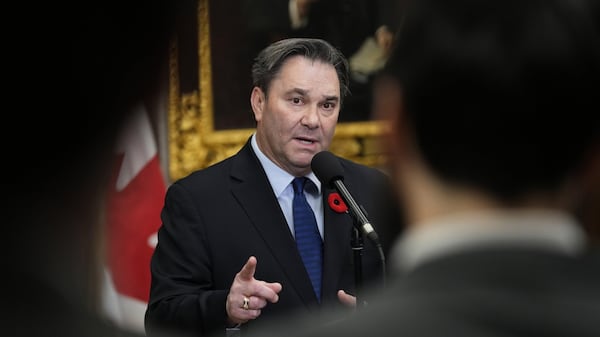
Following a chaotic 2025, new forecasts predict the country’s economy will continue its bounce back — and will even expand slightly — in 2026. That’s despite growing uncertainty south of the border, where international policy could once again greatly impact Canada. “All indications are 2026 is going to be a stronger year than 2025, but it’s all contingent on U.S. policy changes,” said Trevor Tombe, director of fiscal and economic policy at the University of Calgary. “So going into this year, be prepared for things to change in a big way, depending on what happens in the United States or to the global economy.” Albertan angle Commodity-focused provinces, like Alberta, could be especially prone to those swings. Deloitte’s latest economic outlook predicts the province’s GDP growth will slow slightly to 2.1 per cent in 2026. That’s chalked up to “trade uncertainty, weaker consumer spending and lower oil prices” weighing on momentum. Tombe believes recent American moves to capture resources in Venezuela will spell trouble in the future. Short term, the impacts will be noticeable, but he believes less so. “We are seeing energy prices reach levels that we haven’t seen since five years ago, and that’s going to be a potential drag for this province – and especially for our government’s finances,” Tombe said. “If you just look at the stock market prices of major oilsands producers based primarily here in Alberta, they’ve fallen quite a bit in the last couple days because there’s a realistic expectation that the longer-term future is a bit more challenging.” Deloitte’s report says, “despite these headwinds, the Trans Mountain Pipeline’s available capacity and export diversification support growth, with non-U.S. destinations now accounting for 48 per cent of TMX flows.” The provincial government has long insisted increasing exports will not only pad its bottom line but will aid economic growth — namely through job creation. It will be faced with a tough budget in late February as it grapples with those declining commodity prices. Canuck control Economists believe the national outlook should even somewhat in 2026 — especially in the third and fourth quarters. Last year’s issues were largely due to tariffs, but international conflicts and a federal election also led to some ups and downs. Deloitte’s report predicts spending and policy resilience will be key and would help consumers in the long run. “We think inflation is probably going to remain very close to the Bank of Canada’s two per cent target,” chief economist Dawn Desjardins told CTV News. “Against that backdrop, we think the bank will be able to maintain its policy rate at 2.25 per cent, and the lower rate, of course, does make borrowing more attractive.” Desjardins said she’ll also be watching closely as CUSMA negotiations start this spring. So too will those in the auto, steel and aluminum sectors. Together, they paid about 75 per cent of the tariffs the U.S. has collected from Canada.