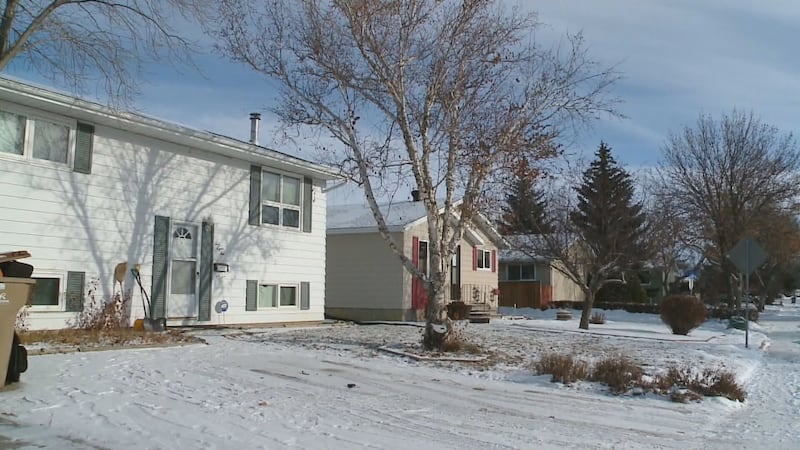
ESTERHAZY, Sask. — Natural earthquakes rarely occur across the Canadian prairies, but a small town in eastern Saskatchewan is somewhat of a hotspot for seismic activity. For decades, mining-related earthquakes have been recorded in Esterhazy, Sask., near the Manitoba border. Most recently, a 3.4 magnitude earthquake rattled the community Tuesday. “I heard of it happening, but never experienced it (until now),” resident Meme Koch told CTV News. “There was a loud rumbling sound, and then my whole house shook.” Natural Resources Canada (NRC) referred to the recent tremor as a “known mining-induced event.” “I would not say it is common, but seismicity in mining environments does occur,” said Rebecca Swinscoe, a research scientist with NRC. “It is typically associated with stress and strain redistribution with the mine.” Nearly 50 quakes since ‘85 NRC records show 49 earthquakes have been recorded in the region since 1985, including three last year. All of them were related to industry or mining operations. “Typically, we would see a lot of small events that go unfelt and unnoticed,” Swinscoe said. The Mosaic Company operates a nearby potash mine. According to the company, the recent earthquake occurred “far from current mining areas and presents no immediate safety concerns.” Mosaic said it continues to improve its understanding of the mine’s geological properties and plans to review seismic activity. People generally do not feel earthquakes below a magnitude of 2.0, according to Swinscoe. Even tremors around 2.5 in magnitude can often be mistaken for something else. NRC data from the last five years shows that Canadians have reportedly felt mining-induced earthquakes in B.C., Saskatchewan, Ontario, Quebec and New Brunswick. Alberta has also experienced similar quakes. “You can’t do anything underground without some risk of seismic activity,” said Maurice Dusseault, professor emeritus in engineering geology at the University of Waterloo. Every major mining operation has mitigation steps in place to control the risk, he added. “It is part of the design process and management process of a mine,” Dusseault said. “Most of the time, you do not have any concern with it.” According to Mosaic, the company engineers its facilities with seismic loading in mind. Not every mine produces noticeable tremors, according to Swinscoe. Seismicity depends on the type of mining operations and geological factors.