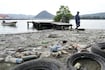
Alberta Health Services says it’s found cyanobacterial blooms or toxins in the waters of a lake in Lac Ste. Anne County about 59 kilometres northwest of Edmonton. Cyanobacteria are naturally occurring. Large growths of them are called blooms and can increase during warm weather. Cyanobacterial blooms, or blue-green algal blooms in this case, have been found in Matchayaw (Devil’s) Lake. Blooms can look blue-green, greenish-brown, brown, pink or red. They may look like scum, streaks, grass clippings, fuzz balls, paint or pea soup. They often smell musty or grassy. Nearby residents and visitors are asked to take the following precautions: People who ingest water with cyanobacteria or who touch a cyanobacterial bloom may get skin irritation, a rash, sore throat, sore red eyes, swollen lips, fever, nausea and vomiting or diarrhea. Symptoms appear within a few hours and should resolve on their own within a couple of days in humans, but children may be more vulnerable and pets could die from exposure. The advisory is in place for Matchayaw Lake until further notice, officials say, and may change as weather and wind conditions can move cyanobacterial blooms from one location in the lake to another.