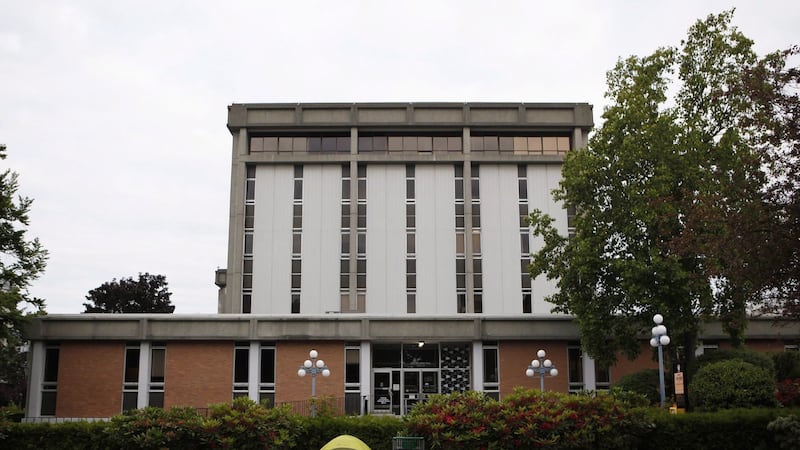
The City of Waterloo is introducing new standards designed to make public spaces more accessible by addressing barriers before buildings are constructed. The Facility Accessibility Design Standards establish consistent requirements for the planning, design, construction and renovation of city-owned buildings and outdoor spaces. The framework goes beyond minimum Ontario Building Code requirements where appropriate, with the goal of making facilities usable for people of all abilities. For Alyssa Clelland, who is blind, inconsistent designs can make navigating public spaces more difficult. “I can tell where the door is,” Clelland said while demonstrating how braille signage helps her navigate at city hall. But in the past, she has encountered challenges in other locations. “Because they are so inconsistent,” she added. Clelland is a member of the Grand River Accessibility Advisory Committee, which worked with the city to develop the new standards. In an updated washroom at Waterloo City Hall, guide strips help Clelland navigate her way. “I have to feel around the wall like this usually” she said, with her hand on the wall. “But because of these guide strips, I don’t have to do that.” Heather Liddycoat, director of facilities design and management services, said some city facilities were not accessible enough. “We were getting feedback from the community that they were having trouble accessing certain spaces,” Liddycoat said. The city also found its operations teams were spending considerable time retrofitting existing facilities to address accessibility issues. The new framework is intended to create a more consistent approach across municipal buildings, while reducing the need for costly modifications after construction. Amy Ross, the city’s accessibility advocate, said the standards encourage planners and builders to consider a range of features that can affect how people experience a facility. “Do our facilities have universal or gender neutral washrooms? Are there adult change tables? Are there ceiling track lifts?” Ross said. Ross, who uses a wheelchair, said accessibility also depends on smaller design choices that can affect people’s independence. “People love the inset garbage, because often when there’s a garbage can, it gets moved around the washroom and then that changes someone’s way of experiencing it,” she said. The standards were developed over three years with input from city staff, the city’s accessibility advocate and the Grand River Accessibility Advisory Committee. The framework is already helping shape projects across Waterloo, including plans for universal washrooms at Moses Springer Community Centre and RIM Park. Accessibility features have also been incorporated into designs for Albert McCormick Community Centre and the city’s new library and community space. The city said it has funding to implement accessibility upgrades across its facilities over the next decade, with additional support from federal and provincial grants.