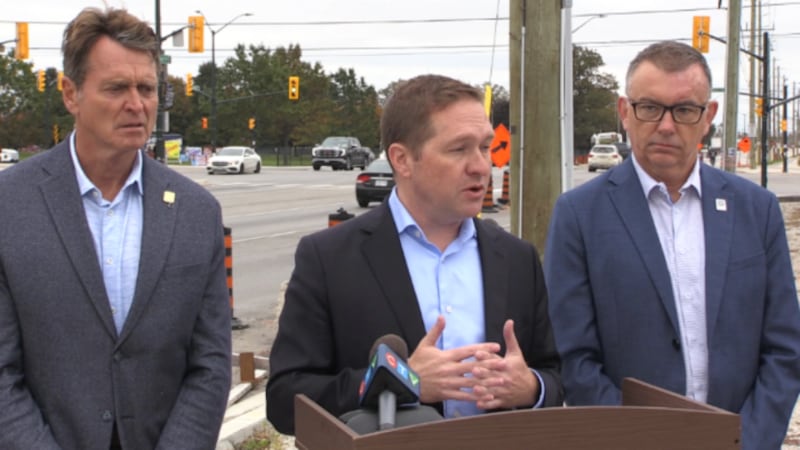
Ontario’s push to prioritize provincial and Canadian suppliers in public-sector spending is creating opportunities for local businesses, but construction industry representatives say the rules need to be clarified to ensure they work as intended. Sen. Sandra Pupatello joined the Windsor Construction Association and the Heavy Construction Association of Windsor on Thursday for a Buy Ontario information session aimed at helping construction and infrastructure companies understand the new procurement requirements and access government contracts. Provincial officials from Infrastructure Ontario and Supply Ontario were also expected to discuss procurement opportunities, supplier registration and recent policy changes. Pupatello said the goal is to give Ontario companies a better chance to supply the goods and materials used in public projects, while helping the province respond to broader economic challenges. “The intent behind the policy is that our local companies, local manufacturers, people who make the goods that go into construction,” she said. “If you’re in Ontario, you get a better opportunity to be in that supply chain, and that’s really important.” Pupatello said government procurement represents a significant opportunity for businesses, particularly in construction projects involving schools, universities, colleges, and hospitals. She said companies must do more work to demonstrate where the products and materials used in their projects originate, with Ontario products prioritized, followed by Canadian alternatives where applicable. The requirements can be complicated, she said, particularly when certain materials are not manufactured in Ontario or Canada. “The rules are pretty restrictive, and it can be very trying and it’s very new,” Pupatello explained. “So, I think a lot of people are still figuring it out.” Jim Lyons, executive director of the Windsor Construction Association, told CTV News that the industry has long relied on local suppliers, including companies providing aggregate and other materials used in construction. However, he said a new provincial directive that factors Ontario content into the evaluation of some tenders has raised concerns about how bids are assessed. “The directive is too ambiguous,” Lyons said. “They need to clarify some of the criteria so that, when the bids are coming in, they’re more apples to apples.” Lyons said contractors can interpret some requirements differently, potentially affecting how their bids are scored and which company ultimately wins a contract. He also questioned whether the system provides sufficient verification of claims about local content and whether there are consequences when those claims are inaccurate. Lyons said the scoring methodology could result in the public paying more for a project without receiving a corresponding benefit. He called on the province to reconsider a provision that can give a contractor’s bid an effective 10 per cent advantage in the scoring process, saying he hopes the construction industry will be exempted from that approach. Pupatello said the information session was intended to identify challenges and help the government understand how the policy is working in practice. “Our local companies, they’re pretty astute and very sophisticated, and they’re helping the government figure out how to make this work,” she said. The Ontario government says it spends more than $30 billion annually procuring goods and services. Its Buy Ontario rules require public-sector organizations to prioritize Ontario and Canadian goods and services, subject to applicable procurement requirements. Infrastructure Ontario’s June 2026 pipeline identifies 52 future capital repair projects in Southwestern Ontario, part of 132 projects across the province.