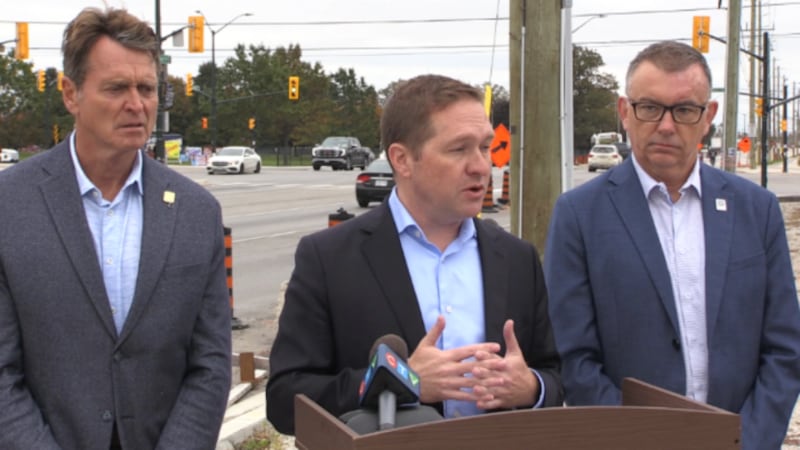
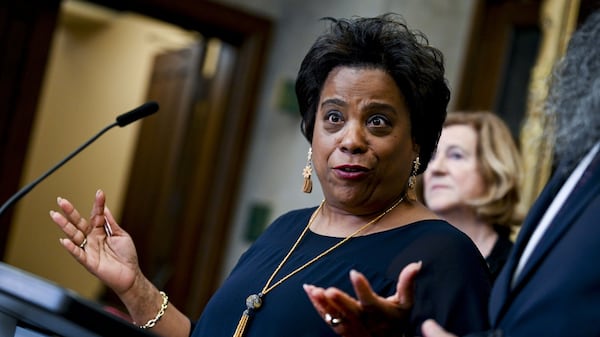
“Londoners are frustrated with construction, and so am I,” admitted incumbent mayoral candidate Josh Morgan at the start of a campaign event to unveil his plan to address the impacts of road construction. Morgan was flanked behind the podium by incumbent Ward 2 candidate Shawn Lewis and incumbent Ward 3 candidate Peter Cuddy as he detailed his plan. “When you think about on Highbury Avenue away from the houses, there’s no reason why we can’t contemplate doing some overnight construction in our city in a way that allows us to complete the necessary infrastructure, but do it more efficiently,” he said. Much of Morgan’s plan focusses on getting roadwork done faster. If re-elected Morgan committed to: Morgan says utilizing some funding from a project’s contingency as an incentive for firms to complete roadwork early is appropriate, “Using a bit of a carrot and stick approach. I think both are appropriate. It’s one of the ways that we could be more innovative and try something different. We spend our tax dollars (to) incentivize in a lot of different ways.” Mayoral candidate Susan Stevenson questions why Morgan’s solutions are coming years after it was first needed. “All those things sound great, but he’s been a leader on council for 12 years and we approved a half-a-billion dollar construction project with BRT (Bus Rapid Transit). We could have used this earlier,” Stevenson asserted. “We’ve tried overnight construction and paving on Wellington (Road). We’ve done some late night paving on Dundas (Street). It’s the novelty, not the norm right now,” Morgan explained. “What we’ve got to do is transition this into being the normal course of business now that we know it works.” But Stevenson is skeptical, “I don’t know why it’s taking an election and a need for him to be re-elected to get the changes that Londoners deserved years ago.” Morgan acknowledges similarities to a campaign announcement last month by council candidates Shawn Lewis and Steve Lehman to extend the length of time construction is permitted each day on certain road projects. “This is what happens when you collaborate on council. You listen to your colleagues, you listen to their ideas, and nobody has a monopoly on good ideas,” he added.