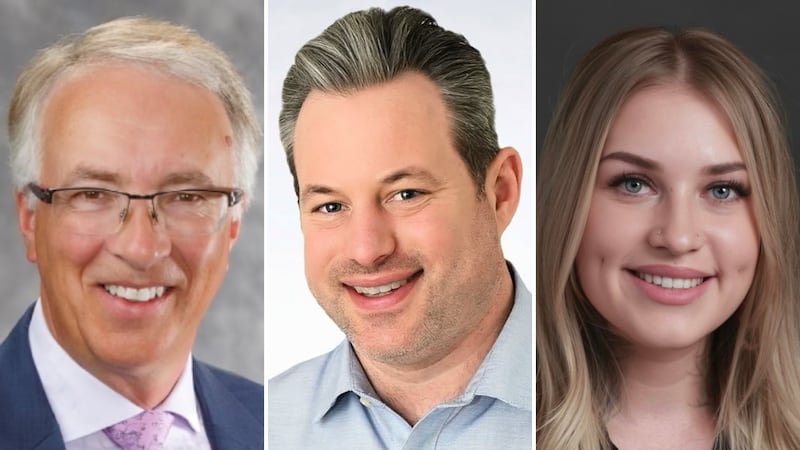
Dr. Francois Marquis is well known in Quebec for dispensing medical advice. As chief of the intensive care at Maisonneuve-Rosemont hospital, he was often a voice during the pandemic. But since the pandemic, he said there has been a proliferation of artificial intelligence (AI) generated deepfakes on people’s social media feeds. “The funny thing is that I’m not on any social media, so I actually never saw myself,” he said. “It’s all people calling me and telling me there’s some deepfakes, you know, running around.” He said in many of the online ads he’s seen he’s talking about joint pain and selling supplements. But more seriously, he said he’s seen videos where he is peddling cures for cancer and anti-pharmaceutical propaganda. He said he was recently confronted by a disgruntled customer while he was in the hospital. “This poor man actually ended up, you know, barging in the ICU and he wanted his money back because he never received the drugs,” said Dr. Marquis. “I was kind of happy that he never received anything.” While he said he was upset people are losing their money in these scams, he’s even more concerned about the loss of trust. “When you’re telling people to stop your drugs, stop your treatments, I have something better. Well, this is much more dangerous.” Dr. Marquis has reported the deepfakes to Quebec’s College of Physicians and Montreal police, but he said there is little else he can do to make these videos stop, except speaking out about them. Holding online platforms accountable Concordia University Communications Technology professor Fenwick McKelvey said people are often left to fight these battles on their own, since AI safeguarding policies are behind the ever-evolving technology. “You see the synthesis of this content for platforms they’re seemingly unwilling or unable to take down, and that it’s internationalized. So, it really creates these very difficult two problems at the same time, how to hold platforms accountable and how to make sure that misinformation from abroad is being held accountable,” McKelvey said. In many cases, it’s up to the user to beware of scams. “Be mindful of what you’re seeing online whether it’s an advertisement or not,” he said. “Always be skeptical of things that are trying to sell you stuff on the internet,” McKelvey added. How to spot deepfakes Jonathan Jarry, a science communicator based at the McGill Office for Science & Society, told CTV News that doctors are among many internet “puppets” fraudsters are using to scam people. “They are targeting a wide range of people. In the case of Dr. Marquis, anyone who recognizes him is likely to have their interest piqued,” Jarry said in an email. “I have seen many videos hosted by made-up, AI-generated doctors targeting older adults by focusing on health problems they are likely to have. Some of the behind-the-scenes puppet masters behind these AI doctors have revealed that they create different personas to reach different groups of people: Black AI influencers, Asian spiritual gurus, and older white male doctors. They’re trying different combinations to reach different demographics to make as much money as possible.” He said while AI technology is getting better, there are still some telltale signs that a video is not what it seems. “The fact that they are endorsing a specific product, usually a dietary supplement. Most people do not need dietary supplements, and most dietary supplements have never been convincingly shown to work. It’s a poorly regulated industry, rife with exploitation. But I have seen many AI doctor videos that do not endorse any product. People should watch out for a slightly robotic cadence of speech; a lack of normal facial expressions; and bland, sterile backgrounds. But keep in mind that the technology is so good, you have likely already been deceived. Don’t take health advice from random videos online,” Jarry added. In Dr. Marquis’ case, the videos altered his voice to sound Parisian, but there is an even bigger clue it’s not him. “It is illegal for a physician in Quebec, in Canada, to directly sell something,” said Dr. Marquis. “So, that’s a huge red flag. If you see anyone pretending to be a doctor physician trying to sell you anything, well, it’s a scam.”