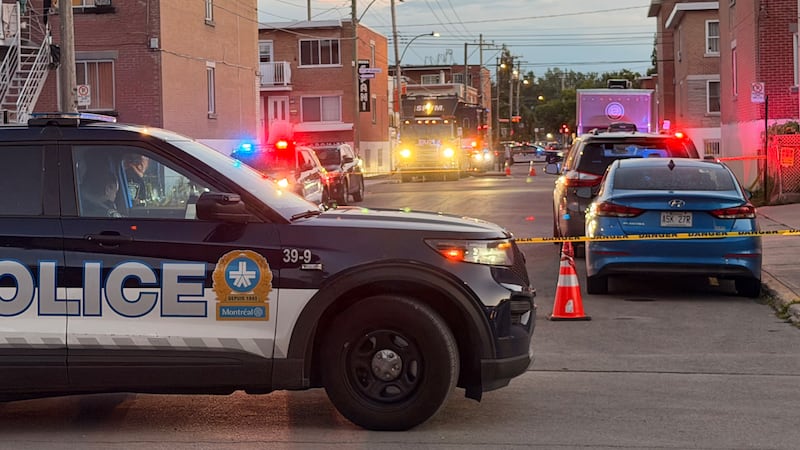
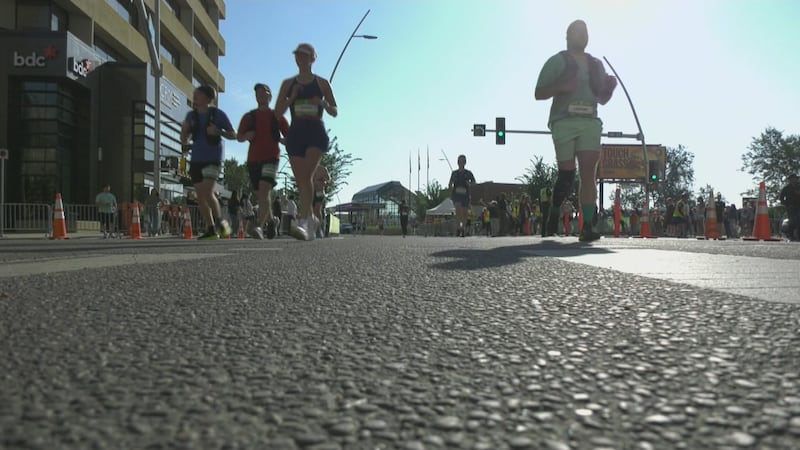
For Rachel Renaud, love — and loss — are at the heart of her sister Gabie’s story. “She just wanted to be loved so much,” said Renaud. “Ever since the loss of our parents, she was always searching for it.” Gabie Renaud was found dead in her home in Saint-Jérôme, north of Montreal, on Sept. 27. Authorities say they believe she was killed four weeks earlier. The accused, Jonathan Blanchet, was arrested and charged with first-degree murder. His next court appearance is scheduled for Nov. 7. Gabie left behind two children, aged 9 and 15. A fight for justice and change Since Gabie’s death, her loved ones say they have been navigating grief while pushing for change. On Sunday, hundreds marched through the streets of Saint-Jérôme in memory of victims of domestic violence. “It’s anger that is driving us all to be here today,” said Gabie’s aunt, Lyne Malette. “This anger is going to last a long time. We have a big year ahead of us with a lot of questions.” In the crowd was Stephanie Carion, a close friend wearing a shirt with Gabie’s photo and the words "Je suis Gabie" (I am Gabie) on it. “She didn’t deserve that. No one deserves that,” said Carion. “Especially not our Gabie, who was truly a gem.” Mélanie Colombey says she was there to show her support for families who have lost loved ones — and to count her blessings that her own sister is still alive. “We need change and that’s why we’re here: to show that enough is enough,” she said. “We don’t want to lose another woman to this violence.” Many in the crowd held posters calling for justice, with messages like “Stop violence against women” and “Reforms before we die.” Photos of victims also lined the streets. Yves Imbeault held a sign with a photo of his daughter Joanie, murdered in June. Police say they believe her partner killed her before taking his own life. “What’s happening is truly an injustice, but people’s compassion gives us the strength we need to keep fighting,” said Imbeault. “We can’t just sit back and do nothing when every year there are more and more cases of femicide.” Repeat offender Gabie’s death is believed to be the 14th femicide in Quebec this year. Nancy Boucher, who previously dated Blanchet, describes their four-year relationship as toxic, saying she was physically assaulted multiple times during that time. Blanchet was arrested several times and eventually served more than three years in prison. Stéphanie Girard, who was at the march, says she was also in a relationship with Blanchet. This time, about a decade ago. “I had him arrested and others also had him arrested, but there was no law severe enough for him,” said Girard. “It never stops. As we speak, there are women being beaten who are afraid to report it because the law isn’t there to protect us.” Gabie’s sister says she believes the convictions should have been a clear warning sign. “Nancy said it was just a matter of time before he would kill a woman,” Renaud said. “The justice system is lacking. The time they do in prison and the follow-up just isn’t enough.” Renaud says her sister’s deep need for love made her more vulnerable to being trapped in an abusive relationship with someone “who takes advantage of women and who manipulates them,” she said. Remembering Gabie Leading the march, Renaud says the event was about honouring Gabie’s life and making sure her death wasn’t in vain. “If we walk together, we have more of an impact,” she said. “I can’t do it alone. We need each other. The families of other victims, and really everyone, must raise their voices to denounce domestic violence.” The sisters experienced tragedy early on, losing both parents to suicide when they were still children. Their mother died first, followed by their father three years later. Rachel was 10; Gabie was 13. “She wasn’t just my sister. She was my everything,” said Renaud through tears. “She was the last one I had left of our family.” Gabie’s two children, she adds, “were her reason to live.” Renaud describes her sister as a force of nature — full of energy and ambition, with so much she wanted to accomplish. She and other advocates are calling for real action — including tougher laws for repeat offenders and stronger follow-up once they’re released. Renaud says prevention also needs to be part of the solution. “We need to start by the education of young boys,” she said. “We need to start this now because it can’t wait anymore. It’s been enough.”