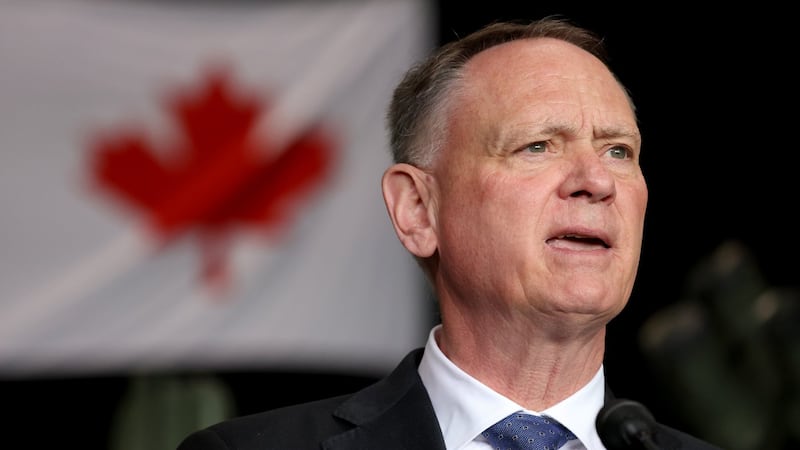
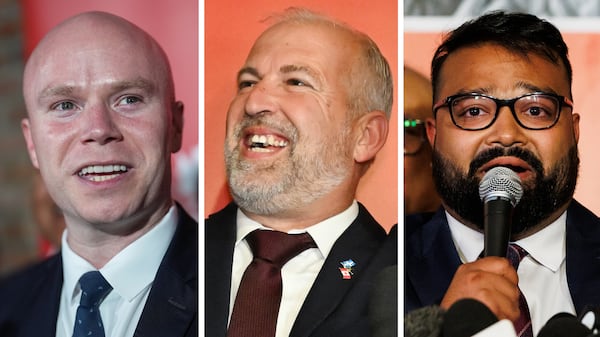
OTTAWA —The Liberals handily clinched three federal byelections on Monday night, and the results will have knock-on effects for more than just Prime Minister Mark Carney. From what the votes mean for parliamentary stability, to what one notable defeat could stir up for dissatisfied Conservatives, here’s what you need to know. The trio of wins puts the Liberals at 173 seats in the House of Commons. This means the governing party has re-established its majority standing, which technically slipped over the summer months due to a series of resignations. This reinjection of stability could see the Liberals hold on to power for years, and at the very least ensures they will have the numbers on their side in any votes of confidence, with the House of Commons fall sitting kicking off on Sept. 21. Plus, there’s the strength of the support for Carney’s leadership. In all three ridings that were up for grabs on Monday — Chicoutimi–Le Fjord, Que., Beaches–East York, Ont., and North Vancouver–Capilano, B.C. — the Liberal candidate won with more than 50 per cent of the vote. Byelections can be considered a bit of a report card on how any party or their leader is viewed by the public at a moment in time, so these results indicate Canadians, at least those who went to the polls in these races, still see the prime minister as the best pick. This message, being delivered amid an increasingly acrimonious trade war with the United States, was something CTV News’ political panellists all emphasized during Monday night’s byelection coverage, noting how much the events of the last few weeks on the Canada-U.S. trade file — and specifically the actions and comments of U.S. President Donald Trump — drove the vote. Nik Nanos, chief data scientist and founder of Nanos Research, said the current top two issues in his weekly polling are jobs and Trump. But, he cautions those political tailwinds could become headwinds. “Trump will play well for the Liberals until Canadians start to get worried about the economy,” Nanos said. “They start to see layoffs and casualties. You know, like war has been declared, but there haven’t been casualties yet.” “If casualties mount, we don’t know how resilient that particular relationship will be, and whether it’ll continue to benefit the Liberals,” he added. Kathleen Monk, a director of communications to former NDP leader Jack Layton, says it remains to be seen how Carney will be viewed by Canadians as the economic pain of long-lasting tariffs starts to hit their wallets. “Sure, there are great GDP numbers. Yes, employment, we added a bunch of jobs in July, but it’s not all a rosy picture,” Monk said. “And I think the people — even though the government will continue to put forward those numbers like the GDP numbers — people don’t feel like they’re doing well, and that will eventually show up at the ballot box.” ‘A big rethink’ needed for Poilievre? That change of Canadians’ tune may be just what Conservative Leader Pierre Poilievre is hoping for, after Monday night’s byelections brought losses on a few fronts for the embattled official Opposition leader. Not only did the Liberals decisively defeat the Conservatives in picking up the Quebec riding, which was vacated after the prime minister convinced one of Poilievre’s MPs Richard Martel to join the Senate, their candidate placed third with just 12.5 per cent of the vote. That’s down from Martel’s 2025 win with 34.1 per cent of the vote. “Not only is that a collapse of 22 percentage points in the span of 12 months between the last election and this election, it’s also the lowest result in a quarter century,” said Dimitri Soudas, a former director of communications to prime minister Stephen Harper. “The last time the Conservatives did this badly in Chicoutimi-Le Fjord was in 2004. So they didn’t just lose the riding, they went from first place to third place with the lowest result in almost 25 years.” The overall vote share for the Conservatives was down in all three of Monday’s races. Speaking during CTV News’ special election coverage Monday night, Kory Teneycke, also a former director of communications for Harper and recent vocal critic of Poilievre, characterized the results for his party as a “beatdown,” chalking it up to low polling numbers for Poilievre and “a leadership that’s under siege” from MPs leaving his caucus. “People can look around and see that the loss of support is not boding well, and they’re going to find different ways of dealing with that,” he said. “But people are going to start taking their own actions to try to preserve their own career in politics, or to send a message that there needs to be a change in leadership.” Scott Reid, a former communications director to prime minister Paul Martin also said the election results in Quebec were “a beating” at the expense of both the Bloc and the Conservatives. “They’re going to have to start from scratch as a matter of electoral strategy,” Reid said, referencing the Conservatives. “What they’re doing ain’t working. What Pierre Poilievre has going, he ain’t playing, it sure ain’t playing in Quebec. It requires a big rethink,” he also said. Still six byelections coming Though, tonight’s results won’t be the last test for the federal parties, as the prime minister still has six other byelections to call, one of which is being seen as a real test of Poilievre’s political standing, and another as a measure of the NDP’s electability under new leadership. Four MPs have resigned since mid-June, one Conservative MP’s resignation came into effect overnight Monday, and there’s another whose seat will be empty as of mid-September. Once a seat in the House of Commons is vacated, the prime minister has between 11 and 180 days after the MP resigns to call a byelection. The campaign period for those races can stretch between 36 and 50 days. So, the next race that’s likely to be called will be Saint-Hyacinthe-Bagot-Acton, Que. That was a Bloc Quebecois-held riding, until MP Simon-Pierre Savard-Tremblay resigned on June 19 to run provincially. The Bloc had a 10-point margin of victory in the 2025 general election, with the Liberals placing second. Similarly, the NDP lost one of the party’s handful of House seats just last week, when longtime MP Alexandre Boulerice resigned from his Rosemont-La Petite-Patrie, Que. riding to throw his hat into the Quebec election. With the New Democrats still in rebuild mode, time will tell whether new leader Avi Lewis’ efforts in in the province this summer be enough to hold onto the party’s only Quebec seat. Then there is a pair of vacant Liberal strongholds: Scarborough North, Ont., which belonged to MP Shaun Chen until he resigned in mid-August citing health issues, and Laurier-Sainte-Marie, Que., which prominent cabinet minister and environmentalist Steven Guilbeault officially vacated just days ago. The margins of victory for the Liberals were substantial in both ridings in the 2025 general election, with the Conservatives placing second in the Ontario race, and the New Democrats placing second in the fight for Guilbeault’s seat, so these byelections are unlikely to be the nail-biters of the batch of upcoming campaigns. Also unlikely to be a close race once the byelection is called is in Yorkton-Melville, Sask., where outgoing Conservative MP Cathay Wagantall — who said her resignation would be effective Aug. 31 — won the riding with 77.5 per cent of the vote in the last election. It’s a long-held Conservative riding where the difference between first and second place was more than 23,000 votes in 2025. The race to watch may very well be the last one called. That’ll be in Brantford-Brant South, Ont., where outgoing Conservative MP Larry Brock has said he’ll be vacating his seat as of Sept. 18 to return to the Brantford Crown attorney’s office. He’s the seventh MP to leave Poilievre’s caucus since the 2025 federal election, and Brock’s departure may become a real test of the embattled leader’s ability to rally voters in a province that’s critical to his party’s future electoral success. Soudas said that when it comes to Brock’s riding, there’s “absolutely no reason whatsoever why the Conservative Party of Canada and Mr. Poilievre cannot win this riding.” “It has been Conservative since 2008. Stephen Harper won it, Andrew Scheer won it, Erin O’Toole won it, and Mr. Poilievre won it. So 18 years consecutive without interruption, a Conservative seat,” he said. The Conservatives won the Ontario riding with 52.4 per cent of the vote in 2025, with the Liberals coming in second at 41.1 per cent. But, when CTV News spoke with several Conservative MPs this summer about Poilievre’s leadership, the Brantford-Brant South race came up as a concern. One Ontario MP described the looming byelection as a key test for the party. The riding has been Conservative since 2008, and the MP said if the Conservatives can’t hold that seat, Poilievre’s leadership will be in serious peril. This MP likened the situation to the Liberals’ loss in Toronto-St. Paul’s in 2024, a defeat widely seen as a turning point that accelerated pressure on then-prime minister Justin Trudeau before he stepped down as Liberal leader. “When your party loses a seat that safe, it really impacts caucus quite hard,” Teneycke told CTV News in an interview on Tuesday. “They start looking at that and seeing what their fate might look like if they were to go into a general election. It creates a lot of motivation for caucus to demand change and accountability on the part of leadership.” With files from CTV News’ Spencer Van Dyk and Brennan MacDonald