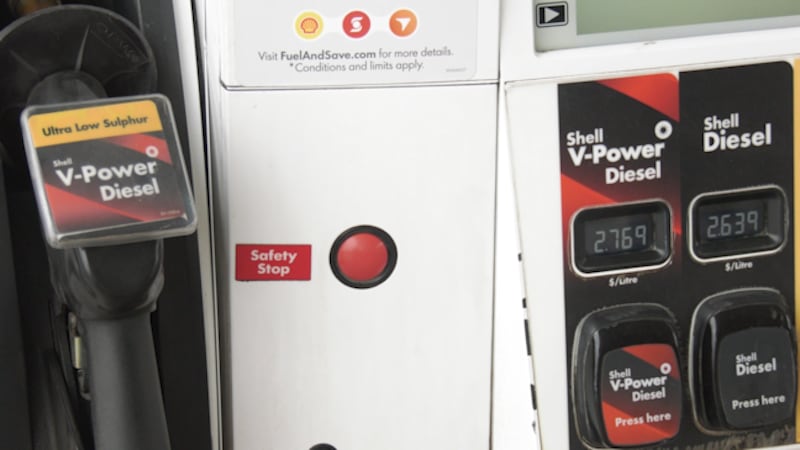
Pulling into a truck stop to fill up on diesel for a long-haul trip is anything but cheap these days. In the last 48 hours alone, diesel prices in Saskatchewan have jumped from around $2.15 per litre, to over $2.60 per litre. The jump in diesel costs will affect the price of goods and services Canada wide, according to Dan McTeague, president of Canadians for Affordable Energy. “So, what happens at the grocery checkout has everything to do with the cost of the farm gate as well as the cost of transportation, which is planes, trains, maritime vessels and even home heating fuel,” he said. McTeague added that grocery prices will soon be on the rise because of the cost of diesel for trucking companies being passed down to clients and ultimately consumers. According to Chris Procyk, Agricultural Producers Association of Saskatchewan vice president, Saskatchewan producers are some of the hardest hit by the steep rise in prices. “There are so many layers to it in terms of the fuel we need for our machines, combines, tractors, semis, to get the crop off. Fuel prices also impact the cost of getting parts,” he said. Procyk also told CTV News that when gas and diesel prices rise, producers end up footing extra bills to clients just to get their products off the farm. “When a company comes to pick up our grain from our farm, we’re usually charged with a fuel surcharge, an increased cost because of the fuel price. So, a lot of those costs get passed along to us as farms, but we actually don’t have any avenue to pass it on,” he said. “The price at the elevator doesn’t account for fuel, and it’s just what the price of the good is. And we have to get it there. So now the cost has gone up quite significantly for us to get it off the field into our bins or into the elevator. So, I think it just means lower and lower returns for farmers in general.” McTeague warns that relief from the unprecedented diesel prices, at least in the short term, could be a ways down the road. It’s very little in the way of any type of relief. It looks like we’re heading towards what could be permanent $2.50 per litre and up for the balance of 2026 and certainly the first quarter of 2027, as long as the weather remains cold.