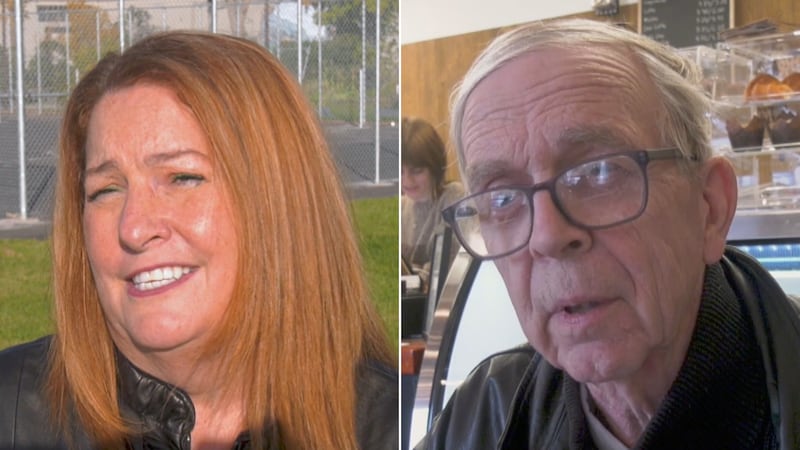
Back in June, Poundmaker’s Lodge Treatment Centres withdrew its application to open new post‑treatment addiction facilities in Yorkton after facing pushback from the community. But others said recovery supports for people coming out of the worst holds of addiction are critical in helping them move toward sober living. Alicia Cooper has been in recovery for eleven years and now works as a frontline support worker. She said people early in recovery need far more encouragement than they often receive. “I get praised right now at 11 years, but somebody at one year or six days is not getting the praise that I am getting. And why not? Because they’re in a harder spot than I am. They are struggling.” “I have figured out my coping mechanisms. I put them in place. They’re the ones that need our support, not me.” Cooper said a post‑treatment centre in Yorkton would have greatly benefited her at the beginning of her own journey, easing the pressure on her family. She said she was disappointed to see Poundmaker’s Lodge withdraw its application to open in a commercially zoned building after council rejected its earlier bid to rezone a residential property. “If somebody always told me that I was just going to be a drug addict, I probably would have continued to use,” Cooper said. “But because I had support and somebody telling me that I could do it, it gave me that glimmer of hope.” Lisa Kroll, who works with people experiencing homelessness, said there is a high demand for addictions recovery services. “If people are going to detox, then they’re going to treatment, then where do they go?” Kroll asked. “With everything unraveling the way it did, it was very sad and hard on the heart, because you know that these people deserve a chance.” Cooper said she supported council’s decision to reject Poundmaker’s attempt to rezone a residential property, but disagreed with council’s decision to table the second application for a building zoned appropriately to Poundmaker’s needs. “To table an application in a zone where you are unable to deny — it was absurd,” she said. “It just opened a door to show Poundmaker that you don’t support their initiative.” She said other addictions‑related services already operate in Yorkton without public protest. “There are other sober living facilities in Yorkton within distance [to those opposed],” she said. “And I don’t see people protesting those. Because they’re actively operating right now. And I guarantee you a lot of people don’t even know about them.” In Cooper’s view, the biggest gap in Yorkton’s harm‑reduction infrastructure is aftercare. “It was literally 11 beds for sober people to learn how to exist and transition into market housing,” she said. “Most people can’t even get into market housing exiting addiction or homelessness without supportive family members.” Residents who opposed the Poundmaker facilities in their respective neighbourhoods expressed concerns about safety, but Cooper said people living in post‑treatment facilities are committed to sober living and unlikely to jeopardize their progress. “I think that you’re probably not going to bite the hand that feeds you,” Cooper said. “You’re likely not going to want to attract issues to the neighbourhood that is supposed to be supporting and helping you through a crucial point in your life.” She said people who reach the post‑treatment stage are focused on rebuilding their lives. “I’m not going to go and hang out with other people who are using,” Cooper said. “You’re trying to reinvent your image, your friends, your circle... everything. You’re bringing around good, positive people. If you’re in a facility like that, you’re ready to change your life.” Kroll said addiction is more common than people realize, even in forms like caffeine, sugar, or shopping. She said Yorkton needs to keep an open mind about new services. “If we’re open to helping and being a community, we will be successful,” she said. “But if we’re just going to slam the door on people when something new comes in, Yorkton’s not going to grow.” Both Kroll and Cooper said Poundmaker’s Lodge could have started with community education before purchasing property. “Why are they shutting the door?” Kroll said. “More education in the community. More awareness for the community. Come out to events like the International Overdose Awareness Day walk. Let people get to know who you are!” In a statement to CTV News, Yorkton’s mayor Aaron Kienle said the city wants to be a constructive partner, adding that Yorkton hopes future proposals will be approached with clarity, compassion, and respect for both the people who need support and the neighbourhoods where services may be located. Cooper has filed an e‑petition with the federal government to demonstrate support for post‑treatment services in Yorkton. It is currently awaiting approval. “I stand by it that every household has an addiction no matter what it is,” Kroll said. “We just need to look at ourselves before we start judging people that are actually truly struggling.”