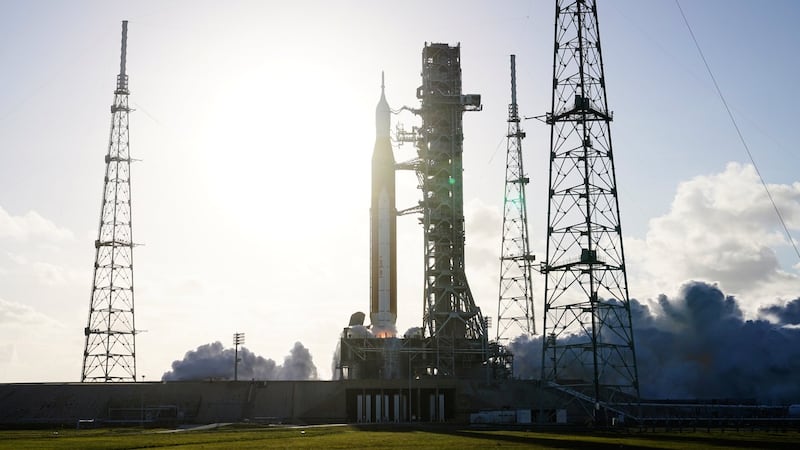
Growing up on a cattle farm in Fort Saskatchewan, Alta., Joshua Kutryck says he dreamt of going to space though he never thought it would happen. But a few months after Artemis II’s lunar flyby, the 44-year-old is preparing for a mission to the International Space Station that could lead to medical breakthroughs. Kutryck from is one of four members assigned to NASA’s SpaceX Crew 13 mission. He will join NASA’s Jessica Watkins and Luke Delaney, as well as Roscosmos cosmonaut Sergey Teteryatnikov. Watkins will be returning to the space station for the second time. The crew will spend six months at the station to conduct experiments and maintenance work. The SpaceX Dragon spacecraft carrying the crew is expected to take off from NASA’s Kennedy Space Center, in Florida, on Sept. 12. “There’s something really unique and really special about being involved as a Canadian,” said Kutryck. “There is something very special about Canada’s space program and how much we do with it.” The mission includes Canadian-led studies on how space travel and microgravity can affect human health. According to Kutryck, much of the Canadian-sponsored science could have practical applications for future space exploration. But he added some of those studies will be able to advance medicine on Earth. The experiments could help develop treatments for heart disease or osteoporosis as radiation and microgravity affect cardiovascular health and bone density, he explained. It can be efficient to conduct medical studies in space since the body ages faster in that environment, he added, during a press briefing. “They’re using the space environment and my body as the sample case to study problems that all humans eventually encounter here on Earth,” Kutryck said. Mathieu Caron, director of the astronauts’ office at the Canadian Space Agency, says space life sciences “has become a niche for Canada.” The crew will also conduct maintenance work on the station, including the Canadian-made servicing system, nicknamed Canadarm 2. Kutryck will bring his expertise in robotics on board, said Caron. Kutryck is the fourth Canadian to take part in a long-duration mission to the International Space Station. Montreal-based space educator Trevor Kjorlen says that with NASA planning to decommission the station in 2030, Kutryck may be the last Canadian to live on the station. “I think it’s a prime opportunity over the next six months after he launches for many Canadians to be able to see (the station), because it’ll probably be the last time they see it with a Canadian on board,” he said. But Kutryck hopes that both the recent Artemis II and the future Crew 13’s missions will be a source of inspiration for young Canadians in technical fields. He says Canada has been at the forefront of space exploration with NASA by participating in both missions. “I hope that when young people look at that, they realize that we’re at a truly defining moment,” he said. “The future of space flight for Canada is very, very bright if you choose it to be so. There are going to be a lot of opportunities for future Canadian astronauts, engineers, scientists, more than there was for me growing up.” After spending years physically and mentally preparing for the mission, Kutryck and his crew say they’re ready to take off in just a few weeks. Erika Morris, The Canadian Press