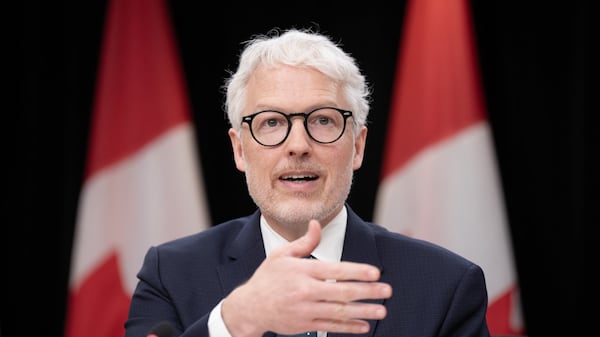
A Vancouver clothing brand is closing its doors to American customers in response to the intensifying trade war between Canada and the U.S. Jessica Sternberg owns Free Label, a made-in-Canada, sustainable and size-inclusive clothing line. She said since President Donald Trump’s second term, she and her team have had to navigate the ever-changing rules surrounding the export of products down South, which is taking a toll. “We can’t focus on the day-to-day of running a business,” she said. “We’re spending an entire full-time person’s role trying to figure out the customs situation.” ‘Trying to attack us’ Sternberg said this is one of the reasons she’s made the difficult decision to pause shipping to the U.S. Depending on the month, she said about 40 per cent of her customer base lives there. “It’s a sacrifice,” she said. “I’m sacrificing a huge portion of my business because if I were to ship to the United States, it would not reflect my values, and it would also fund the very government that’s trying to attack us.” Customer support Sternberg, who launched Free Label in 2015, said the response from both Canadian and American customers has been positive. “A lot of our American customers have voiced how appreciative they are that we are making a stance, and we are no longer shipping to the United States,” she said. Free Label isn’t the only Canadian business to take a firm stance. Ottawa-based retailer Black Coffee Apparel has also ceased shipping operations, citing the risk of losing their product and profit if an American buyer refuses to pay the tariff. Federal investment On Friday, Hon. Gregor Robertson, Minister of Housing and Infrastructure, announced an investment of over $10 million in funding to support 12 B.C. businesses and organizations. The investment stems from the Regional Tariff Response Initiative. “We are in a really tough situation right now with our top trading partners to the South making big changes and putting us in a difficult position,” he said. “B.C.’s under a lot of this pressure.” Sternberg said her biggest concern is how much longer local retailers can shoulder the cost. “We’re losing small businesses,” she said. “We’re going to just see this huge redistribution of wealth from regular people owning and working for small businesses to these large corporations that are primarily American-owned. And I think we need to be all really concerned about that.” The Canadian government’s retaliatory tariffs come into effect on Sept. 8.