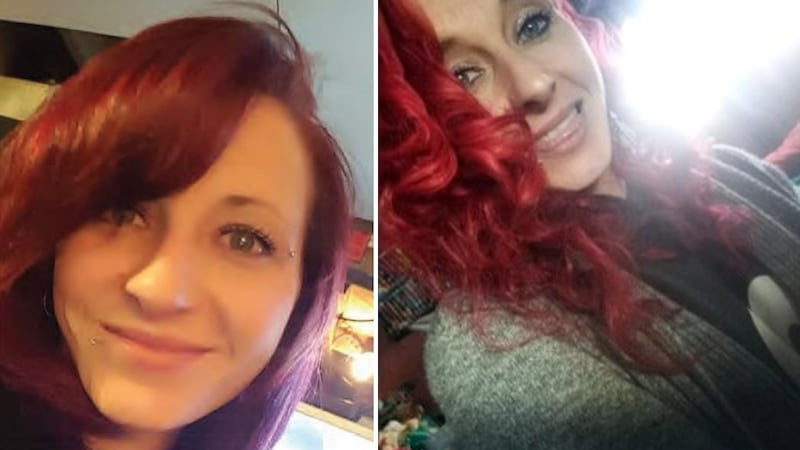
A Quebec woman is speaking out about the potential risks of hormonal birth control after surviving a cardiac arrest following a pulmonary embolism that nearly killed her and left her with a lasting disability in her leg. Jessica Lefebvre’s heart stopped beating for five minutes after she suffered a massive pulmonary embolism — a blood clot that blocks an artery in the lungs — at 29. She was using a vaginal contraceptive ring, a combined hormonal birth-control method containing estrogen and progestin that is associated with a small increased risk of blood clots. “It was a traumatic experience. I could have died,” Lefebvre, now 36, told CTV News. “The risk of blood clots is small, but women should still be more aware of the risks of birth control, and they should be aware of their options.” Three months after a premature delivery and a high-risk pregnancy in July 2019, Lefebvre said her doctor recommended birth control after she declined her doctor’s suggestion to have her tubes tied. Lefebvre said she was devastated to learn that she should not have another child because a future pregnancy could pose serious risks to her health. She ultimately agreed to use birth control. “The whole purpose of prescribing me birth control was for me not to become pregnant and have another high-risk pregnancy and potentially die, but the birth control almost killed me,” Lefebvre said. “I wish my doctor would have told me that blood clots are a risk. The only thing they said was that because of my weight, the birth control wouldn’t be as effective in preventing pregnancy.” Emergency responders resuscitated her In September 2019, an ambulance was called when Lefebvre developed symptoms consistent with a pulmonary embolism, including shortness of breath and sharp chest pain. On the way to Saint-Eustache Hospital, Lefebvre went into cardiac arrest in the ambulance. Emergency responders resuscitated her. Doctors removed her vaginal ring after learning she was using birth control. She was then transferred to Montreal’s Sacré-Coeur Hospital in critical condition, where she was placed in a medically induced coma for 10 days and required two types of life support. “When I woke up, I was confused; everyone had to explain what had happened to me,” she said. “Everything happened so fast. The last thing I remember was getting into the ambulance before waking up from the coma.” When Lefebvre awoke, she was experiencing severe pain in her left leg and was unable to move her foot. Specialists assessed her leg during the following months, but she said they could not determine exactly what had happened. She spent months relearning how to walk, first in hospital and later at a rehabilitation centre, progressing from a wheelchair to a walker. She also saw a therapist regularly because she was experiencing symptoms of post-traumatic stress disorder (PTSD), including flashbacks and nightmares about the event. At the same time she was in recovery, Lefebvre was also caring for her son. “When my son was learning how to walk, so was I,” she said. “I was extremely tired and weak, but I pushed myself because I wanted to be home for my son’s first Christmas.” Small risk of blood clots The risk of developing a blood clot while using hormonal birth control is small. However, that risk varies depending on the type of contraception, whether a woman is pregnant or postpartum, and if she has other risk factors or pre-existing health conditions. Birth control can be broadly divided into hormonal and non-hormonal methods. Hormonal methods include the pill, patch, vaginal ring, injection, implant and hormonal IUD, while non-hormonal options include the copper IUD. Some hormonal methods contain both estrogen and progestin, while others contain only progestin. Methods containing both hormones have a higher risk of blood clots. Dr. Marie-Ève Murray, an obstetrician-gynecologist who specializes in family planning in Montreal, said women should speak to their health-care provider about which option is best for them. “The risk of blood clots is real when you’re taking a combined hormonal contraceptive, but it prevents pregnancy, and the risk of having a blood clot is even higher if you’re pregnant or if you’re in the postpartum period,” Murray said. “If you have some risk factor for blood clots, then those types of options are not suitable for those women, and we then tend to prescribe them either the non-hormonal one or the progestin-only.” Murray said birth control can also offer important health benefits, including reducing menstrual bleeding and cramps, improving acne, and managing conditions such as endometriosis, polyendocrine metabolic ovarian syndrome (PMOS), premenstrual syndrome (PMS) and premenstrual dysphoric disorder (PMDD). Birth control is also associated with a lowered risk of ovarian, endometrial (uterine) and colorectal cancers, Murray said. While the risk of blood clots is small, Murray said women should understand the risks and benefits of each contraceptive option. “The goal is not to scare women about birth control. It’s important that women are informed and know the risk,” Murray said. “With any treatment, you need to be aware of the risks and the other options. We take many medications on a day-to-day basis that come with risk. Birth control may come with risks, but ultimately they are safe.” ‘I’m starting to live’ Lefebvre was able to return home in Saint-Jérôme for her son’s first Christmas in 2019. On Christmas Eve, she stayed up late making sure all his gifts were wrapped. Her son, who was less than a year old, played more with the wrapping paper than his toys. “After being in the hospital for so long, it was so nice to be home with my child,” Lefebvre said. “It was so important to me that he wake up to Santa and see all the gifts. Even though he won’t remember it, it was also for me.” In the years that followed, she continued rehabilitation for her leg. Today, she walks without assistance, although she still has a limp. She remains on pain medication for her leg and blood thinners to prevent another blood clot. As her strength and mobility have slowly improved, Lefebvre said she is finally able to make up for time lost with her son and do things she could not do before, including taking him to the park, the movies, camping, the beach and the pumpkin patch. But every September, the anniversary of the cardiac arrest and pulmonary embolism brings back memories of what she went through. On that day each year, she and her family go out for dinner to celebrate her life. “When the day comes, it gets me anxious, and I think of everything I went through, but I also think about how far I’ve come,” she said. “I’m so grateful to be alive, and I feel that now I’m starting to live.”