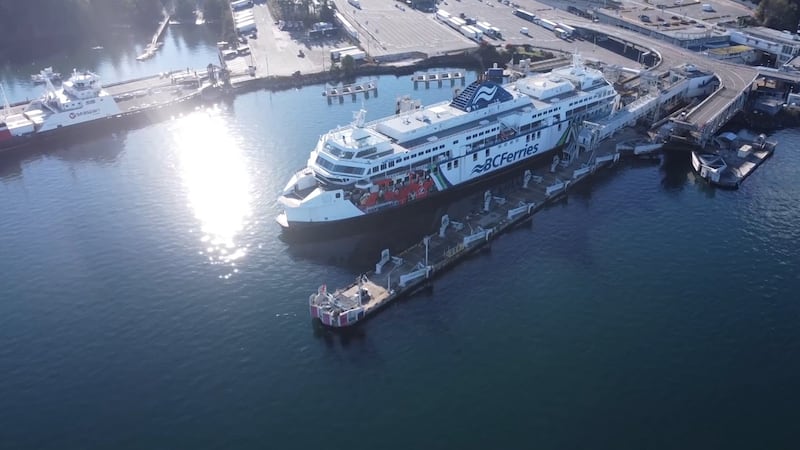
A potential 30 per cent increase in B.C. Ferries fares is adding urgency to calls for the federal government to provide more support for the coastal ferry system. Courtenay Alberni NDP MP Gord Johns wrapped up a series of rallies in Victoria on Thursday, calling on Ottawa to modernize the funding agreement for B.C. Ferries and provide what he says would be more equitable support for the province’s coastal communities. A small but vocal group gathered outside the B.C. Legislature for the final stop of Johns’ Fair Federal Ferry Funding tour. “When you look at the federal contributions, they contribute 3 per cent to operating costs of B.C. Ferries,” Johns said. The Province of British Columbia contributes 24 per cent of the company’s operating costs. Johns says the federal government contributes 43 per cent toward operating costs for ferry services in Atlantic Canada. “I would like to see some kind of fairness, some kind of equality,” said Victoria resident Sharon Hazelwood, who attended the rally. The tour began Monday in Port Alberni before making stops on the Sunshine Coast and at the Union of B.C. Municipalities convention in Vancouver. It wrapped up Thursday in Victoria. Johns says the timing is critical as B.C. Ferries begins its Performance Seven Review, which will set ferry rates for 2028 through 2032. B.C. Ferries is citing the possibility of a minimum 30 per cent fare increase during that period, according to Johns. “It’s urgent and that review started this month,” he said. Johns says higher ferry fares would have an impact far beyond the cost of a crossing. “It affects everything we buy. Our cost of goods and it will impact small business,” he said. “That is going to do terrible things to small communities,” Hazelwood said. Johns says the current federal funding arrangement dates back to 1977, when British Columbia had less than half its current population. Under the existing arrangement, he says B.C. Ferries receives about $6 per person in federal operating support, compared with about $125 per person in Atlantic Canada. Johns argues the difference shows why the agreement needs to be updated. “This is our Highway 1, and it’s time for the federal government to step up and modernize this agreement and create fair federal funding when it comes to operating costs for us here on coastal British Columbia,” he said.