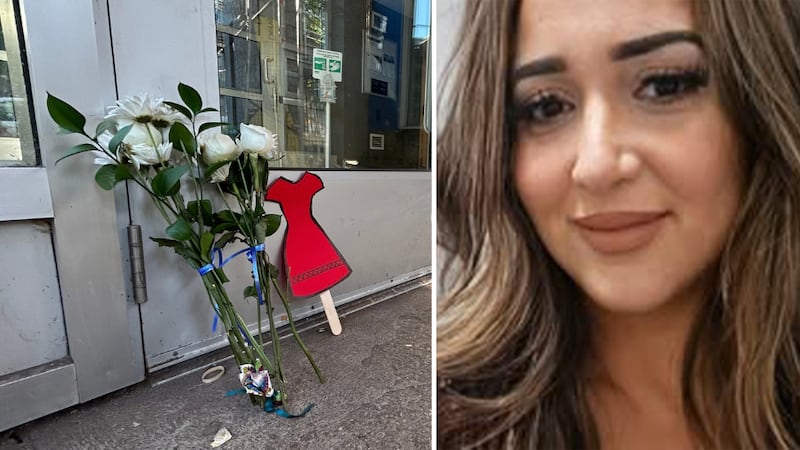
A Windsor mother is upset that the man convicted in her son’s murder is out on a 60-day pass. Douglas Lambier, now 63 years old, was sentenced to life in prison for the 2005 murder of a nine-year-old boy in Windsor. Brandon Burchell was suffocated to death inside a west end apartment building. Lambier pleaded guilty in 2006 to second-degree murder. He was sentenced to life in prison with 15 years parole ineligibility. On Sept. 24, 2026, he was released from a minimum-security jail in British Columbia for a 60 day unescorted temporary absence (UTA). It will expire Nov. 20. “We never get parole,” Burchell’s mother, Tina Gervais tearfully told CTV News. “When you’re sentencing someone for a life sentence, especially with his kind of record, that he should do a life sentence.” According to the Parole Board of Canada (PBC) decision, obtained by CTV News, Lambier has a “troubling” criminal history including “a pattern of sexual deviance”. When Lambier was arrested in June 2005, he already had two previous convictions (in 1990 and 1996) for sexual assault against minors for which he was sentenced to three years and ten months. At the time of Burchell’s death, Lambier was subject to a court-order to not be in the presence of minors. On June 25, 2005, Lambier “invited the minor victim to your residence when you knew that no one would be home. You gave the victim alcohol. You smothered the victim to his death,” the PBC decision reads. “You said you take responsibility for the allegations made against you, but you do not acknowledge committing these acts.” According to the PBC, Lambier grew up exposed to poverty, neglect and sexual abuse. He turned to alcohol and illegal drugs to cope, the PBC explained. “Your actions were the result of anger at others who you believed were taking advantage of you,” the PBC wrote. Lambier was never granted bail when he was arrested in June 2005 and has now been incarcerated for 21 years. In that time, the PBC says Lambier has been sober for two decades, as a result of involvement in Alcoholics Anonymous. He has also taken advantage of prison programming for sex offenders where he has learned “a switching technique to replace problematic fantasies”. Lambier himself told the PBC he is not ready for full parole and requested a 60-day UTA to be served at a community residential facility (CRF) on Vancouver Island where he is working on a Skills for Recovery Program. Gervais participated virtually in the PBC hearing this past September, where the board read her victim impact statement. “The Board recognizes the extensive and enduring emotional and psychological harm suffered by the victims and their family,” the decision reads. Yet it approved Lambier’s UTA, placing him as a “low to moderate for general, violent and sexual recidivism.” It was a devastating blow to Gervais back in Windsor. “I don’t care how much counseling he went to or what he’s went through, there’s nothing that’s going to change my mind,” Gervais told CTV News. “He’s a monster.” Gervais took to social media, particularly community groups in and around Vancouver and Vancouver Island. “It’s not only for my safety. I’m thinking of other children’s safety and families,” she explained. “There’s somebody that’s going to be out walking around and he’s already (offended) four times, what’s going to change him?” Gervais worries. While out on his UTA, Lambier cannot be anywhere near children or where children might be, he cannot consume alcohol or drugs or be anywhere its sold, and he cannot communicate with his victims’ families. When his UTA is over on Nov. 20, Lambier will return to his minimum-security prison in British Columbia. He would have to undergo a new PBC hearing and present his plan should he ever see full parole. By his own admission, Lambier told the PBC he would “prefer the structure and support” of a CRF for now and a “gradual release to the community” in the coming years. “He had a life sentence. Let them make him do his life sentence. And we should not have to relive this all over again,” Gervais concluded.