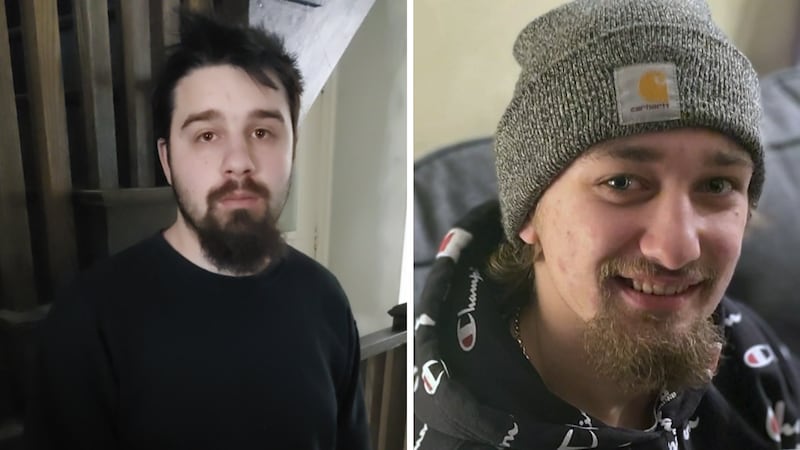
Warning: This article contains graphic details that may be disturbing and triggering to readers. Gabriel DiCecco heard directly from the family of William Schernhammer, two-and-a-half years after he shot and killed his friend and dumped his body on the side of the road in Alliston. DiCecco, 27, was convicted of manslaughter in the shooting when a Barrie jury found him not guilty of second-degree murder. Schernhammer’s mother faced DiCecco, telling the court of the undying love she had for her firstborn son whom she gave birth to at 17 years of age. Rachelle Schernhammer called her son’s killing “an act of total annihilation” that has devastated his siblings, parents and grandparents, who are still struggling to make sense of life without him. “The ripple effect of this cold, brutal violence reached into every fibre” of her family’s lives, Schernhammer told the court in her victim impact statement. William’s father told the court of the pain and suffering his son’s death has caused him and his family. “There isn’t counselling, a court decision or anything else that can change the fact that William is gone and I will never get to see him grow older,” he explained, telling the court “I don’t know how I am supposed to feel that my family is safe if the person who killed my son is free.” Schernhammer’s grandmother described being diagnosed with broken heart syndrome, traumatized by her grandson’s killing. She told the court of the close bond she had with her first grandchild and the physical and emotion harm his death has caused her since the day his remains were found in town. During trial, the court heard DiCecco shot Schernhammer four times in his car on the night of Jan. 12, 2024. The defence argued DiCecco killed Schernhammer in a chaotic panic, alleging he was trying to force himself on DiCecco. Lawyer Sam Goldstein said his client had been provoked before he shot and killed his best friend. DiCecco said he had been sexually assaulted by Schernhammer years earlier but police did not charge Schernhammer as the allegations were unfounded. DiCecco, when questioned by investigators in the hours and days that followed, initially told police he knew nothing about his friend’s disappearance. He later changed his story, telling police a mysterious masked man emerged from a field that night and shot Schernhammer before running away. DiCecco, who testified in his own defence, said he had a shotgun in his car because he was afraid of the drug dealers Schernhammer often associated with. He said he drove Schernhammer to Barrie to pick up drugs from a dealer. Schernhammer’s remains were discovered nine days later when DiCecco showed police where he disposed of his friend’s body. He first told police he had dropped Schernhammer off earlier that night but could not remember specific details. Eventually DiCecco confessed to police that he shot Schernhammer, claiming it was a reaction to his friend trying to sexually violate him. The judge will soon decide what facts the court must rely on based on the jury’s verdict, that found DiCecco guilty of manslaughter and committing an indignity to a dead body. The Crown argued that the court does not have to agree with the defence that DiCecco was provoked before killing Schernhammer. The Crown argued DiCecco lacked the state of mind required to commit murder, resulting in the manslaughter verdict. DiCecco returns to court next week to set another date for his continuing sentencing hearing.