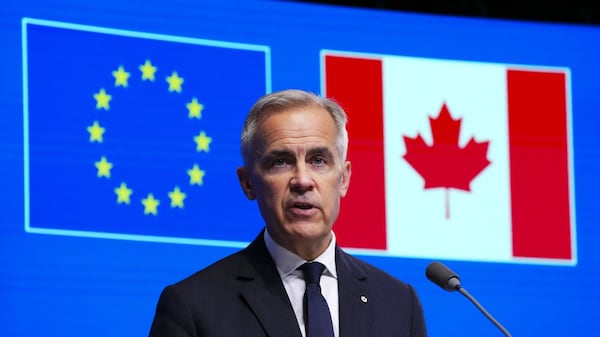
Prime Minister Mark Carney unveiled a major boost to the GST credit on Monday, rebranding the program as the “Canada Groceries and Essentials Benefit” in a bid to provide immediate relief to 12 million low-income Canadians. Standing in an Ottawa grocery store as Parliament resumed following the winter break, Carney characterized the move as a “bridge” to longer-term food security and affordability. “On average, these payments make up for the higher level of food prices since the pandemic,” Carney told reporters. Under the new plan, quarterly GST payments will increase by 25 per cent over the next five years, beginning this July. The government also announced a one-time top-up to be issued this year. For a family of four, the changes mean total payments will rise to roughly $1,890 this year, up from the current $1,100. A single person can expect up to $950 this year, compared to the current $540. In subsequent years, those amounts will level off to approximately $1,400 for families and $700 for individuals. Relief ‘spread thin’ While some Canadians welcomed the extra cash, one social agency expressed concern that the measures do not address the root of the crisis. In Calgary, where the local food bank supports a record 900 households daily, CEO Melissa From said while the payments will help, they are unlikely to reduce the number of people relying on emergency food services. “Certainly, this quarterly payment they’ll receive with their GST rebate will be of some help. I don’t know if it’ll be enough help that we would see this population no longer relying on the food bank,” said From. The announcement included a $20-million boost to the Local Food Infrastructure Fund to support food banks, an amount the CEO suggests is insufficient given the national scale of the problem. “The reality is $20 million, when it’s spread that thin, isn’t going to go terribly far,” said From. Political pressure The move comes as the minority Liberal government faces intense pressure from the opposition over the cost of living. Conservative House Leader Andrew Scheer dismissed the announcement as a “recycled Trudeau-era policy.” Scheer argued the government should instead focus on permanently removing taxes on food production and ending what he called “inflationary practices.” Lori Williams, a political scientist at Mount Royal University, said affordability is set to be the key issue for the next election. “Pierre Poilievre needs to focus more on what’s happening within Canada and convince Canadians he’s got a better plan for improving things. Mark Carney’s got to start to show results from all of these international overtures he’s making,” said Williams. The campaign-style nature of the announcement sparked speculation about a potential spring election, though Carney insisted his government is not considering a snap poll. “Of course, we’re not. We’re not. We’re focused just on results for Canadians,” said Carney. The bill will require support from members of the opposition to pass through the House of Commons before the benefits can be issued.