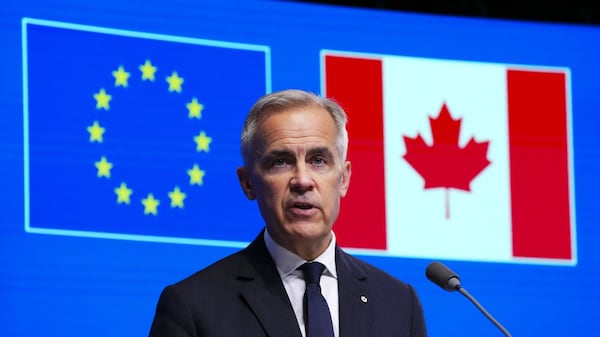
The federal and Alberta governments are set to announce Friday they’ve finalized an agreement on industrial carbon pricing, sources confirm to CTV News. That deal is a critical piece of the puzzle in a memorandum of understanding to get a pipeline to the West Coast built. The new agreement is set around a $130-a-tonne price by 2040. It was originally supposed to rise to $170 a tonne by 2030. That was considered a “sweet spot,” as the year is viewed as the threshold to kickstart massive decarbonization projects and help Canada meet targets set out in the Emissions Reduction Plan. The polluter policy is seen as Canada’s most important tool for decreasing harmful greenhouse gases. MOU details Sources say Prime Minister Mark Carney will be in Calgary Friday to announce the plan. He was slated to present the broad strokes of the agreement to his cabinet in a virtual meeting Wednesday morning. In November, Carney joined Alberta Premier Danielle Smith to ink an energy co-operation agreement, which outlined conditions that need to be met for a new oil pipeline to the Pacific Coast to proceed. The MOU laid out deadlines by which the two parties needed to agree on certain issues, including on the industrial carbon price. At the time, it specifically stated Alberta’s system “will ramp up to a minimum effective credit price of $130 per tonne.” Eco-disappointment Environmental groups are calling the new agreement a kowtow to oil and gas giants. Not only is it lighter on polluters than was originally planned, but some say the 2040 target will push emissions far beyond any manageable level. “The idea of a $130-a-tonne carbon price by 2040 effectively cuts Canada’s most important and last-standing climate policy,” Enviromental Defence’s Aly Hyder Ali said. “Ultimately, with this decision, the federal government has basically turned the system into a permission slip for polluters to keep polluting for another decade and a half.” The group believes the delay will only create an even wider pollution gap—and will take Canada out of the running to achieve net zero by 2050. And Hyder Ali believes it’s all for nothing. The Climate Institute estimates the earlier target would have cost companies roughly 50 cents per barrel. He calls that a rounding error. “The industry is said to make $100 billion in profit this year.” Economic push New data suggests most Albertans will welcome the MOU finalization regardless of its potential eco-impact. An Angus Reid poll this week shows Albertans increasingly prioritize economic growth over environmental protection and suggests the rest of Canada is moving closer to the province’s long-held views on energy infrastructure. Calgary-Confederation MP and sole federal Liberal in the city, Corey Hogan, says there’s a way to balance both. “This is a pragmatic government, and it’s a government that wants to work with people from all walks of life,” he told CTV News Wednesday. “That involves engagement. That means talking to people that maybe you didn’t have constructive relationships with in the past.” With files from Spencer Van Dyk