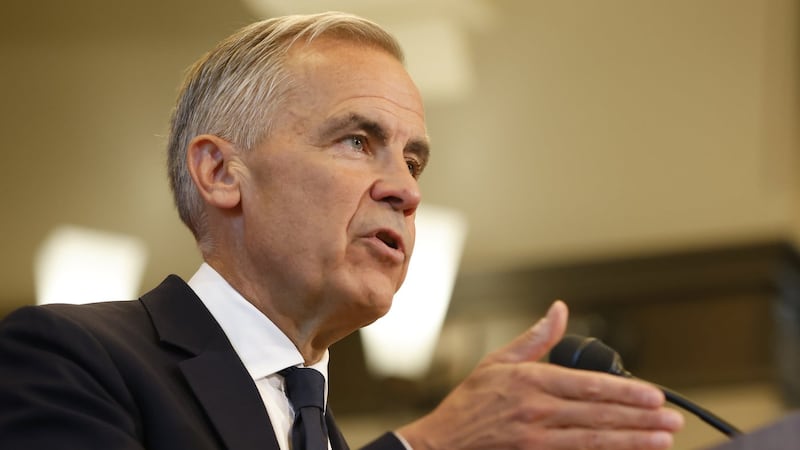
OTTAWA — The federal government is asking a Federal Court judge to toss out a lawsuit accusing Ottawa of having no intention of meeting its 2030 greenhouse gas emissions target. In recent court filings, government lawyers argued the Federal Court doesn’t have the power to order the government to take steps to meet its emissions targets. The government also argued it wasn’t up to the court to “opine on the political and policy issues” at the heart of the lawsuit. “Climate change is a real and important issue. Accountability, however, with respect to concerns expressed by the Applicants, lies with Parliament, not with the Court,” the government wrote. “There is no basis on which a court could order any of the relief sought in the Application. The Act creates no duties which could be owed to the Applicants and instead establishes a framework that includes a series of targets, plans, assessments, and reporting to track progress on emission reductions over time.” A group of climate advocates filed a lawsuit against the federal government in June arguing recent policy changes have knocked Ottawa off its track to meet Canada’s legislated greenhouse gas emissions reduction targets. Environmental Defence, the Canadian Association of Physicians for the Environment and climate activists Marie Maltais, Sophia Mathur and Shirley Barnea brought the lawsuit forward. They asked the Federal Court to order the government to bring its 2030 emissions reductions plan into compliance with the Net-Zero Accountability Act — or to declare Ottawa’s emission reductions plan unlawful under the act. The Net-Zero Accountability Act, which passed in 2021, legally commits Canada to achieving net-zero emissions by 2050 and requires the government to set national emission reduction targets along the way — though there are no consequences for missing them. A progress report published in December shows the government is nowhere near on track to meet its current target of cutting emissions to 40 to 45 per cent below 2005 levels. Prime Minister Mark Carney has been accused of backsliding on climate policy for the better part of the last year. He eliminated the consumer carbon price in March 2025 — on his first day in office. While he promised a strengthened industrial carbon pricing system, he was accused of weakening that system through an agreement with Alberta in May that has ramifications for every other province and territory. His government is also moving to repeal the electric vehicle sales mandate — Ottawa has promised stronger tailpipe standards but those are still years away — and to cancel the oil and gas emissions cap. Carney’s government also has delayed methane regulations in Alberta. In a video released two weeks after the suit was filed, Carney said federal climate policy under former prime minister Justin Trudeau was too expensive and divisive. “I want to be clear on this point. The changes we have made will mean that our emissions will be higher in the next few years than they were projected to be under the previous government’s plan,” Carney said in the video. “But in my judgment, that plan was not sustainable over the long term.” --- This report by The Canadian Press was first published Aug. 31, 2026. Nick Murray, The Canadian Press