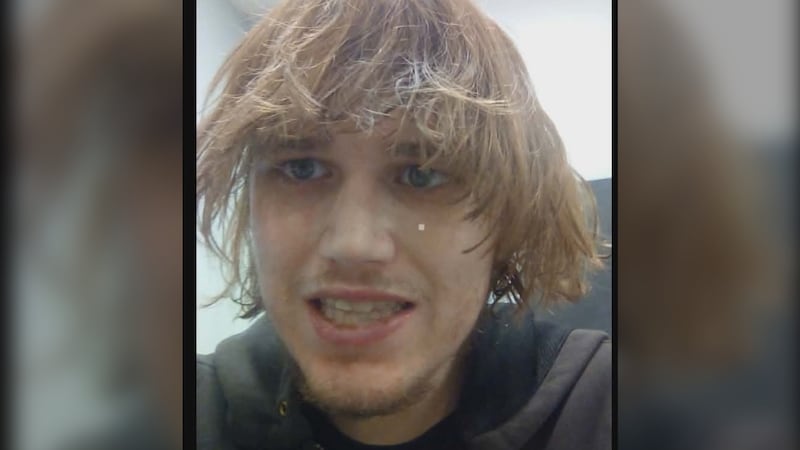
Three years ago, a stroke left Michael Lavigne, a former firefighter, mostly paralyzed and bedridden. Since then, every step toward recovery has been a battle for him and his family. This week, the Montreal man finally received preliminary testing confirming he can undergo cataract surgery, a procedure that had been delayed due to the lack of adapted services, which his family is denouncing. His sister, Tammy Lavigne, cares for him full-time alongside their mother, Connie Auger. Despite health challenges of her own, at 79 years old, Auger has remained a pillar for her son. “In the last three years, I’ve contacted seven hospitals and all of them said the same thing: they could do the [cataract] operation, but they couldn’t do the necessary testing because they all said they cannot accommodate him,” she said. “We were losing hope.” For the family, the logistical challenges have been exhausting and discouraging. Michael’s condition requires a lift to sit upright, specialized transportation, and a clinic that can accommodate his bulky medical equipment. Without these, hospitals repeatedly turned the family away. A helping hand arrives After CTV News reported Michael’s story, Martin Gascon, co-owner of Salutem, a private transport company in Ontario, offered to drive him to the Montreal clinic for testing — free of charge. “It’s pretty expensive to get transport privately,” Gascon said, adding that this trip alone would have typically cost up to $700. “It’s important for everyone to receive medical services, and we know that it’s not easy to get proper adapted transportation.” Tuesday’s testing confirmed that Michael’s cataracts can be operated on, and surgery for both eyes will be scheduled soon. For the family, the news brought immense relief—but also new challenges. Multiple financial barriers Because Michael is under 65, the surgery is not covered under Quebec’s health plan, leaving the family to cover the $1,600 cost out of pocket. Meanwhile, Auger’s savings are limited, and Tammy left her job in the U.S. to care for her brother full-time. “I don’t know what we’re going to do because the government’s not giving me a cent for being his primary caregiver — I’m scared,” she said. “He keeps falling through the cracks, and it’s not like he can be the only one going through this with a situation needing something as simple as cataract surgery.” Tammy added that Michael’s $900-per-month disability benefits aren’t enough — not even covering their apartment’s rent in Pierrefonds. “So forget about all the utilities, food, and anything else. People like Michael are just forgotten.” Systemic gaps remain Steven Laperrière, general manager of RAPLIQ, a Quebec advocacy organization, said Michael’s story reflects broader challenges for people with severe disabilities. Many individuals give up when the barriers become too heavy. “I’m sure that it’s happened in the past where other people like him needed those types of exams and couldn’t get them due to transport — some just gave up because it’s too heavy a fight to carry on,” he said. While he said the money Michael receives is on par with what people with his condition receive, that amount, Laperrière said, is simply insufficient. “It might be okay with a base revenue, but it doesn’t factor in that the costs of living that are always going to rise,” he explained. “In the best scenario, your health situation stays stable. But typically, with age, chances are you’ll need more and more money, and more help.” CTV News reached out to the Quebec Health Ministry regarding the family’s concerns, including disability benefits, adapted transportation, and support for family caregivers, but did not receive a response in time for publication. At the Office des personnes handicapées du Québec (Quebec Office for People with Disabilities), spokesperson Karine Lesage said the agency is concerned about issues related to paratransit. In a statement, she said the office has studied challenges related to adapted transportation in collaboration with the Ministry of Transport. The work, which includes a summary report finalized in September 2024, identified key issues, including governance, service delivery, and eligibility policies, which were discussed by the Advisory Committee on Adapted Transport for People with Disabilities. For Laperrière, looking into the issues is just one part of the puzzle — but taking action is urgently needed. “The machine [governments] are supposedly there to help you, whatever your situation is, but the impression is quite the opposite for many people,” he said. “It’s not always easy to find solutions but they have to do it — it’s our duty as a society.” Hope for the future With news that Michael’s surgery will happen, Tammy highlighted how transformative this will be for her family, and especially for her brother. “Even just when it comes to the little things that we take for granted, like being able to watch TV and seeing loved ones,” she said. “His communication has improved a lot, but for words he’s unable to say out loud, he will be able to use a tablet and just point out those words.” Despite the hurdles, the family is determined to stay focused on the future. “I love him to death. He will always be my baby boy,” Auger said. Michael, looking forward to regaining his vision, added with a laugh that what he’s most excited to see again is: “All of my family, my friends, and then… my TV.” For the trio, confirmation that Michael’s cataracts are operable is already a moment of relief—and, they hope, a symbol of faith for others facing similar barriers in Quebec’s healthcare system.