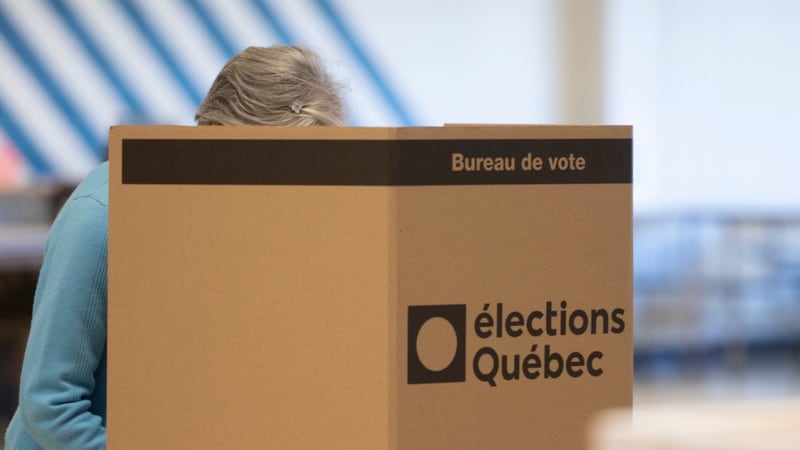
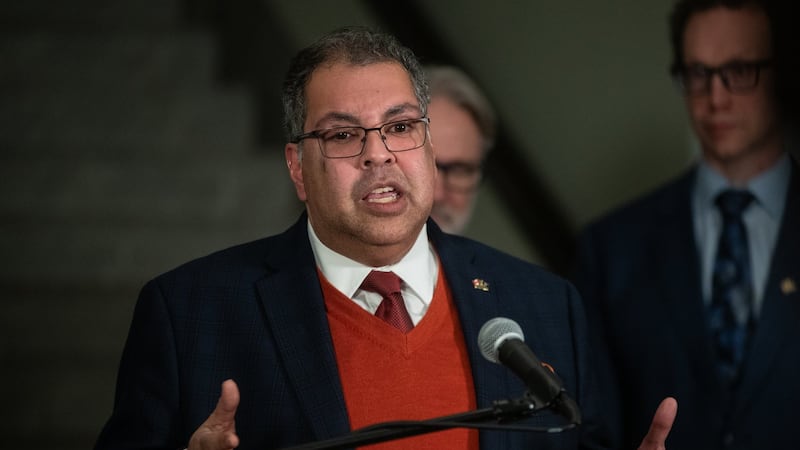
The Quebec government is seeking to appeal a ruling that ordered Élections Québec to send out voter reminder cards in English and French for the October general election by suspending the province’s language law, Bill 96. The provincial government filed the application Wednesday, stating that Quebec Superior Court Judge Sylvain Lussier erred in his decision by “applying the criteria of the appearance of law and the balancing of inconveniences by creating a language right not provided for in the Constitution.” The appeal request highlights the judge’s error in four main sections, citing that Section 3 of the Canadian Charter does not have language rights and that Section 133 of the Constitution Act, 1867 does not apply in this case. It further states that unwritten constitutional principles cannot be used to suspend or invalidate a law and that the trial judge was not dealing with a clear-cut case. The government’s request is expected to be heard by the Quebec Court of Appeal on the same day as the Quebec election, on Oct. 5. Lussier partially granted a provisional interlocutory injunction on Sept. 16, suspending part of the French-language charter for 10 days and ordering Élections Québec to prepare reminder cards in both French and English to send to voters ahead of the Oct. 5 election. He did not order the agency to send bilingual versions of the registration notice and voter’s guide that were already sent, which he said would be unrealistic and costly. On Sept. 21, the suspension of Bill 96 was extended until the end of the election. Élections Québec announced on Sept. 1 that it would not send English-language versions of mailouts it sends every election, including a notice of voter registration, a provincial election guide, and the reminder card, because of Quebec language law, Bill 96. The documents included a QR code that would direct people to English-language voting information online. The agency said it sought an exemption from the language law, but Quebec’s Minister of the French Language and the Commissioner of the French Language denied the request. The move led to a lawsuit filed in early September, alleging that voters who lack access to the information needed to cast their ballots are “denied the exercise of their fundamental right to meaningfully participate in the political process.” In a statement to CTV News signed by Quebec’s Executive Council, Treasury Board and Quebec’s French-language Ministry, it said it would not comment further on the plan to appeal. “In light of the Superior Court’s decision on September 16 and out of respect for the judicial process, we will not issue a statement,” the statement reads. Élections Quebec said it would also not comment. “We will not comment on this decision, as it is a political issue and our mission to organize the elections requires us to remain neutral and impartial,” Élections Quebec spokesperson Julie St-Arnaud-Drolet wrote in a statement to CTV News. “Our public statement on Sept. 1 was intended to inform English-speaking voters about how to access information in English, not to spark a debate on the new provisions of the French Language Charter.” Parti Québécois leader Paul St-Pierre Plamondon stated Friday that if his party forms government, it would not use resources on this case. “If the pamphlet is in English, it’s a fundamental right to vote, so I don’t see the point,” he told reporters on the campaign trail. “The civil code is in both languages because it’s a fundamental right; I think it’s the same logic for voting.”