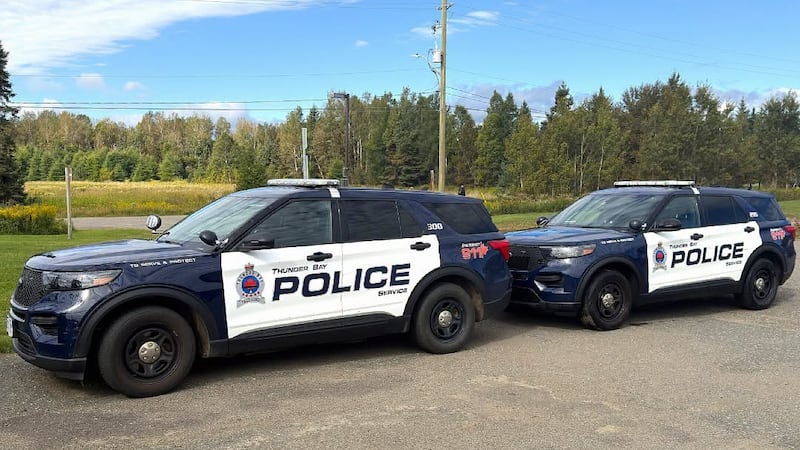
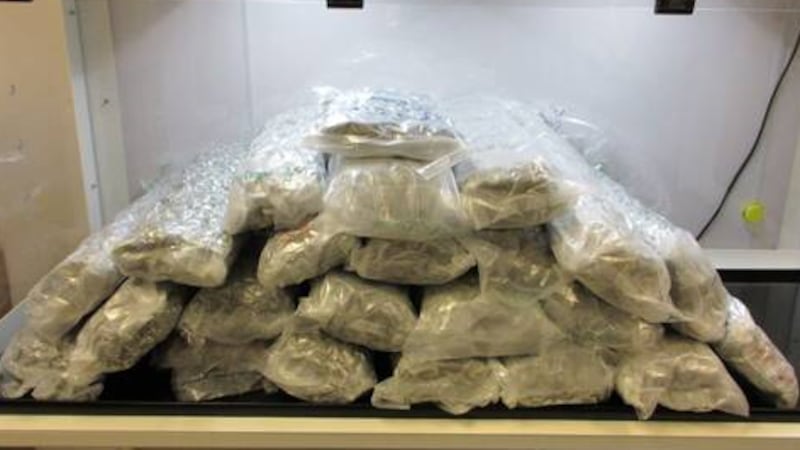
A judge in Thunder Bay has ruled that a tracking warrant and a transmission data recorder warrant issued for a suspect in a drug trafficking investigation were tainted by racial profiling and should not have been issued. As a result, all evidence obtained by using the warrants was ruled inadmissible. Thunder Bay Police investigators obtained the warrants April 18, 2024, based on information provided by four confidential informants. They were issued to allow police to monitor Jamel Rose, a young black man from southern Ontario who was making regular visits to Thunder Bay. The warrants targeted his smartphone. Rose, then 23, was arrested in May 2024 and charged with trafficking cocaine and fentanyl, possession of the proceeds of crime, resisting arrest and violating probation. However, his lawyer argued the warrants should not have been issued for several reasons, especially because Rose was the victim of racial profiling. In his decision, Superior Court Justice Stephen Wojciechowski agreed, ruling police made assumptions not backed up in fact, intentionally influenced by race. Wojciechowski concluded that police settled on Rose as a suspect, despite not conclusively seeing Rose engage in any activity consistent with drug trafficking. On the day of his arrest, Rose had just left a Bulk Barn in Thunder Bay and was carrying a cloth grocery bag. Drugs were found at a ‘trap house’ police believed was associated with Rose. A trap house is a term for a residence used to sell drugs. However, the judge ruled that there was no actual evidence linking Rose to the trap house. Investigators linked him to a “skinny Black male” who had been seen entering the trap house, but were not able to prove that person was Rose. “At no time before Mr. Rose is arrested is he seen undertaking in any activities which are consistent with trafficking, neither before nor after the warrants were issued,” Wojciechowski said in his decision. “The identification of a skinny Black male is entirely devoid of any identifying features which would distinguish Mr. Rose from any other skinny Black male.” Complicating the issue was the evidence from informants, whose information said Rose was a man named ‘Drew,’ who was working with an older man named ‘Marcus’ to sell drugs from a trap house on McKellar Street. ‘Younger Black male’ Yet at no time during their surveillance did they see Rose with a person matching Marcus’s description. Other evidence showed that Rose flew into the airport on certain dates and that someone named ‘Drew’ took a Uride from the airport. While the informants told police that Drew got around using the rideshare service, police failed to show that Drew and Rose were the same person. In fact, on at least one occasion someone other than Rose took a Uride using the ‘Drew Smith’ name. While multiple people could have been using that account, police failed to prove that Rose did so. While police identified Rose as being Drew in the information they provided to get the warrants, the judge ruled that police did not have the evidence to conclusively back that claim. And there was no conclusive evidence linking Rose with the drugs seized from the McKellar Street trap house in Thunder Bay. While a “younger Black male with a lighter complexion” is seen exiting another trap house in the city with a woman in April 2024, the judge also ruled there was not enough evidence to prove that it was Rose. Both are wearing hoodies that partially covered their faces and “it is unclear whether the individual seen on April 15 was Mr. Rose,” Wojciechowski said in his decision. While the judge found several other issues with the way the warrants were obtained, he also said there was no evidence that police intentionally racially profiled Rose. However, previous court rulings have said racial profiling can take place even when “officers may not be aware that they were influenced by race.” That is the case here, the judge said, “since it is beyond dispute that people’s beliefs can be influenced, or even motivated, by unconscious bias.” “Based upon a consideration of the totality of the evidence before me, it is reasonable to conclude that the investigation was tainted by racial profiling, given the decision to arrest Mr. Rose without any evidence to tie him to a trafficking operation aside from a generic description as a skinny Black male,” Wojciechowski wrote. “These violations support the decision that the warrants should not have been issued, the investigative results obtained as a result of these authorizations be excised, and any evidence which resulted from the arrest of Mr. Rose also be excised from any other warrants which were subsequently issued.” Read the full decision here.