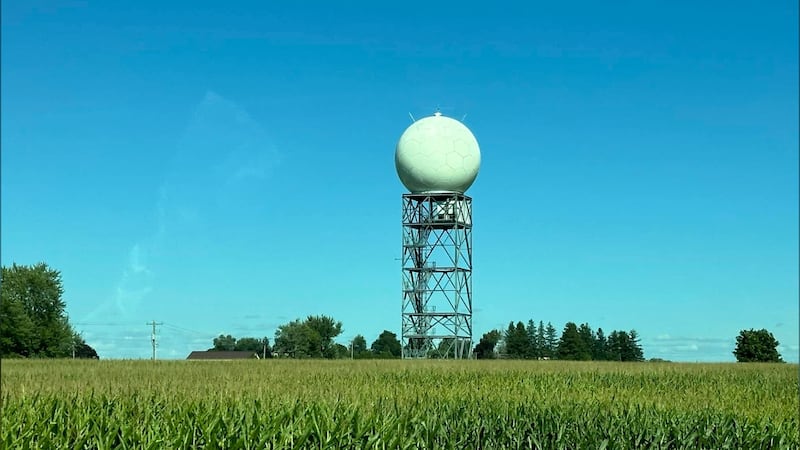
Essex Conservative MP Chris Lewis is pushing for better weather radar coverage in Windsor-Essex, arguing the region is effectively a blind spot in Canada’s warning system. Lewis has written to the federal environment minister calling for a review of severe weather alerts and radar coverage after a series of significant weather events, including the storm that swept through Essex Fun Fest in July, injuring three people. Speaking on AM800’s The Shift with guest host Dan MacDonald, Lewis said Windsor-Essex relies heavily on U.S. radar data because the closest Canadian radar station is in Exeter, about 200 kilometres away. He adds the distance can make it harder to accurately track severe storms approaching the region, resulting in delayed or missed warnings. “Windsor-Essex, we rely on three radar systems out of the United States, which is called NOAA, but by the time that information gets to us, a lot of the times the very severe weather has already passed,” Lewis said. He says upon consulting with industry experts, he believes the solution is to install equipment within the county to better track dangerous systems approaching from across the border. “To have our own radar somewhere in between Comber and Tilbury that basically points back across the region that will pick up the big storms that are coming from the Midwest, from Michigan, so that we have proper notification,” he said. Lewis says the issue isn’t about the work being done by meteorologists, but whether they have the tools needed to cover Windsor-Essex effectively. “I’m not blaming Environment Canada for this. What I’m saying is we need the proper infrastructure, which is our own radar site in our region, because our region is very, very unique,” he said. “We’ve got Lake Erie, we’ve got the Detroit River, and we’ve got Lake St. Clair.” Lewis says he’s still waiting to hear back from the federal environment minister, but if a response doesn’t come before Parliament returns, he plans to press the issue in the House of Commons this fall. A spokesperson for Minister Julie Dabrusin with Environment and Climate Change Canada says they recognize the critical role the weather radar network plays in monitoring precipitation and extreme weather events, particularly across large water bodies. They add that “the Exeter Radar (CASET) is online and fully operational after being temporarily offline for necessary maintenance. If an individual radar is temporarily unavailable, meteorologists continue producing accurate predictions of developing weather events using data from nearby radars, as well as satellite imagery, lightning detection information, and automated surface weather observations from weather stations and marine buoys.”